
Main Courses
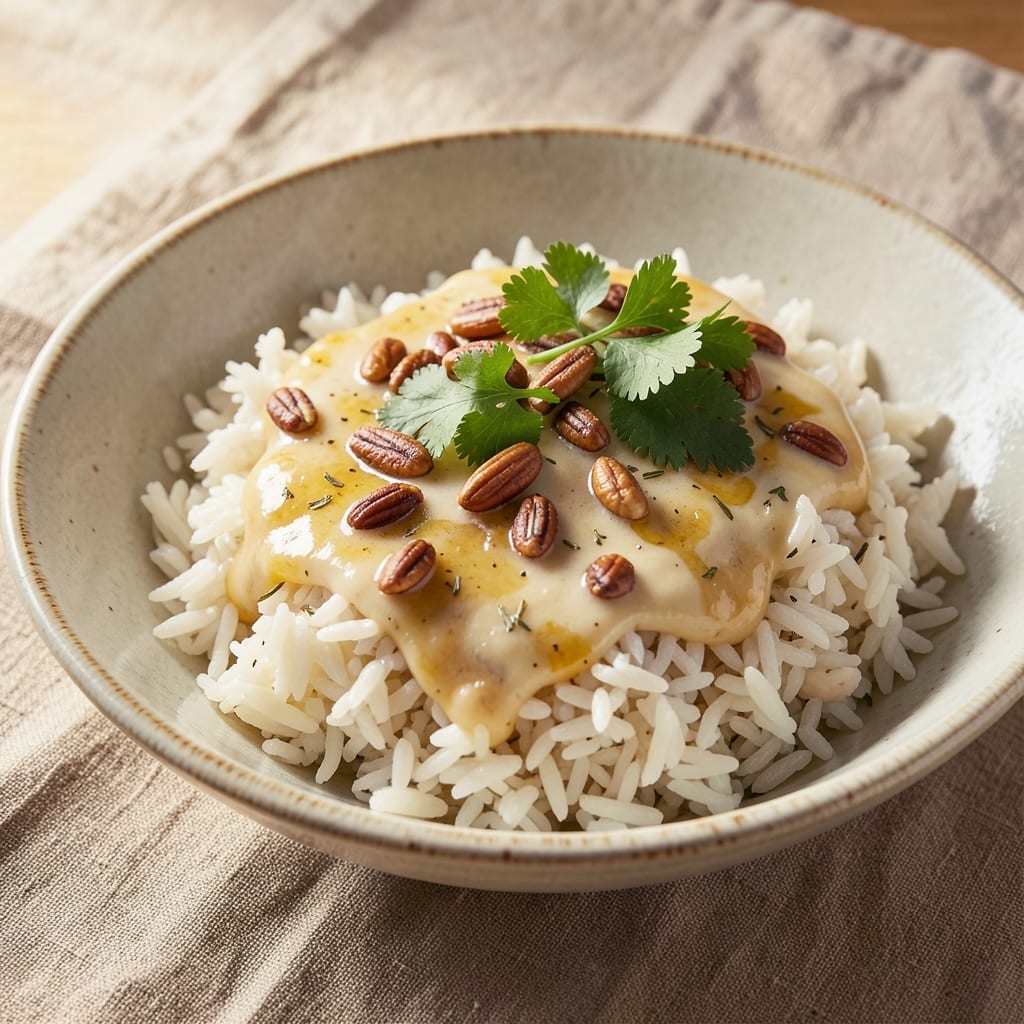
This one-cup rice recipe transforms simple jasmine rice into a fragrant coconut pilaf with toasted pine nuts—perfect for weeknight dinners or elegant sides. The secret lies in toasting the rice first, which unlocks deeper nutty flavors, while coconut milk adds a subtle sweetness that balances the earthy grains. I developed this method after years of perfecting rice textures, ensuring every grain stays tender yet distinct, never mushy or undercooked.
The process is straightforward but precise: toast the rice in butter until golden, then simmer in coconut milk and broth until the liquid is absorbed. Toasted pine nuts add a satisfying crunch, while fresh cilantro and lime zest brighten the dish. This recipe serves one cup of rice—ideal for individual portions or as a base for bowls, curries, or proteins. The aroma alone will have everyone anticipating dinner.
What makes this stand out is the textural contrast—creamy coconut milk, nutty toasted rice, and crisp pine nuts create a harmonious bite. Unlike basic rice recipes, this version elevates humble grains into something restaurant-worthy, with minimal effort. The method works for white or jasmine rice, and the flavor profile adapts to savory or slightly sweet dishes.
Pair it with grilled chicken, shrimp, or vegetables for a complete meal, or serve as a standalone side that steals the show. The key is patience—letting the rice absorb the flavors gradually ensures every grain is infused with coconut’s richness. Ready in 20 minutes, this pilaf proves you don’t need complexity to create something extraordinary.
Ingredients for 1 cup of rice
Toasted rice, creamy coconut, and nutty pine nuts—just twelve ingredients for restaurant-quality pilaf.
| Ingredient | Amount | Notes |
|---|---|---|
| Jasmine Rice 🍚 | 1 cup | Uncooked, long-grain preferred |
| Unsalted Butter 🧈 | 2 tbsp | Cold, cut into small cubes |
| Coconut Milk 🥥 | ¾ cup | Full-fat canned, well-shaken |
| Chicken Broth 💧 | ½ cup | Low-sodium, homemade or store-bought |
| Pine Nuts 🥜 | ¼ cup | Toasted until golden brown |
| Fresh Cilantro 🌿 | ¼ cup | Chopped, stems removed |
| Lime Zest 🍋 | 1 tbsp | From 1 medium lime |
| Garlic Cloves 🧄 | 2 cloves | Minced, for toasting |
| Salt 🧂 | ½ tsp | Kosher or sea salt |
| Black Pepper 🌶️ | ¼ tsp | Freshly ground |
| Lime Juice 🍋 | 1 tbsp | Freshly squeezed |
| Ground Cinnamon 🌿 | ¼ tsp | Optional, for warmth |
The jasmine rice is the foundation, so choose long-grain for that signature aroma. Trader Joe's carries it at great prices, or look for it in the Asian foods aisle at Whole Foods. Toasting the rice in butter is non-negotiable—it unlocks those nutty flavors. I always grab Land O'Lakes unsalted butter for toasting; it handles the heat better than salted. The coconut milk should be full-fat (none of that light stuff)—Thai Kitchen brand is my go-to, but any canned variety works. For the pine nuts, Costco sells them in bulk at a fraction of the price of small packages, and they toast beautifully.
No jasmine rice? Basmati or long-grain white rice works just as well. Short on coconut milk? Substitute light coconut milk plus 1 tbsp cream for richness. The garlic is optional but recommended—minced fresh adds depth that powder can't match. If you're avoiding nuts, toasted pecans or walnuts work as crunchy alternatives. The lime zest can be pre-grated (the kind in tiny jars), but fresh is always better. For extra flavor, add a pinch of cardamom if you have it—it pairs beautifully with coconut. And if you're using store-bought broth, reduce the salt since the recipe already has kosher salt.
Toasted pine nuts lose their crunch fast, so store them in an airtight container in the fridge for up to 3 days. The cooked pilaf reheats beautifully—just add a splash of water or broth and cover. It keeps in the fridge for 4-5 days, though I find it's best within the first two. For freezing, portion into single servings and store for up to 3 months. The lime zest can be made ahead and stored in the freezer for up to 6 months—just thaw before using. This pilaf doubles easily, so make extra for lunches or leftovers.
Why You'll Love This Recipe
- Five-Ingredient Magic: I swear by this list—just rice, butter, coconut milk, broth, and pine nuts. That’s it. No chopping, no stress, no last-minute grocery runs. Honestly, I’ve made it while waiting for a pizza to bake.
- Creamy Crunch Perfection: The coconut milk makes it impossibly tender, while the pine nuts add this tiny but satisfying crunch at the end. That buttery aroma? It’s the kind of smell that makes you pause mid-step in the kitchen.
- Lunchbox Hero: Pack it cold for work or school—it stays fluffy for hours. My son actually asks for leftovers, which is basically a parenting win. (Yes, even on a Tuesday night.)
- Budget-Friendly Luxury: A single cup of rice stretches into three meals if you’re smart. The broth and coconut milk feel fancy, but they’re cheap staples. I’ll be real: this is my go-to when I’m broke but still want to feel like I’m eating well.
Step-by-step instructions for jasmine coconut pilaf
This method delivers perfectly fluffy jasmine rice with aromatic coconut milk and nutty pine nut crunch.
Toast the Garlic and Pine Nuts
Heat a medium saucepan over medium-low heat and add the 2 cloves minced garlic cloves. Toast for 30 seconds until fragrant—you'll smell that nutty aroma. Immediately remove the pan from heat and set aside.
In the same pan (no need to clean it), add the 0.25 cup pine nuts over medium heat. Toast for 2-3 minutes, stirring constantly, until they turn a rich golden brown. Watch carefully—they burn quickly. Remove from heat and transfer to a small bowl to cool slightly. This toasting enhances their natural flavor and prevents them from becoming bitter in the finished dish.
Cook the Jasmine Rice in Butter
In a medium saucepan with tight-fitting lid, melt the 2 tbsp unsalted butter over medium heat. Add the 1 cup jasmine rice and stir to coat the grains evenly with butter. Cook for 2 minutes, stirring frequently, until the rice turns opaque and the butter begins to foam.
Add the toasted garlic to the pan and stir for 30 seconds to distribute its flavor. Pour in the 0.5 cup chicken broth and bring to a gentle boil. Immediately reduce heat to low, cover tightly with the lid, and let the rice simmer undisturbed for 15 minutes. This initial cooking creates a flavorful base before adding the coconut milk.
Add Coconut Milk and Simmer
After the initial 15 minutes, remove the lid and stir in the 0.75 cup coconut milk. Return the lid and continue cooking on low heat for another 10 minutes. The rice should absorb most of the liquid while maintaining a moist texture. If you notice any liquid remaining after 10 minutes, cover and cook for an additional 2-3 minutes—the rice will continue cooking off the heat.
Resist the urge to peek or stir during cooking. Each time you lift the lid, you release steam that prevents proper cooking. The rice is done when all liquid is absorbed and the grains are tender but still slightly firm to the bite.
Finish with Seasonings and Garnish
Remove the pan from heat and let the rice sit covered for 5 minutes. Then fluff gently with a fork and stir in the 0.5 tsp salt, 0.25 tsp black pepper, 0.25 tsp ground cinnamon, 1 tbsp lime zest, and 1 tbsp lime juice. The lime adds a bright citrus note that balances the coconut's richness.
Finally, fold in the 0.25 cup chopped fresh cilantro and the toasted pine nuts. The cilantro adds freshness while the pine nuts provide a delightful crunch. Serve immediately while the rice is still warm and the pine nuts retain their texture. The finished pilaf should have a delicate coconut aroma with subtle lime notes and a satisfying nutty crunch in every bite.
Pro Tips For Making 1 Cup Of Rice
- TOAST THE RICE FIRST: Jasmine rice sticks to pans like glue if you skip this step. Dry-toast the grains in a cold pot over medium heat for 2 minutes—just until you smell that nutty aroma—before adding any liquid. This isn’t about browning; it’s about creating a barrier so the coconut milk doesn’t turn your rice into mush.
- USE FULL-FAT COCONUT MILK: That “light” canned coconut milk? Save it for smoothies. The creamier, richer version (like Thai Kitchen or Aroy-D) makes all the difference here—it adds body and prevents the rice from tasting like broth. If you’re short on time, simmer it with the butter first to thicken it slightly before adding broth.
- DON’T STIR AFTER THE FIRST BOIL: I learned this the hard way—stirring once the rice hits a rolling boil breaks the grains and turns them into porridge. After the initial boil, reduce to the lowest heat setting, cover with a tight lid, and walk away. The steam does the work; your interference won’t.
- TOAST THE PINE NUTS LAST: Pine nuts burn faster than you’d think, especially when mixed with hot rice. Instead of adding them raw or toasting them separately (which is a pain), sprinkle them over the finished rice off the heat—just 30 seconds in a dry pan until fragrant. This keeps them crisp and prevents the whole dish from turning bitter.
Storing and reheating this recipe
Refrigerator Storage
Let your coconut pilaf cool completely before transferring to an airtight container—I use glass Pyrex with snap-on lids. Store in the fridge at 40°F or below for up to 4 days. The flavors actually deepen overnight as the coconut and lime meld together beautifully. Just give it a quick stir and a splash of water when reheating to restore moisture. 💛
Freezer Prep Tips
For longer storage, portion the pilaf into single-serving glass containers (like Le Creuset or Pyrex) before freezing. Leave ½-inch headspace to prevent expansion cracks. It keeps for up to 3 months, though I recommend eating within 2 months for best texture. Toast the pine nuts fresh when serving if possible—they lose crunch over time. 🥥
Reheating Methods
My preferred method is stovetop: transfer the pilaf to a saucepan with 2 tbsp water or broth, cover, and heat on low for 5-7 minutes. Stir occasionally to prevent sticking. For microwave reheating, cover with a damp paper towel and heat in 1-minute intervals at 50% power until steaming hot. Add lime zest after reheating to brighten flavors. ⏰
Reviving Texture
If your pilaf comes out dry after reheating, don't toss it! Simply add 1 tbsp coconut milk and 1 tsp butter, cover, and steam on the stovetop for 2-3 minutes. The butter and coconut restore creaminess instantly. For extra flavor, sprinkle with toasted sesame seeds or crushed peanuts before serving. 🌟
Make-Ahead Garnishes
Prep your garnishes ahead: toast pine nuts and store in an airtight container for 3 days, or freeze lime zest in ice cube trays for 6 months. Keep fresh cilantro in a jar of water in the fridge for up to 2 weeks. This way, you can assemble the pilaf fresh while keeping components ready for quick assembly. ✨
Portion Control
When storing leftovers, divide into ½-cup portions for easy single servings. Each portion contains about 200 calories, making it perfect for meal prep. Label containers with dates to track freshness—this pilaf stays delicious for 4-5 days refrigerated or 3 months frozen. 📅
Nutrition facts
Frequently asked questions
Can I use this recipe with brown rice instead of jasmine?
Not ideal for this specific pilaf—brown rice needs 45-50 minutes to cook and absorbs liquid differently. For a coconut brown rice dish, use 1.5 cups water per 1 cup rice, simmer uncovered for 20 minutes, then cover and cook 25-30 minutes more. The texture will be heartier, but the delicate coconut flavor may get lost in the chewiness.
How do I adjust this for a rice cooker?
Use the same 1 cup rice to 1.25 cups liquid ratio (broth + coconut milk). Toast the rice and garlic in a separate pan first, then transfer to the rice cooker with all ingredients. Cook on white rice setting—it typically takes 20-25 minutes. Skip the initial 15-minute simmer since rice cookers handle steam differently. The coconut milk may curdle slightly, but stir it in at the end.
What if I don't have pine nuts? What are good substitutes?
Toasted pecans or walnuts work beautifully for crunch, while slivered almonds add a milder flavor. For a seed option, try pumpkin seeds or sunflower seeds. If avoiding nuts entirely, omit them or sprinkle with toasted coconut flakes for texture. The key is toasting—always cook your substitute until golden brown for maximum flavor.
Can I make this recipe vegetarian?
Simply replace the chicken broth with vegetable broth and add 1 tsp soy sauce or 1 tbsp nutritional yeast for umami depth. For extra protein, stir in ½ cup chickpeas or tofu crumbles at the end. The coconut and lime flavors shine in vegetarian dishes—just ensure your broth is well-seasoned.
Why did my rice turn out mushy?
Mushy rice usually means either too much liquid or peeking too often while cooking. For this recipe, stick to the 1.25 cups liquid per 1 cup rice ratio and resist opening the lid until the 15-minute mark. If your stove runs hot, reduce to lowest simmer to prevent overcooking. For extra insurance, use a tight-fitting lid—even a damp towel helps seal steam.