
Main Courses
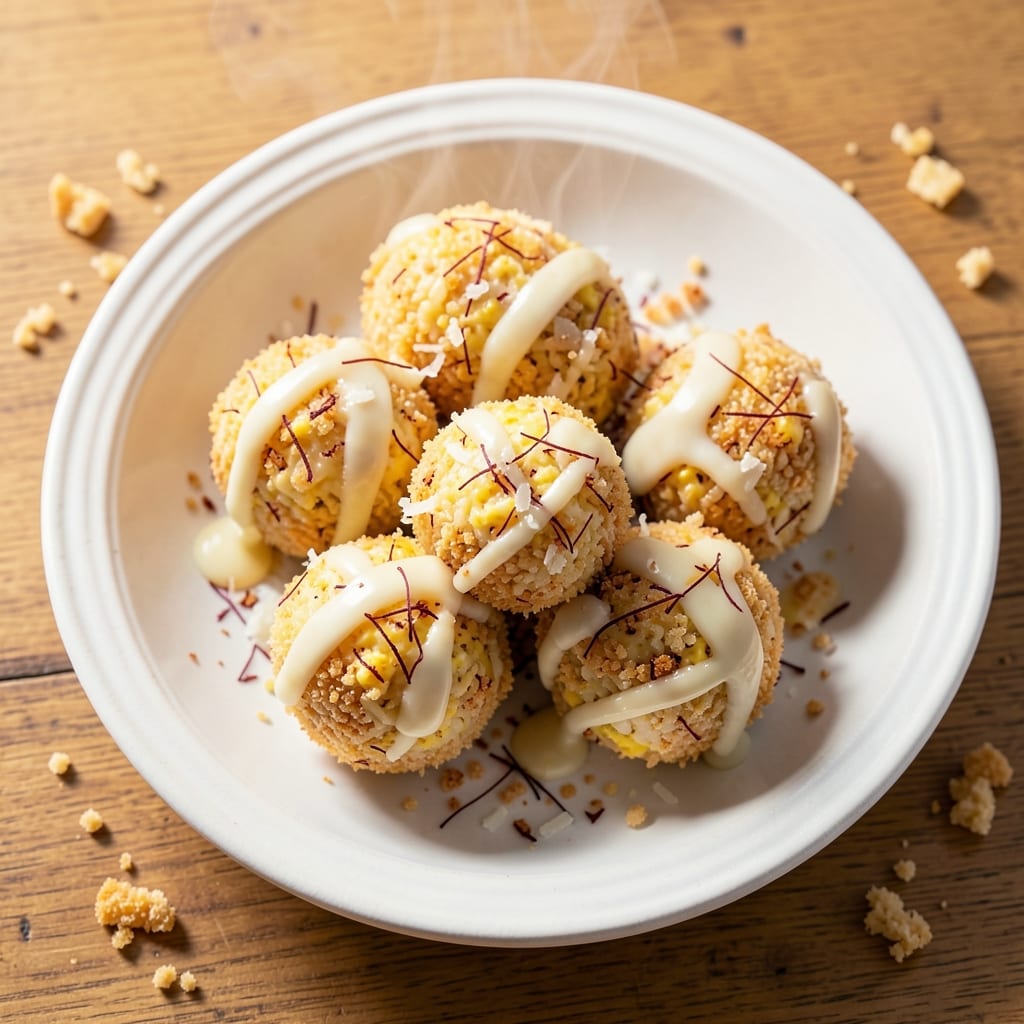
Arborio rice balls transform leftover risotto into golden, crispy orbs that taste like a cross between arancini and fried rice—nutty, savory, and impossible to resist. The secret lies in perfectly cooked arborio rice that holds its shape while absorbing saffron’s golden hue and toasted breadcrumbs for that addictive crunch. I developed this recipe after realizing how much I wasted perfectly good risotto, and now it’s my go-to way to repurpose leftovers into something restaurant-worthy.
What sets these apart is the balance of textures: a tender, creamy rice center wrapped in crispy breading, all held together by a light, airy structure. You’ll start with cooked arborio rice (or leftover risotto), mixed with cheese, saffron, and your choice of filling—whether it’s classic ragù, melted mozzarella, or even roasted vegetables for a vegetarian twist. The breading isn’t just for crunch; it creates a golden barrier that locks in all the flavors during frying.
By the time they emerge from the fryer, you’ll have golden-brown orbs with a crackly exterior and a creamy, saffron-infused interior—each bite a perfect harmony of textures and flavors. These aren’t just leftovers; they’re a foolproof way to turn a simple risotto into an appetizer, snack, or even a main course when paired with marinara or a fresh arugula salad. The best part? They’re just as impressive served warm or at room temperature, making them ideal for parties or meal prep.
For extra flair, serve them on a platter with a drizzle of olive oil and a sprinkle of flaky sea salt, or pair them with a tangy marinara for dipping. The recipe scales effortlessly, so you can make a batch for a crowd or just a few for a satisfying snack. Ready to elevate your risotto leftovers into something extraordinary?
Ingredients for arborio rice balls
Golden, crispy orbs with creamy saffron centers—just these ingredients transform risotto leftovers into something extraordinary.
| Ingredient | Amount | Notes |
|---|---|---|
| Cooked Arborio Rice 🍚 | 3 cups | Leftover risotto preferred, cold |
| Saffron Threads 🌼 | ¼ tsp | Soaked in 1 tbsp warm water |
| Parmesan Cheese 🧀 | ½ cup | Freshly grated, aged variety |
| All-Purpose Flour 🌾 | 1 cup | For breading, sifted |
| Panko Breadcrumbs 🍞 | 1 ½ cups | For extra crunch |
| Large Eggs 🥚 | 2 whole | Beaten for egg wash |
| Vegetable Oil 🫒 | 3 cups | For frying, high smoke point |
| Mozzarella Cheese 🧀 | 1 cup | Fresh, shredded or chopped |
| Garlic Cloves 🧄 | 2 cloves | Minced for filling option |
| Olive Oil 🫒 | 2 tbsp | For drizzling after frying |
| Flaky Sea Salt 🧂 | 1 tbsp | For finishing touch |
| Fresh Basil Leaves 🌿 | ¼ cup | Chopped, optional garnish |
| Ragù Sauce 🍅 | ½ cup | Optional filling, store-bought or homemade |
| Lemon Zest 🍋 | 1 tsp | Brightens flavor |
The arborio rice is the foundation here. Leftover risotto works best—it’s already got that perfect creamy texture and absorbed all the flavors. If you’re starting fresh, cook your rice until it’s al dente but still holds its shape. Trader Joe's sells pre-cooked arborio rice in pouches, which is a lifesaver for quick prep. The Parmesan should be the good stuff—Parmigiano-Reggiano from a block, freshly grated. Pre-grated cheese gets clumpy and lacks that rich, nutty depth. For the saffron, buy it in small jars—it’s pricey, so you won’t use much. Soak those threads in warm water for 10 minutes before mixing into the rice to release all the color and flavor.
No panko? Toast regular breadcrumbs in a dry pan until golden for a similar crunch. Short on mozzarella? Fontina or provolone melts beautifully too. The ragù can be swapped for roasted vegetables, sun-dried tomatoes, or even a simple mix of sautéed mushrooms and spinach for a vegetarian twist. The garlic is optional but adds a nice punch—roast it first for a sweeter flavor. If you’re making these ahead, prep the filling and breading separately, then assemble just before frying. The egg wash is non-negotiable—it’s what creates that golden, crackly exterior. Beaten eggs work better than separated whites for a richer coating.
These keep surprisingly well. Serve warm for the best texture, but they’re just as good at room temperature. Store any leftovers in an airtight container for 3-4 days—they’ll lose some crunch but still taste amazing. For freezing, fry them first, then cool completely before storing. They’ll keep for up to 2 months. Reheat in a 350°F oven for 10-15 minutes to restore that crispy exterior. I always make a double batch—they disappear fast, especially when paired with a drizzle of olive oil and a sprinkle of flaky salt. Perfect for parties, lunchboxes, or a fancy snack when you’ve got company over.
Why You'll Love This Recipe
- One-Bowl Wonder: I swear by this recipe when I’m too tired to measure five things. Just mix the cooked Arborio rice with saffron and Parmesan, dip in flour, then coat in panko—no standing over a stove, no fancy techniques. Honestly, the only thing harder is deciding whether to make them tonight or save for later.
- Golden Crisp Magic: That panko crust? Chef’s kiss. The outside gets perfectly crispy while the saffron-infused rice stays creamy inside—like a little hug of risotto texture in every bite. Between us, the Parmesan makes it taste fancy without the fuss.
- Lunchbox Hero: I pack these cold for work all the time. They hold up better than most rice dishes, and the saffron gives them a gorgeous color that makes my sad office salad look intentional. (Yes, even on a Tuesday night.)
- Pantry Staple Hack: Arborio rice is cheap, and these use leftovers like a dream. Double the batch, freeze half, and you’ve got a 10-minute snack or side whenever. My college budget still thanks me for this one.
Step-by-step instructions for saffron-infused arborio rice balls
Here's how to transform cold risotto into crispy, golden orbs with nutty crunch and saffron brightness.
Prepare the Saffron-Infused Rice Mixture
In a large mixing bowl, combine the 3 cups cooked arborio rice with the 0.25 tsp saffron threads that have been soaked in 1 tablespoon warm water. Add the 0.5 cup freshly grated Parmesan cheese and 1 cup mozzarella cheese, mixing gently with your hands until evenly distributed. The saffron should infuse a delicate golden hue into the rice.
If using the optional 0.5 cup ragù sauce or 2 cloves minced garlic, fold these in now along with the 1 teaspoon lemon zest. The lemon zest brightens the saffron's earthy notes while keeping the filling flavorful. For extra moisture, you can also add 1 tablespoon olive oil at this stage. Once combined, shape the mixture into 4 equal portions—each will become one rice ball.
Create the Breading Station
Set up three shallow bowls: one with 1 cup sifted all-purpose flour, another with the 2 whole beaten eggs, and a third with 1.5 cups panko breadcrumbs. This classic breading technique ensures a crispy, layered exterior. I like to press the rice balls firmly into the flour first—this helps the coating adhere better during frying.
Roll each rice portion in the flour until lightly coated, then dip into the beaten egg wash, allowing excess to drip off. Finally, press into the panko breadcrumbs, covering completely. The panko should stick firmly—this is what creates that satisfying crunch. Work quickly to prevent the egg from drying out between batches.
Fry to Golden Perfection
Heat 3 cups vegetable oil in a deep skillet to 350°F—use a thermometer to monitor this precisely. The oil should shimmer but not smoke when a breadcrumb is dropped in. Carefully add the breaded rice balls, frying 2 at a time to avoid overcrowding. Fry for 3-4 minutes per side until they turn a deep golden brown with crispy edges.
They're done when the panko is uniformly golden and the internal temperature reaches 165°F. If they brown too quickly, reduce the heat slightly. Drain on a wire rack or paper towels to remove excess oil—this prevents sogginess. The result should be a satisfying crunch that gives way to creamy, saffron-infused risotto inside.
Finish and Serve
Once fried, transfer the rice balls to a serving platter. Immediately drizzle with 2 tablespoons olive oil and sprinkle with 1 tablespoon flaky sea salt while still warm. The salt enhances all the flavors while the oil adds a final glossy sheen. For garnish, scatter 0.25 cup chopped fresh basil leaves over the top—this adds a fresh contrast to the rich, nutty flavors.
Serve immediately while the panko is still crisp. These rice balls hold up well for 15-20 minutes at room temperature, but they're best enjoyed straight from the fryer. Pair with a simple arugula salad or marinara sauce for dipping to complete the meal. The saffron's aroma will linger delightfully, making every bite feel special.
Pro Tips For Making Arborio Rice Balls
- CHILL THE RICE FIRST: Cold arborio rice clumps less when mixed with saffron and parmesan—trust me, I’ve made sticky messes trying to shape them warm. Spread it on a tray and pop it in the fridge for 30 minutes before handling. ---
- GRATE THE PARMESAN FRESH: Pre-shredded cheese has anti-caking agents that make your rice balls dry and crumbly. Grab a box of Parmigiano-Reggiano, grate it yourself, and pack it into the mix while it’s still sharp and oily—it’ll bind better. ---
- DON’T SKIP THE DOUBLE COAT: Flour first, then panko—this isn’t a crouton, it’s a rice ball. The flour seals the cracks so the panko sticks like armor. Dip, press gently, then roll in panko with your palms, not just a sprinkle. ---
- FRY IN BATCHES OR OVERCOOK: Two balls in the pan at once? They’ll steam instead of crisp. Work in singles or pairs, and keep the oil at 350°F—hot enough to sizzle but not smoke. Crowd the pan, and you’ll end up with soggy, greasy disappointment.
Troubleshooting this dish
Rice Too Dry?
If your arborio rice mixture feels too dry to shape, add 1-2 teaspoons of warm water at a time until it holds together when pressed. Overcooked rice is the usual culprit—always use slightly undercooked risotto (al dente) for best results. For extra moisture, mix in 1 tablespoon olive oil or a splash of heavy cream into the rice before shaping.
Breading Won’t Stick
Cold rice makes breading slip off. Warm the rice mixture slightly (just enough to soften) before shaping, and ensure your egg wash is fresh—old eggs won’t adhere well. For extra grip, dip rice balls in flour first, then egg, then panko. A light spray of water between layers can also help the coating cling.
Oil Too Hot?
If your rice balls brown too fast but stay raw inside, your oil is too hot. Ideal frying temperature is 325-350°F—use a candy thermometer for accuracy. Let oil return to temperature between batches. If smoke appears, remove from heat immediately and let cool before continuing. Underheated oil causes greasy, soggy results.
Filling Leaks Out
Overmixing the rice-cheese filling weakens the structure. Gently fold ingredients together just until combined—no more than 10-12 strokes. For extra stability, chill the mixture for 15 minutes before shaping. If using wet fillings (like ragù), pat them dry with a paper towel first to reduce moisture content.
Uneven Cooking
Small rice balls cook faster than large ones. Stick to 2-inch diameter for consistency. If using different fillings, arrange them evenly in the center of each ball. For extra insurance, preheat your oil for 5 minutes before frying to ensure even heat distribution throughout the pan.
Saffron Color Fading
Saffron loses potency when exposed to light or heat. Soak threads in 1 tablespoon warm water for 10 minutes before mixing, and add the liquid (not dry threads) to the rice. For deeper color, use ½ teaspoon saffron instead of the standard amount. Store any extra threads in the freezer in an airtight container to preserve freshness.
Nutrition facts
Frequently asked questions
Can I make these rice balls without frying?
For a lighter version, bake them at 400°F for 15-18 minutes on a parchment-lined tray, flipping halfway. Brush with olive oil first for crispiness. The texture will be different—more tender than fried—but still delicious. Just watch closely to avoid burning.
How do I store leftover arborio rice balls?
Store in an airtight container at room temperature for 3-4 days for best texture. For longer storage, freeze them after frying (unfrozen) for up to 2 months. Reheat in a 350°F oven for 10-12 minutes to restore crispiness. Microwaving makes them soggy.
What's the best way to shape the rice balls?
Use a 2-tablespoon scoop to portion the rice mixture, then roll into balls between your palms. For perfect spheres, place each ball on a floured surface and gently roll in circular motions. Keep them small (2 inches) for even cooking. If they feel too sticky, chill the mixture for 15 minutes first.
Can I use regular white rice instead of arborio?
Not ideal—arborio's high starch content gives these balls their signature creamy texture. If you must, use short-grain Japanese rice (like sushi rice) and cook it slightly firmer than usual. The flavor won't be as rich, but it'll still hold together when fried. For best results, stick with arborio or leftover risotto.
Why did my rice balls fall apart when frying?
This usually happens from one of three things: overmixed filling (keep strokes to 10-12), wet ingredients (pat fillings dry), or cold rice (warm slightly before shaping). Also ensure your breading layers are applied in order: flour → egg → panko. If they still crumble, try adding 1 tablespoon cornstarch to the rice mixture for extra binding.