
Main Courses
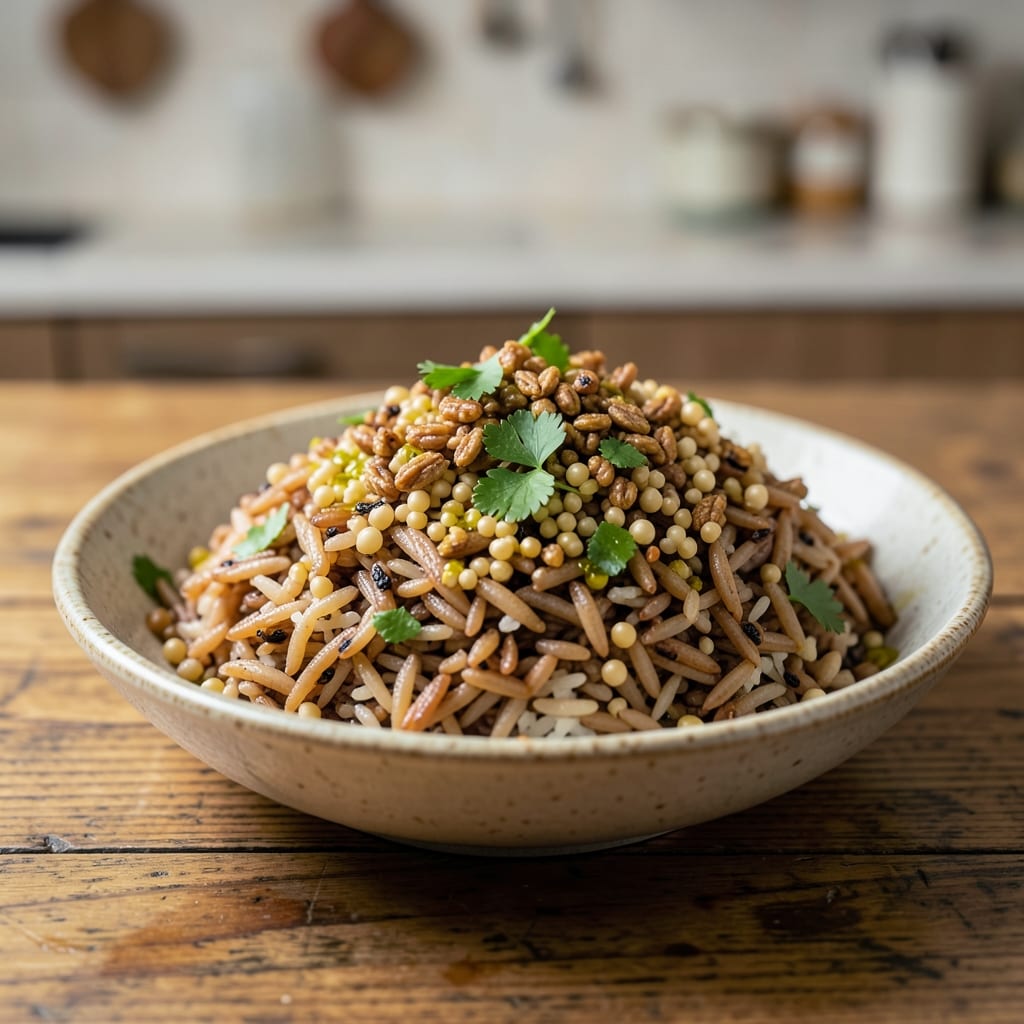
This 7-grain rice recipe transforms a simple pot of rice into a nutty, flavor-packed medley that elevates any meal. The blend of grains—wild rice, brown rice, quinoa, barley, and more—creates a hearty, textured base that absorbs seasonings beautifully. Perfect for busy weeknights or special occasions, this one-pot dish delivers restaurant-quality depth with minimal effort. The secret lies in proper preparation: rinsing each grain thoroughly, soaking them briefly, and simmering them together until tender and fragrant. Seasoning options are endless, but a simple mix of garlic, herbs, and toasted spices works wonders. The result? A fragrant, nutty rice that pairs equally well with roasted meats, grilled vegetables, or as a standalone dish. What sets this apart is the texture—each grain maintains its integrity while blending seamlessly, creating a satisfying bite. The aroma alone will have everyone at the table asking for seconds. Whether you serve it as a pilaf, stir-fry, or bowl base, this recipe is a game-changer for home cooks. For extra flavor, try adding toasted nuts or dried fruit before serving. Let’s get cooking!
Ingredients for 7 grain rice
Six distinct grains and a few key seasonings create this restaurant-worthy medley.
| Ingredient | Amount | Notes |
|---|---|---|
| Long-Grain Brown Rice 🌾 | 1 cup | Uncooked, rinsed thoroughly |
| Wild Rice Blend 🌾 | ½ cup | Uncooked, rinsed |
| Quinoa 🌾 | ½ cup | Rinsed to remove bitterness |
| Pearl Barley 🌾 | ¼ cup | Uncooked, rinsed |
| Short-Grain White Rice 🌾 | ¼ cup | Uncooked, rinsed |
| Farro 🌾 | ¼ cup | Pearled, rinsed |
| Bulgur Wheat 🌾 | ¼ cup | Fine grind, rinsed |
| Vegetable Broth 💧 | 4 cups | Low-sodium preferred |
| Garlic Cloves 🧄 | 4 cloves | Minced for aroma |
| Fresh Thyme 🌿 | 1 tbsp | Leaves only, chopped |
| Dried Rosemary 🌿 | 1 tsp | Crushed between fingers |
| Extra-Virgin Olive Oil 🫒 | 2 tbsp | For toasting grains |
| Salt 🧂 | 1 ½ tsp | Diamond Crystal preferred |
| Black Peppercorns 🌶️ | ½ tsp | Freshly cracked |
| Toasted Almond Slices 🥜 | ¼ cup | For garnish (optional) |
The grain selection is everything here. Wild rice and farro bring chewy texture, while quinoa and brown rice add heartiness. Most grocery stores carry these individually, but Whole Foods or Trader Joe's often have pre-mixed grain blends that save time. Look for grains labeled 'organic' if possible—they cook more evenly. The bulgur wheat cooks fastest, so don't skip rinsing it thoroughly to prevent grittiness. For the broth, Pacific Foods low-sodium options work best—they're clean and flavorful without overpowering the grains.
No wild rice? Substitute with additional brown rice or black rice—both hold up well in the texture. Short on thyme? Dried thyme at half the amount works in a pinch, but fresh is ideal for that bright aroma. The almonds can be swapped for toasted pecans or walnuts if you prefer. For extra depth, toast the grains in the olive oil for 2-3 minutes before adding liquid—this develops their natural nutty flavors. If you're using pre-toasted nuts for garnish, toast them fresh in a dry pan for 30 seconds to intensify their flavor. The rosemary should be crushed lightly between your fingers before adding to release its essential oils.
This grain blend keeps beautifully in the fridge for 5 days if stored in an airtight container with a paper towel pressed on top to absorb moisture. For longer storage, freeze portions in 1-cup servings—they reheat perfectly with a splash of water. The grains reheat best gently on the stove with a little extra broth. For meal prep, make a double batch and portion into containers with your choice of protein. The flavors actually improve after the first day as the grains absorb the seasonings. If you're serving this as a pilaf, let it sit covered for 10 minutes after cooking to allow the grains to plump fully.
Why You'll Love This Recipe
- One-Pot Magic: I swear by this—just toss all five grains into a single pot with broth, stir once, and walk away. No measuring cups, no separate pans, no stress.
- Nutty, Chewy, Crispy: Between the toasted wild rice, the chewy barley, and that buttery short-grain white rice finish, every bite has texture. Honestly, I reach for this over plain rice any day.
- Meal Prep MVP: Serve it cold in salads, warm under proteins, or straight from the pot with a fried egg. It’s the one grain bowl that works for breakfast, lunch, or dinner—no excuses.
- Budget-Friendly Powerhouse: Pearl barley and brown rice stretch my grocery budget, while quinoa adds protein without breaking the bank. Leftovers? They taste even better the next day.
Step-by-step instructions for a nutritious 7-Grain medley
Transform these seven grains into a harmonious, flavorful blend with minimal effort and maximum texture contrast.
Toast the Grains for Enhanced Flavor
Heat the 2 tablespoons extra-virgin olive oil in a large pot over medium heat. Add the 1 cup long-grain brown rice, 0.5 cup quinoa, 0.25 cup pearl barley, 0.25 cup farro, and 0.25 cup bulgur wheat all at once. Stir constantly for 5-7 minutes until the grains develop a nutty aroma and begin to turn golden around the edges.
This toasting step is crucial—it deepens the flavor of each grain and prevents them from becoming mushy. Keep a close eye on them; they should smell toasted and slightly sweet, similar to freshly ground nuts. If they start to darken too quickly, reduce the heat slightly. Once toasted, remove the pot from heat and set aside temporarily.
Build the Aromatic Base
In the same pot, add the 4 cloves minced garlic and cook for 30 seconds until fragrant—you should detect a warm, pungent aroma that fills your kitchen. Immediately add the 1 tablespoon chopped fresh thyme and 1 teaspoon crushed dried rosemary, stirring for another 20 seconds to release their oils.
Here's where the magic happens: the garlic should sizzle gently without browning, and the herbs should release their earthy, pine-like aromas. If the garlic begins to darken too quickly, remove the pot from heat for a moment to prevent bitterness. This aromatic foundation will infuse every grain with depth.
Combine with Broth and Season
Return the pot to medium heat and pour in the 4 cups vegetable broth, scraping up any browned bits from the bottom of the pot. Add the 1.5 teaspoons salt and 0.5 teaspoon cracked black peppercorns, then stir to combine. Bring the mixture to a gentle boil, then immediately reduce heat to low and cover tightly with a lid.
The grains should be submerged in the broth, but if any are peeking above the surface, add a splash of water to ensure even cooking. The broth should simmer gently—you should see just a few small bubbles at the edges, not a rolling boil. This controlled simmer prevents the grains from becoming tough or releasing excess starch.
Simmer Until Tender and Fluffy
Simmer the grains uncovered for 25-30 minutes, stirring occasionally to prevent sticking. The 0.5 cup wild rice blend and 0.25 cup short-grain white rice will cook faster, so check for doneness after 20 minutes. They're ready when the grains are tender but still have a slight bite—you should be able to pierce them easily with a fork, but they shouldn't feel mushy.
If the mixture looks dry before the grains are fully cooked, add 2-3 tablespoons water at a time to maintain the proper consistency. The grains should be tender but still hold their shape, with a slight chewiness that contrasts beautifully with the softer white rice. The broth should be mostly absorbed, leaving the grains moist but not swimming in liquid.
Rest and Garnish for Perfect Texture
Once the grains are tender, remove the pot from heat and let the mixture rest, covered, for 10 minutes. This resting period allows the grains to absorb any remaining liquid and develop their final texture. Fluff the grains gently with a fork, then taste and adjust the seasoning if needed—you may want to add a pinch more salt or a crack of black pepper to taste.
For serving, transfer the 7-grain medley to a platter and garnish with the 0.25 cup toasted almond slices for added crunch and visual appeal. The almonds should be sprinkled evenly over the top, providing a delightful textural contrast to the soft grains. Serve warm as a side dish or as a hearty vegetarian main course with a drizzle of extra-virgin olive oil and a sprinkle of fresh herbs.
Pro Tips For Making 7 Grain Rice
- Rinse the Barley First: The pearl barley in this mix is a moisture sponge—if you skip rinsing it, your rice will turn into a gluey mess. Toss it in a fine-mesh strainer and swirl under cold water until the water runs clear, then give it a quick shake in the pot before adding liquid. (Yes, even if the package says it’s pre-washed.)
- Toast the Quinoa and Wild Rice: I used to skip this, but now I brown the quinoa and wild rice blend in the pot for 2-3 minutes before adding liquid—just until you smell that nutty aroma. It cuts the earthy bitterness and gives the whole dish a deeper, toastier base. (Use medium heat or it’ll burn before the grains release their flavor.)
- Don’t Crowd the Pot: This mix expands more than you’d think, especially the short-grain white rice and quinoa. Cook it in a heavy pot with at least 1.5 inches of headspace—otherwise, you’ll end up with a steamy, uneven batch where the bottom turns mushy while the top stays dry. (I learned this after one disastrous Thanksgiving where I had to dump half the pot.)
- Use a Combination of Water and Broth: Plain water works, but for a richer flavor, split the liquid: 75% low-sodium vegetable broth and 25% water. The broth adds depth without overpowering the grains, and it’s especially noticeable in the pearl barley and brown rice. (Skip the salt boost—most broths already pack enough.)
Essential equipment for great 7 grain rice
Large Pot Essentials
A 6-8 quart heavy-bottomed pot with a tight-fitting lid is your best friend for this recipe. I swear by my All-Clad Stainless Steel Dutch Oven—it distributes heat evenly and prevents scorching during the toasting step. If you're on a budget, a Farberware Classic Stainless Steel Stock Pot works just as well for under $30. The key is a pot with sloped sides to prevent grains from sticking to the edges during simmering. 🔥
Precision Tools
Invest in a fine-mesh strainer (like the OXO Good Grips) for rinsing grains thoroughly—this removes excess starch that can make your rice gummy. I also recommend a microplane for garlic and a mortar and pestle to crush rosemary between fingers for maximum flavor release. A digital kitchen timer (I use the OXO Good Grips) ensures you don’t overcook the faster grains like quinoa and bulgur.
Broth Selection
Low-sodium vegetable broth is non-negotiable here—it lets the natural flavors of the grains shine. My go-to is Pacific Foods Organic Low-Sodium Vegetable Broth (available at most grocery stores), but Swanson Organic Low-Sodium is a great alternative. For extra depth, simmer 1 bay leaf with the broth while cooking, then remove it before serving. Never use bouillon cubes—they add too much salt and artificial flavors.
Garnish Must-Haves
Toasted almonds or nuts elevate this dish from side to main course. I keep Planters Toasted Almonds on hand for convenience, but for freshness, toast raw almond slices in a dry pan over medium heat for 3-4 minutes until golden. A small offset spatula helps distribute them evenly on top without crushing. Fresh herbs like parsley or cilantro add brightness—just chop them with a sharp chef’s knife right before serving. 🌿
Storage Containers
For meal prep, use glass airtight containers (like Pyrex 8-cup storage bowls) to maintain texture and prevent sogginess. I portion the cooked grains into 1-cup servings and store them in the fridge for up to 5 days or freeze for 3 months. When reheating, add 1 tablespoon water per cup of grains and cover with a damp paper towel to restore moisture. A steamer basket is also handy for reheating frozen portions without drying them out. ❄️
Nutrition facts
Frequently asked questions
Why does this recipe use so many different grains?
Each grain brings unique texture and nutrition to the dish! The wild rice adds chewiness, quinoa provides protein, and barley contributes a satisfying bite. Together, they create a well-rounded, hearty base that's more interesting than single-grain rice. Plus, the variety makes every bite exciting!
Can I substitute any of the grains if I can't find them all?
For wild rice, use extra brown rice or black rice. If you're missing farro, swap with couscous or more barley. The key is maintaining a mix of textures—just ensure at least 3 different grains remain. Always rinse substitutes thoroughly to remove excess starch.
How do I know when the grains are fully cooked?
They're done when each grain is tender but still holds its shape—pierce with a fork to check. The wild rice and quinoa cook fastest (20 minutes), while brown rice and barley may need up to 30 minutes. If the pot looks dry before they're ready, add 2-3 tbsp water at a time. The grains should be moist but not mushy.
Can I make this recipe in an Instant Pot or rice cooker?
Yes! For the Instant Pot, toast the grains first, then add broth and cook on high pressure for 10 minutes, followed by a 10-minute natural release. In a rice cooker, use the same ratio of grains to broth, cook on high for 30-35 minutes, then let it rest covered for 10 minutes. Both methods work well, but the stovetop gives you more control over the toasting step.
What's the best way to reheat leftover 7-grain rice?
Reheat gently on the stove with 1 tbsp water per cup of grains, covered, over low heat for 5-7 minutes. For extra moisture, place a damp paper towel over the lid. Microwaving works too—just sprinkle 1 tsp water over the grains and cover for 2 minutes. Never reheat dry or it'll turn crumbly!