
Main Courses
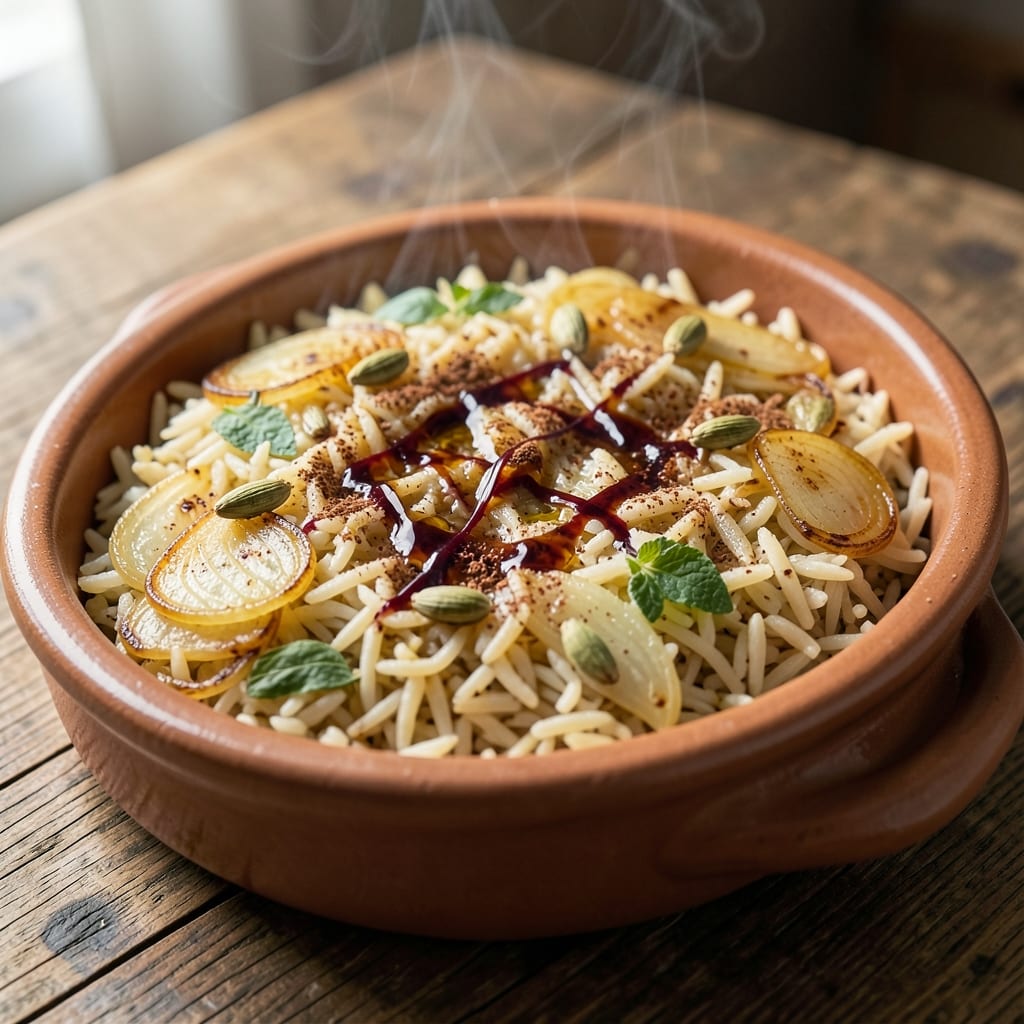
This Afghan basmati rice recipe transforms simple grains into a fragrant, golden masterpiece that defines Afghan cuisine. The secret lies in layering whole spices like cardamom and cinnamon with toasted onions, creating a flavor base that infuses every grain. Unlike basic rice, this method delivers perfectly fluffy texture with aromatic depth that pairs beautifully with lamb, chicken, or even as a standalone dish.
What sets this recipe apart is the careful balance of traditional techniques—soaking the rice for ideal texture, sautéing spices until fragrant, and simmering with just enough water to achieve that signature fluffiness. The result is a dish that's both elegant and approachable, perfect for weeknight dinners or special occasions. Ready in about 45 minutes, it delivers restaurant-quality results without requiring advanced skills.
Ingredients for afghan basmati rice
Eleven ingredients transform into a fragrant, golden Afghan basmati rice masterpiece with aromatic depth.
| Ingredient | Amount | Notes |
|---|---|---|
| Basmati Rice 🌾 | 1 ½ cups | Uncooked, long-grain preferred |
| Yellow Onions 🧅 | 1 whole | Thinly sliced, about 1.5 cups |
| Green Cardamom Pods 🌿 | 8 whole | Lightly crushed, seeds only |
| Ground Cinnamon 🌶️ | ½ tsp | Freshly ground preferred |
| Saffron Threads 🧡 | ¼ tsp | High-quality, premium grade |
| Vegetable Oil 🫒 | ½ cup | Light or neutral flavor |
| Salt 🧂 | 1 ½ tsp | Diamond Crystal preferred |
| Water 💧 | 3 cups | Room temperature preferred |
| Fresh Ginger 🌿 | 1 tbsp | Finely grated, fresh preferred |
| Black Peppercorns 🌶️ | 6 whole | Lightly crushed, fresh preferred |
| Bay Leaves 🍃 | 2 whole | Dried, standard size |
| Lemon Juice 🍋 | 1 tbsp | Freshly squeezed |
The quality of spices determines success here. Penzeys Spices or Whole Foods bulk section are ideal sources for cardamom and saffron—look for vibrant color and strong aroma. Saffron should be a rich, deep red, not faded or dull. The cardamom pods must be plump and aromatic; if they smell stale, replace them. Fresh ginger is non-negotiable for authentic flavor—Trader Joe's carries excellent organic ginger year-round. For the basmati rice, Indian Basmati from Whole Foods or Tilda brand delivers superior texture and aroma compared to generic supermarket options.
No cardamom? Cinnamon plus a pinch of nutmeg approximates the warmth, though it won't match the complexity. Substituting saffron with turmeric at half the amount gives color but lacks floral notes. The bay leaves can be omitted entirely if unavailable, but they contribute subtle earthiness. For the onions, yellow or red work best—sweet onions lack the necessary depth. The vegetable oil should have a neutral flavor; avocado oil is ideal for high-heat sautéing without overpowering the spices. If fresh ginger is unavailable, powdered ginger at one-third the amount works in a pinch, though texture differs.
Prep ahead for best results: Soak the rice for 30 minutes before cooking to remove excess starch and achieve perfect fluffiness. Store spices in airtight containers away from light—cardamom and cinnamon retain potency for 6-12 months, while saffron lasts 12-18 months if refrigerated. The cooked rice reheats beautifully; sprinkle 1 tsp water per cup and cover with a damp towel to maintain moisture. Portion into glass containers for up to 5 days in the refrigerator or freeze for 3 months—ideal for meal prep.
Why You'll Love This Recipe
- No-Soaking Needed: I swear by this trick—just rinse the basmati rice once, then let it sit for 10 minutes. That’s it. No overnight soaking, no waiting hours. The grains stay separate and fluffy, every single time.
- Golden Spice Magic: Between us, the cardamom and cinnamon do something wild to this rice. You start with warm onion and saffron, then those crushed pods release their earthy punch as it cooks—like a slow, aromatic hug for your taste buds.
- Weeknight & Wedding: This rice is my go-to for lazy nights (hello, 20-minute dinner) and the star of my holiday table. Serve it plain for a clean canvas, or pile it under curries, kebabs, or even breakfast eggs. It adapts without trying too hard.
- Budget Luxury: A single box of basmati and a few whole cardamom pods stretch for weeks. The saffron? A splash goes a long way. You’re feeding a crowd for pennies, but no one will guess it’s not a gourmet dish—because it is.
Step-by-step instructions for Afghan basmati rice
This method delivers restaurant-quality Afghan rice with aromatic spices and perfect texture every time.
Prepare the Spice Infusion
In a small saucepan, combine the 0.5 cup vegetable oil, 8 whole green cardamom pods (lightly crushed), 6 whole black peppercorns (lightly crushed), 2 whole bay leaves, 0.5 tsp ground cinnamon, 1 tbsp fresh ginger, and 1 whole yellow onion (thinly sliced). Warm over low heat for 5-7 minutes until the onions soften and the spices begin to perfume the oil.
This step builds the aromatic base. You'll know it's ready when the oil smells deeply spiced and the onions have just begun to caramelize at the edges. Remove from heat and let steep for 5 minutes to allow all flavors to meld. Strain through a fine-mesh sieve into a clean bowl, pressing gently on the solids to extract maximum flavor. Discard the spice packet.
Bloom the Saffron
While the spice oil infuses, prepare the saffron by dissolving the 0.25 tsp saffron threads in 2 tablespoons of the 3 cups water reserved for cooking. Set aside for 10 minutes to fully bloom. This step is crucial—the saffron's vibrant color and floral aroma develop when properly steeped in warm liquid.
I use a small glass jar for this process. The dark threads will dissolve completely into a golden liquid. If you notice any undissolved bits, gently stir with a spoon. This saffron infusion will later infuse the rice with its signature color and delicate floral notes.
Toast the Rice
Heat the spice-infused oil in a heavy-bottomed pot over medium heat. Add the 1.5 cups basmati rice and toast for 2-3 minutes, stirring constantly with a wooden spoon. You'll hear a popping sound as the rice begins to toast—this is normal and indicates the rice is developing its nutty flavor.
The rice should turn a pale golden color and smell distinctly nutty. This toasting step is essential for developing the rice's characteristic aroma and preventing a raw taste. Be careful not to burn the rice—it should be lightly toasted but not dark brown.
Cook the Rice
Add the remaining 2 tablespoons water (from the saffron infusion) and the 1.5 tsp salt to the pot. Stir once to distribute evenly, then add the remaining 2 cups water (from the original 3 cups) and the saffron infusion. Bring to a gentle boil over medium-high heat.
Once boiling, reduce heat to low, cover tightly with a lid, and simmer for 12-15 minutes. The rice should cook undisturbed in its own steam. After 10 minutes, check the rice—it should be tender but still slightly firm in the center. If it's not done, continue cooking for another 2-3 minutes.
Finish and Rest
When the rice is tender, remove from heat and let it sit covered for 5 minutes. This resting period allows the rice to absorb any remaining moisture and develop its final texture. Stir in the 1 tbsp lemon juice gently with a fork, being careful not to break the grains.
For the final step, fluff the rice gently with a fork to separate the grains. The finished rice should be fragrant with cardamom and saffron, with individual grains that are tender yet distinct. Serve immediately while still warm for the best texture and flavor experience.
Pro Tips For Making Afghan Basmati Rice
- TOAST THE ONIONS LOW: Use a heavy-bottomed pan and keep the heat at medium-low—high heat burns onions before they caramelize. I learned this the hard way when my first batch turned bitter; now I let them cook for 10-12 minutes until deep golden, stirring only when they stick. The flavor difference is night and day.
- CRUSH CARDMOM HARD: Split the pods lengthwise with the flat side of a knife and crush them with the back of a spoon—no blender, no skipping. Whole pods just float on top like decorative garnish. My grandmother swore by this, and she was right: the released oils infuse the rice with real warmth, not just flecks of green.
- SAFFRON IN WARM WATER: Bloom the saffron threads in 2 tablespoons of warm water for 5 minutes before adding to the rice—cold water makes them stubborn. I was skeptical until I tried it: the strands dissolve completely, giving every grain that signature golden hue and aroma. No clumps, no wasted threads.
- STEAM DON’T BOIL: Once the rice is soaked and drained, spread it evenly in the pot and add just enough water to reach the top—no more. Cover with a tight lid, turn the heat to medium-high for 5 minutes, then reduce to low and steam for 12-15 minutes. I skip the boiling step now; the rice stays fluffy and separate, never mushy.
Storing and reheating this afghan basmati rice
Refrigerator Storage
Let your Afghan basmati rice cool completely before storing—this prevents condensation that can make it soggy. Transfer to an airtight container (I love Pyrex glass containers) and refrigerate for up to 5 days. The spices continue to mellow, making flavors even more complex over time. Always leave ½ inch headspace to prevent pressure buildup from steam. 🧂
Freezer Prep Tips
For longer storage, portion rice into 1-cup servings in ziplock freezer bags—this makes reheating easier. Press out excess air to prevent freezer burn, then freeze for up to 3 months. Label with dates since texture degrades slightly after 2 months. I like adding a small piece of parchment paper between layers if freezing multiple portions. ❄️
Stovetop Reheating
My preferred method: Spread rice in a nonstick skillet over medium-low heat with 2 tbsp water per cup. Cover and heat for 5-7 minutes, stirring gently once. The residual spices will perfume your kitchen beautifully. For extra moisture, add 1 tsp lemon juice at the end—it brightens flavors after storage. 🔥
Microwave Revival
For quick meals, sprinkle 1 tsp water over rice in a microwave-safe dish, cover with a damp paper towel, and heat on 50% power for 2 minutes. Stir, then continue in 30-second intervals until hot. Avoid high power—it dries out the grains. A quick spray of water before microwaving helps maintain fluffiness. ✨
Texture Preservation
If rice seems dry after reheating, steam it: Place in a heatproof bowl over a pot of simmering water for 5 minutes, covered. For extra flavor, reheat with ½ tsp saffron-infused water (save some from initial cooking). Never reheat in the microwave uncovered—it turns rice gummy. The key is gentle, even heat. 💫
Nutrition facts
Frequently asked questions
Why does Afghan basmati rice need to be soaked before cooking?
Soaking removes excess surface starch that causes mushy texture. For this recipe, soak 1.5 cups basmati rice in water for 30 minutes—this helps create those signature fluffy, separate grains. The soaking also kickstarts the cooking process, ensuring even absorption of the aromatic spices during toasting.
Can I substitute jasmine rice for basmati in this recipe?
While jasmine rice has a lovely aroma, it won't achieve the same texture or flavor profile. Basmati's long grains and nutty taste are essential for authentic Afghan rice. If you must substitute, use long-grain white rice and increase the cooking water by 25%, but expect less distinct grains and a milder spice infusion.
What's the secret to getting perfectly fluffy Afghan rice?
The three key steps are: 1) toasting the rice in spice-infused oil, 2) using the right water ratio (2 cups water per 1.5 cups rice), and 3) resting covered for 5 minutes after cooking. The lemon juice at the end also helps maintain fluffiness by cutting through any residual starch. Never stir the rice while cooking—this releases starch and makes it gummy.
How do I adjust this recipe for a rice cooker?
Use the same ingredients but reduce water to 1.75 cups (instead of 3 cups). Toast the rice and spices in a separate pan first, then transfer to the rice cooker. Add the saffron-infused water and cook on the white rice setting. The rice cooker's gentle heat will prevent overcooking, and you'll still get that signature fragrance.
What's the best way to serve this Afghan basmati rice?
This fragrant rice pairs beautifully with grilled lamb chops, chicken kabobs, or spiced vegetable curries. For a complete Afghan meal, serve with garlic naan and a side of cucumber raita. The lemon juice in the recipe also makes it refreshing as a standalone dish with grilled shrimp or marinated tofu.