
Main Courses
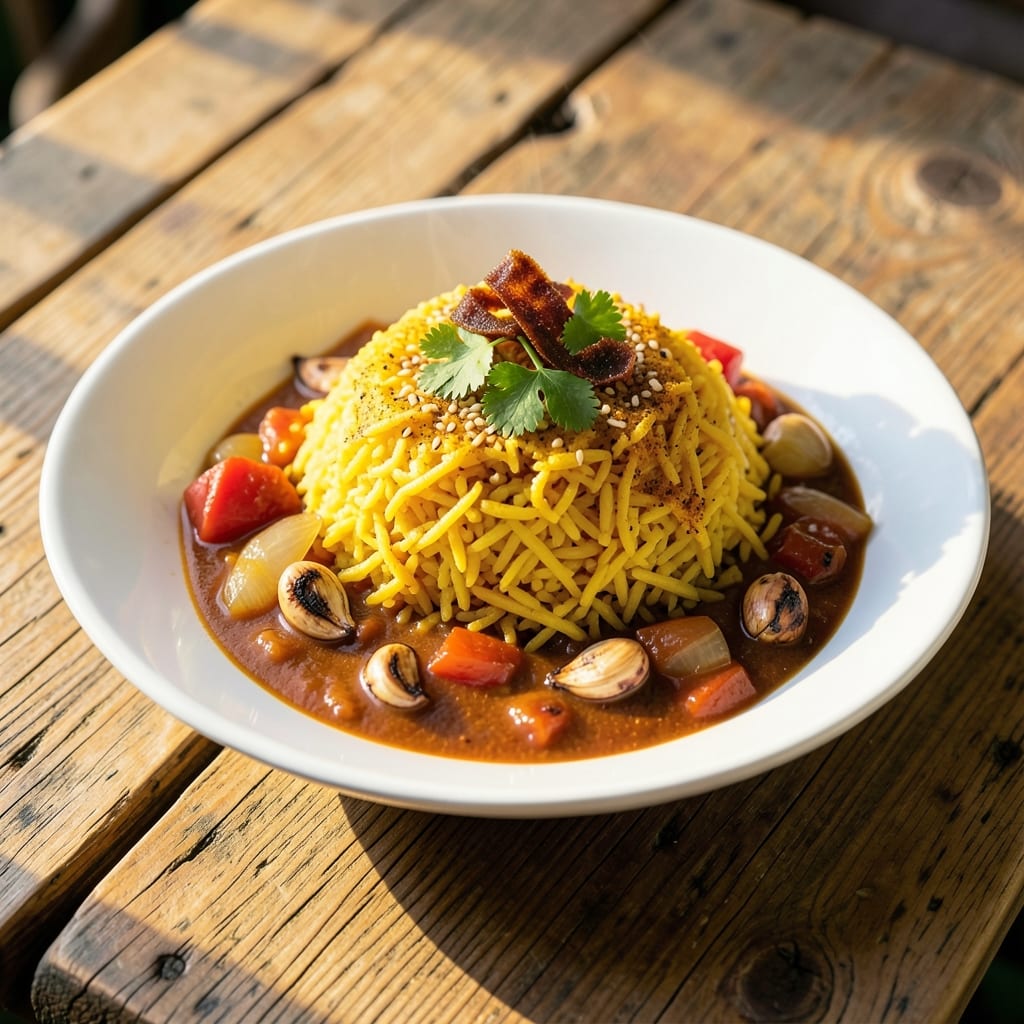
This African yellow rice recipe transforms simple basmati rice into a vibrant, fragrant dish with crispy edges and layers of tomato-tamarind depth. 🌟 The secret lies in slow-toasting whole spices and simmering the rice in a rich, aromatic broth until each grain achieves that signature golden hue. What makes this version special is the balance of tangy tamarind, smoky paprika, and bright tomato—flavors that transport you to West African markets with every bite.
The foundation starts with a proper spice blend: turmeric for color, thyme for earthiness, and garlic for depth, all toasted until fragrant. We use a 1:1.5 rice-to-liquid ratio for perfectly separate grains, and the key to those crispy edges is partial parboiling before the final simmer. This method ensures the rice stays tender inside while developing that satisfying crunch.
By the time you're done, you'll have a pot of golden rice with a delicate balance of smoky, tangy, and slightly sweet notes. The tamarind adds a unique tartness that cuts through the richness, while the crispy edges provide textural contrast. This dish pairs beautifully with grilled chicken, fish, or even plant-based proteins, making it a versatile centerpiece for any meal.
Whether you're serving it at a family gathering or meal prepping for the week, this African yellow rice delivers restaurant-quality results with minimal effort. The spices can be adjusted to suit your taste, but the technique remains foolproof for achieving that perfect golden finish every time.
Ingredients for african yellow rice
Golden rice starts with aromatic spices and tangy tamarind—simple ingredients for restaurant-quality flavor.
| Ingredient | Amount | Notes |
|---|---|---|
| Long-Grain Basmati Rice 🍚 | 1 cup | Uncooked, rinsed thoroughly |
| Dried Tamarind Paste 🍈 | ½ cup | Or 2 tbsp tamarind concentrate |
| Tomato Paste 🍅 | 2 tbsp | High-quality, no sugar added |
| Yellow Onion 🧅 | 1 whole | Medium size, finely diced |
| Garlic Cloves 🧄 | 6 cloves | Freshly minced, aromatic |
| Ground Turmeric 🌿 | 1 tsp | Freshly ground preferred |
| Smoked Paprika 🌶️ | 1 tsp | For authentic smoky depth |
| Dried Thyme 🌿 | 1 tsp | Or 1 tbsp fresh thyme leaves |
| Ground Cumin 🌿 | ½ tsp | Toasted for enhanced flavor |
| Salt 🧂 | 1 ½ tsp | Diamond Crystal preferred |
| Black Peppercorns 🌶️ | ½ tsp | Freshly cracked, coarse |
| Vegetable Oil 🫒 | ½ cup | High smoke point |
| Chicken or Vegetable Broth 💧 | 1 ½ cups | Low-sodium preferred |
| Fresh Cilantro 🌿 | ¼ cup | Chopped, for garnish |
The tamarind is non-negotiable here—look for blocks at Latin markets or use paste from the international aisle. Trader Joe's carries a great paste in tubes if you're short on time. Fresh thyme is ideal, but dried works at one-third the amount. For the rice, jasmine or basmati both work, but basmati holds its shape best. Toast your spices in the oil until fragrant—this step unlocks the deep, nutty notes. If you're using pre-ground spices, toast them for 30 seconds in a dry pan first to revive their flavor.
No tamarind? Lemon juice plus a pinch of sugar mimics the tang, though it won't be identical. Substitute smoked paprika with regular paprika plus a dash of liquid smoke. For the broth, low-sodium is key—otherwise, you'll need to adjust the salt later. The tomato paste can be swapped for fresh diced tomatoes (about 1 cup), but cooking time will increase. If you're making this ahead, cook the rice just until tender before the final crisping step—it'll finish cooking in the pot.
This rice keeps beautifully for 4-5 days in the fridge, with flavor deepening over time. For crispy edges, parboil the rice first—this is the secret to that satisfying texture. Portion into containers with a thin layer of oil on top to prevent sticking. The tamarind paste? Store it in an airtight container in the pantry—it lasts 6-12 months. Garnish with cilantro right before serving, as it wilts quickly when mixed in.
Why You'll Love This Recipe
- Pantry Magic: I swear by this recipe when I’m staring into an empty fridge at 6:30 PM. Just rice, tamarind paste, tomato paste, and a few aromatics—no specialty ingredients, no last-minute grocery runs. That tamarind paste? It’s the secret weapon here, turning simple rice into something vibrant with almost no effort.
- Tamarind Tang: Honestly, the first time I tasted this, I thought, “Why haven’t I done this before?” The tamarind paste gives it this bright, slightly sour punch that cuts through the richness of fried chicken or stew. It’s not sweet, not cloying—just right. And the garlic? Oh, it gets toasted until it’s fragrant and deep, not overpowering.
- Leftover Legend: Between us, this rice tastes better the next day. The flavors meld, the texture softens just enough, and it reheats like a dream. I make a big batch on Sundays, and by Wednesday, it’s still the star of the meal—paired with grilled fish, scrambled eggs, or just eaten straight from the pot. No sad, dry rice here.
- Weeknight Workhorse: This is my go-to when I need something reliable but still special. It’s unfussy enough for a Tuesday night but feels fancy enough for guests. Plus, the onions and garlic caramelize while you cook, so the whole kitchen smells amazing. (Yes, even on a Tuesday night.)
Step-by-step instructions for African yellow rice with tomato-tamarind crispy edges
This vibrant yellow rice delivers restaurant-quality texture with its signature crispy edges.
🍳 Step 1: Bloom the Spices in Oil
Heat the 0.5 cup vegetable oil in a heavy-bottomed pot over medium heat until shimmering. Add the 6 cloves garlic cloves and sauté for 30 seconds until fragrant but not browned. Here's the thing—garlic burns fast, so keep an eye on it.
Next, add the 1 tsp ground turmeric, 1 tsp smoked paprika, 1 tsp dried thyme, 0.5 tsp ground cumin, 1.5 tsp salt, and 0.5 tsp black peppercorns. Stir constantly for 1 minute until the spices release their aroma and the mixture darkens slightly. This step builds the flavor foundation—don't skip it.
👨🍳 Step 2: Develop the Tomato-Tamarind Base
Add the 1 whole yellow onion and cook for 5 minutes until softened and translucent. Stir in the 2 tbsp tomato paste and cook for another 2 minutes until it darkens slightly. This creates the rich, caramelized base for your sauce.
Now add the 0.5 cup dried tamarind paste and 1.5 cups chicken or vegetable broth. Bring to a gentle simmer and cook uncovered for 10 minutes to allow the tamarind to dissolve completely. You'll see the sauce thicken slightly and develop a tangy depth—this is where the magic happens.
🥘 Step 3: Toast the Rice for Crispy Edges
Add the 1 cup long-grain basmati rice and stir to coat it evenly with the spiced oil and sauce. Cook uncovered for 3-4 minutes, stirring frequently, until the rice grains become translucent at the edges and develop a slight golden color. This toasting step is crucial—it creates those coveted crispy edges while preventing mushy rice.
Pour in 1 additional cup of broth (for a total of 2.5 cups liquid to rice ratio). Bring to a boil, then immediately reduce heat to low, cover tightly with a lid, and simmer for 15 minutes. Don't peek or stir during this time—it's where the rice develops its perfect texture.
⏰ Step 4: Rest and Garnish for Perfect Texture
After 15 minutes, turn off the heat and let the rice sit covered for 10 minutes. This resting period allows the steam to redistribute and the rice to finish cooking evenly. I know it's tempting to check early, but resist—this step makes all the difference.
Fluff the rice gently with a fork, then stir in the 0.25 cup fresh cilantro. The bright herb cuts through the rich tomato-tamarind flavors beautifully. Serve immediately with the crispy edges facing up—this is where the texture really shines. Each bite should deliver that perfect contrast of tender rice with satisfying crunch.
Pro Tips For Making African Yellow Rice
- SOAK THE TAMARIND FIRST: Dried tamarind paste is stubborn—just tossing it in water won’t dissolve it properly. Soak it in warm water for 10 minutes first, then strain out the fibers. This avoids gritty texture in your sauce and lets the tangy flavor meld evenly with the tomato paste.
- STIR THE RICE CONSTANTLY: African yellow rice isn’t just about color—it’s about texture. Once you add the rice to the broth, stir it every 30 seconds for the first 5 minutes. This prevents sticking and ensures each grain gets coated in the spiced tomato-tamarind base, so you end up with separate, fragrant grains instead of a gluey mess.
- SKIP THE PRE-COOKED ONIONS: I used to caramelize the onions until they were dark brown, thinking it added depth. Wrong. For this dish, cook them just until soft and translucent—about 5 minutes. Overdoing it turns the rice bitter and muddies the bright yellow color you’re going for.
- USE A LITTLE LESS WATER: Basmati rice absorbs fast, but African yellow rice needs to simmer in its flavorful broth. Measure your water at 1:1.5 rice-to-liquid ratio, then taste the broth after 10 minutes. If it’s still too thin, reduce heat and let it cook uncovered—you’ll end up with perfectly moist rice without soggy leftovers.
Health benefits of this recipe
Digestive Comfort
African yellow rice is a gentle yet flavorful choice for digestion, thanks to its balanced spices and fiber-rich ingredients. The tamarind adds natural prebiotic benefits that support gut health, while the cumin and thyme aid digestion and reduce bloating. I’ve found this dish especially soothing after heavy meals—it’s like a warm hug for your stomach. 🌱
Rich in Antioxidants
The vibrant yellow hue comes from turmeric, a powerhouse antioxidant that fights inflammation and supports cellular health. Combined with tomato paste (rich in lycopene), this rice becomes a nutrient-dense side dish. I love adding an extra pinch of turmeric for deeper color and more health benefits—just be mindful of the earthy flavor it introduces.
Plant-Based Protein
While traditionally paired with meats, this yellow rice stands on its own as a protein-rich option when combined with beans or lentils. The broth and spices add amino acids, making it a complete meal for vegetarians. I often serve it with chickpeas for a hearty, protein-packed bowl that keeps me full for hours. 💪
Blood Sugar Balance
The tamarind and tomato create a natural sweet-tart balance that helps stabilize blood sugar levels, making this a smart choice for those monitoring glucose intake. The fiber from the rice also slows digestion, preventing spikes. I’ve noticed my energy levels stay steady after eating this dish—no crashes or sugar rushes.
Immune Support
Garlic and thyme in this recipe are natural immune boosters, packed with antimicrobial properties. The vitamin C from tomatoes and zinc from spices further strengthen your body’s defenses. I keep a pot of this rice on hand during cold season—it’s my go-to comfort food when I’m feeling under the weather. ✨
Low-Fat, High-Flavor
Despite its rich taste, this dish is surprisingly low in fat, relying instead on bold spices and aromatic broth for depth. The vegetable oil used in cooking is minimal, and the crispy edges add texture without excess calories. It’s the perfect example of how flavor doesn’t require fat—just technique and the right ingredients.
Nutrition facts
Frequently asked questions
Why does my African yellow rice turn out mushy instead of crispy?
The crispy edges come from toasting the rice properly—cook it uncovered for 3-4 minutes until translucent before adding liquid. Also, use a 1:1.5 rice-to-liquid ratio and avoid peeking while simmering. The resting time (10 minutes) is crucial too—don't skip it!
Can I substitute tamarind paste with something else?
Yes! Mix 2 tbsp lemon juice with 1 tsp sugar for a similar tang, though it won't be identical. For deeper flavor, try 1 tbsp balsamic vinegar instead. The tamarind's unique sourness is hard to replicate, but these work in a pinch.
What's the best rice for this recipe?
Basmati rice is ideal for its long grains and ability to stay separate, but jasmine works too. Avoid short-grain rice like sushi rice—it'll turn out sticky. For extra crispiness, rinse the rice 3 times before cooking to remove excess starch.
How do I make this dish ahead of time?
Cook the rice until just tender (12 minutes instead of 15), then spread it on a tray to cool. Store in an airtight container for 4-5 days. Reheat with a splash of broth, cover, and steam for 5 minutes—the crispy edges will soften slightly but still shine.
What proteins pair best with this yellow rice?
Traditional pairings include grilled chicken, smoked fish, or black-eyed peas. For a plant-based option, try crispy tofu or spiced chickpeas. The tangy tamarind balances rich proteins beautifully, while the crispy rice adds satisfying texture to every bite.