
Main Courses
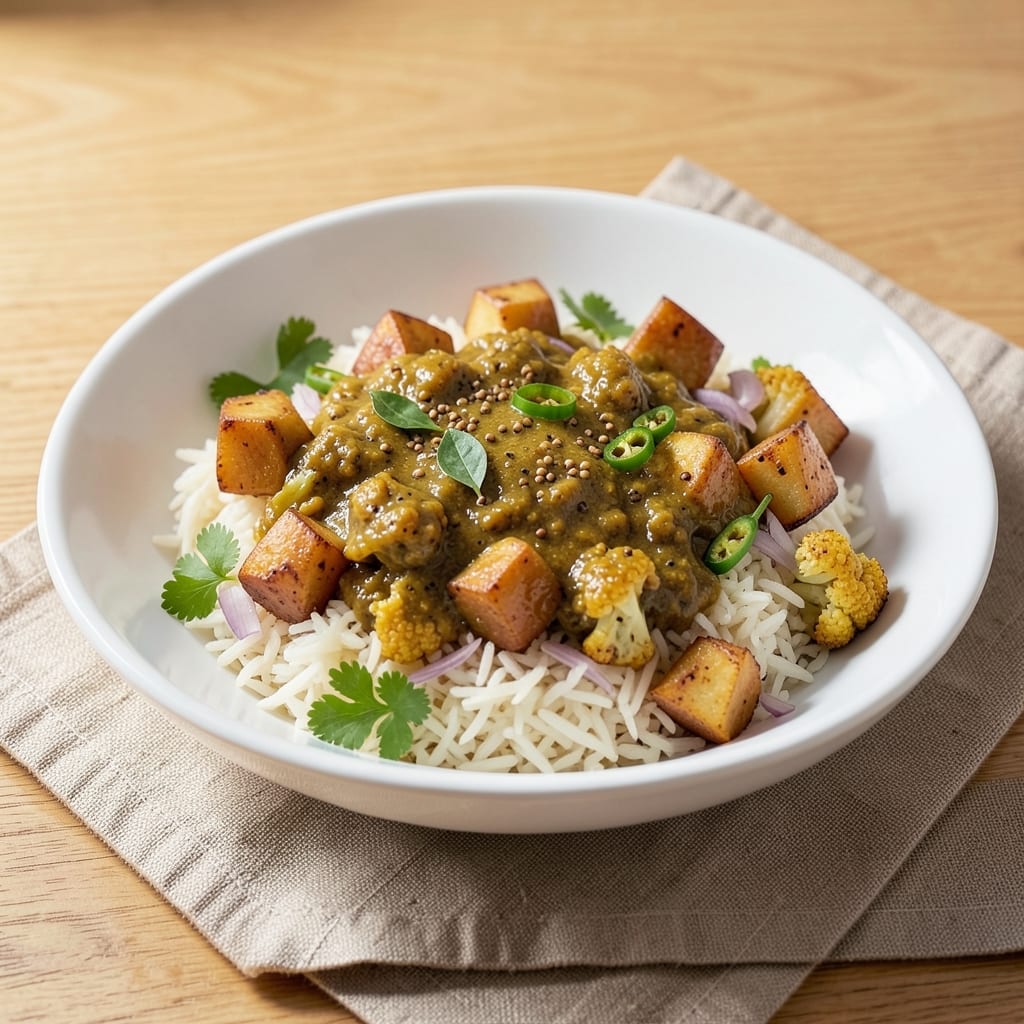
Aloo gobi rice recipe transforms simple potatoes and cauliflower into a fragrant, one-pot masterpiece that balances earthy spices with tender vegetables and perfectly cooked rice. This dish, a staple in North Indian cuisine, delivers restaurant-quality flavor without requiring multiple pots or complex techniques. The secret lies in layering spices—cumin, coriander, and garam masala—while letting the vegetables caramelize slowly for maximum depth.
The beauty of this recipe is its simplicity: one pot means minimal cleanup, and the aromatic tempering (tadka) of mustard seeds and curry leaves elevates the dish from ordinary to extraordinary. I’ve adapted the traditional method to work on both stovetops and pressure cookers, ensuring it fits seamlessly into your routine while delivering authentic taste. The rice cooks directly in the same pot, absorbing the rich flavors of the curry for a cohesive, satisfying meal.
What you’ll end up with is a vibrant, spiced potato and cauliflower curry served over fluffy basmati rice, where each bite offers a perfect harmony of textures—tender cauliflower florets, creamy potatoes, and fragrant rice. The dish is hearty enough for a weeknight dinner but elegant enough for guests, and it pairs beautifully with a cooling raita or crispy papadums for a complete meal.
Ready in about 45 minutes, this recipe is designed to be foolproof, with clear instructions for balancing spices and achieving the ideal consistency. Whether you’re a beginner or an experienced cook, the step-by-step process ensures you’ll achieve that signature aloo gobi flavor every time. Let’s get started!
Ingredients for aloo gobi rice
One-pot simplicity with bold Indian flavors—just 16 ingredients for a restaurant-worthy dish.
| Ingredient | Amount | Notes |
|---|---|---|
| Basmatî Rice 🍚 | 1 cup | Uncooked, long-grain preferred |
| Russet Potatoes 🥔 | 2 medium | Cut into 1-inch cubes |
| Cauliflower 🧅 | 1 head | Cut into florets, stems removed |
| Mustard Seeds 🌶️ | 1 tsp | Whole, for tempering |
| Curry Leaves 🌿 | ¼ cup | Fresh, lightly packed |
| Green Chilies 🌶️ | 2 whole | Slit lengthwise, seeds removed |
| Cumin Seeds 🌿 | 1 tsp | Toasted for aroma |
| Ground Coriander 🌿 | 1 tbsp | Freshly ground preferred |
| Turmeric Powder 🧂 | ½ tsp | Bright yellow color |
| Garam Masala 🌶️ | 1 tsp | Freshly ground for best flavor |
| Fresh Ginger 🌿 | 1 tbsp | Grated, fine texture |
| Onion 🧅 | 1 medium | Finely chopped, white part |
| Tomato Paste 🍅 | 1 tbsp | Squeeze tube preferred |
| Salt 🧂 | 1 tsp | Adjust to taste |
| Vegetable Oil 🫒 | 3 tbsp | High smoke point |
| Water 💧 | 2 ½ cups | Room temperature |
The cauliflower and potatoes are the stars here, so pick firm, fresh heads—no rubbery florets. Whole Foods or Indian grocery stores carry the best quality, but regular supermarkets work too. For the spices, Penzeys or local Indian markets have the freshest garam masala, but don’t stress if you only have store-brand—just make sure it’s labeled ‘ground’ not ‘pre-mixed.’ The mustard seeds should pop loudly when toasted—that’s your cue they’re ready. If you can’t find curry leaves, dried will work at half the amount, though fresh is ideal.
No curry leaves? Bay leaves or a pinch of dried thyme adds depth. Running low on garam masala? Mix equal parts cumin, coriander, and cinnamon for a quick swap. The tomato paste can be fresh tomato purée if you’re feeling fancy—just blend 1 cup diced tomatoes and strain. For the ginger, fresh is non-negotiable—ground loses its punch fast. The green chilies can be omitted entirely if you prefer mild heat, but Kashmiri chilies add color without heat. If your potatoes are waxy, Russets will caramelize better in the one-pot.
Prep the veggies first—cutting everything evenly ensures even cooking. The spices keep for months in a cool, dark cabinet, but the curry leaves and mustard seeds lose potency after 6 months. For extra flavor, rinse the rice before cooking—removes excess starch and prevents mushiness. Leftovers reheat beautifully—just add 2 tbsp water per serving and simmer covered for 5 minutes. Freezes for 3 months if stored in an airtight container.
Why You'll Love This Recipe
- One-Pot Magic: I swear by this recipe—just toss the chopped potatoes, cauliflower, and rice into one pot with the spices, and let it simmer. No switching pans, no extra bowls, and honestly? The mustard seeds sizzling in the oil make my whole kitchen smell like home.
- Craving-Worthy Crunch: That perfect texture—crispy edges on the potatoes, tender florets, and fluffy basmati—is what keeps me coming back. The curry leaves add this earthy depth that makes it taste like a restaurant dish, not just dinner.
- Lunchbox Hero: Between us, this is my go-to for meal prep. The flavors only get better the next day, and I pack it in containers with a squeeze of lemon—my kids eat it cold or reheated, no complaints. (Yes, even on a Tuesday night.)
- Pantry Staple Power: I use whatever potatoes and cauliflower are on sale, and the spices last forever. It’s the kind of dish that stretches a budget without sacrificing taste, and honestly? I’ve fed six people with one batch and still had leftovers for lunch.
Step-by-step instructions for aloo gobi rice
This one-pot wonder delivers aromatic basmati rice with tender potatoes and cauliflower—all infused with South Indian spices.
Temper the Spices for Maximum Aroma
Heat the 3 tablespoons vegetable oil in a heavy-bottomed pot over medium heat. Add the 1 teaspoon cumin seeds and let them sizzle for 30 seconds until they release their nutty aroma. Here's the thing—don't walk away. Cumin burns faster than you think.
Next, add the 1 teaspoon mustard seeds and let them pop audibly. Immediately follow with the 0.25 cup curry leaves and 2 whole green chilies (slit lengthwise). Stir for 20 seconds until the curry leaves darken slightly and the chilies turn vibrant green. This quick tempering step unlocks the full flavor potential of your dish.
Sauté the Aromatic Base
Add the 1 medium onion (finely chopped) and sauté for 3-4 minutes until translucent and golden at the edges. Here's where the magic happens: the onions should caramelize just enough to form a sweet base without browning. If they stick, add a splash of water.
Stir in the 1 tablespoon fresh ginger (finely grated) and cook for 30 seconds until the raw aroma disappears. Add the 1 tablespoon ground coriander, 0.5 teaspoon turmeric powder, and 1 teaspoon salt. Mix well for 1 minute until the spices bloom and fill your kitchen with an irresistible fragrance.
Add Vegetables and Tomato Paste
Add the 2 medium russet potatoes (cut into 1-inch cubes) and 1 head cauliflower (cut into florets) to the pot. Toss everything together for 2 minutes to coat the vegetables evenly with the spice mixture. This ensures every bite gets that perfect balance of flavors.
Squeeze in the 1 tablespoon tomato paste and stir vigorously for 1 minute to distribute it completely. The paste will darken slightly as it melts into the oil, creating a rich foundation for the rice. Here's the critical part: don't let the vegetables brown at this stage. Keep the heat at medium to maintain control.
Combine Rice and Liquid for Perfect Texture
Add the 1 cup basmati rice and mix gently for 1 minute to coat each grain with the spiced vegetables. Pour in the 2.5 cups water and add the 1 teaspoon garam masala. Stir once more to distribute everything evenly.
Bring the mixture to a boil over high heat, then immediately reduce to low heat. Cover the pot with a tight-fitting lid and cook for 15 minutes without disturbing it. This resting period allows the rice to absorb moisture evenly and develop that signature South Indian texture—fluffy yet slightly sticky.
Rest and Fluff for Restaurant-Quality Results
After 15 minutes, turn off the heat and let the rice sit covered for 10 minutes. This resting period is crucial—it allows the steam to redistribute and the flavors to meld completely. Here's the secret: resist the temptation to peek or stir during this time.
Once rested, fluff the rice gently with a fork, being careful not to break the grains. The final texture should be light and separate, with each grain distinct yet clinging to the spiced vegetables. If any liquid remains, let it evaporate uncovered for 2-3 minutes over low heat. Serve immediately with a dollop of yogurt or a side of raita for the perfect balance.
Pro Tips For Making Aloo Gobi Rice
- CUT CAULIFLOWER SMALLER: I learned this the hard way—big florets stay tough and undercooked. Break the cauliflower into 1-inch chunks (yes, even the thick stems) so they soften evenly alongside the potatoes. If you’re impatient like me, give them a quick blanch in salted water for 2 minutes first—it cuts down on cooking time later.
- SALT THE POTATOES FIRST: Toss the peeled potatoes in a bowl with 1 teaspoon of salt and let them sit for 10 minutes before cooking. This draws out moisture and guarantees they don’t turn mushy later. (Skip this, and you’ll end up with sad, waterlogged spuds in your rice.)
- LOW AND SLOW FOR RICE: Once the water boils for your basmati, drop the heat to actual low—just a simmer, not a lazy bubble. Cover tightly and walk away for 12 minutes. Peeking or high heat ruins the texture. (I know, I know, but trust the process.)
- TOAST THE SPICES HARD: When you fry the mustard seeds and curry leaves, crank the heat to medium-high and let them sizzle for 30 seconds before adding anything else. This deepens their flavor (and stops them from tasting raw). If they’re popping like popcorn, you’re on the right track.
Essential equipment for this recipe
Heavy-Bottomed Pot
Your heavy-bottomed pot is non-negotiable for this recipe—it distributes heat evenly and prevents burning during the 15-minute simmer. I use a 5-quart enameled cast iron Dutch oven (like Le Creuset), but any heavy pot with a tight-fitting lid works. The key is the thickness—thin pots cause hot spots that burn your spices before the vegetables cook through. If you don’t have one, a stainless steel pot with thick walls is your next best option. 🔥
Tight-Fitting Lid
A tight-fitting lid is essential for trapping steam and cooking the rice perfectly. I’ve had the best results with a glass or metal lid with a rubber seal—these create a better seal than lightweight plastic lids. If your lid doesn’t seal tightly, the rice will cook unevenly, leaving some grains hard and others mushy. Pro tip: Place a damp paper towel under the lid to prevent steam from escaping. This small trick makes a huge difference in texture.
Fine-Mesh Strainer
For rinsing your basmati rice, a fine-mesh strainer is a game-changer. It removes excess starch more effectively than a colander, preventing the rice from turning gummy. I use a stainless steel strainer from OXO because it’s durable and has tight mesh. Rinse the rice under cold water until the water runs clear—this step is crucial for fluffy, separate grains. Skip it, and you’ll end up with sticky rice that clumps together.
Chef’s Knife and Cutting Board
Even cooking starts with evenly cut vegetables, so invest in a sharp 8-inch chef’s knife (like Wüsthof) and a sturdy cutting board. Cut the potatoes and cauliflower into uniform 1-inch cubes and florets—this ensures they cook at the same rate. A dull knife makes prep frustrating and uneven cuts, which leads to some veggies being undercooked while others turn mushy. If you’re not comfortable with knives, a mandoline can help, but practice makes perfect here.
Wooden Spoon
A wooden spoon is your best friend for stirring and fluffing the rice without scratching your pot. I prefer a long-handled spoon (like Ozeri Touch-Grip) because it gives you better control and keeps your hand away from the heat. Wood distributes heat better than metal and won’t react with acidic ingredients like tomatoes. Use it to gently fold the rice and vegetables at the end, ensuring everything is coated in those fragrant spices. 💫
Measuring Spoons and Cups
Precision matters with spices—too much salt or garam masala can overpower the dish, while too little leaves it bland. Use stainless steel measuring spoons (like OXO Good Grips) for accuracy, especially for the ½ teaspoon turmeric and 1 teaspoon garam masala. For the 2.5 cups water, a liquid measuring cup ensures you don’t under- or over-water the rice. Trust me, measuring correctly is the difference between a dry, crunchy pot and a perfectly balanced one-pot meal.
Nutrition facts
Frequently asked questions
Can I make this dish without curry leaves?
Yes! If you don't have curry leaves, substitute with ½ teaspoon dried curry powder or 2-3 dried bay leaves. For a milder flavor, you can also use 1 teaspoon fresh thyme. Just remember that fresh curry leaves add a unique aroma that's hard to replicate, but these alternatives will still give you great flavor.
How do I adjust the spice level for kids or sensitive stomachs?
Reduce the green chilies to 1 whole chili or omit them entirely. For milder heat, replace them with ½ teaspoon Kashmiri red chili powder (which adds color without heat). Also, cut the garam masala to ½ teaspoon and reduce the mustard seeds to ½ teaspoon. The dish will still be flavorful but much gentler on sensitive palates.
Can I use frozen cauliflower instead of fresh?
Fresh cauliflower gives the best texture, but you can use frozen if needed. Thaw and drain it completely first, then pat dry with a paper towel. Add it to the pot 5 minutes after the potatoes go in, as it cooks faster. You may need to adjust the water by ¼ cup less since frozen veggies release more moisture.
Why did my rice turn out mushy? Mushy rice usually happens from one of three things: overcooking, not rinsing the rice, or too much water. Always rinse basmati rice until the water runs clear, and stick to the 2.5 cups water measurement. If your rice still turns out mushy, try reducing water by ¼ cup next time. Also,
Can I make this recipe in an Instant Pot?
Follow the same steps until adding the rice and water. Use the High Pressure setting for 5 minutes with 1 cup water (instead of 2.5 cups). After cooking, let the pressure release naturally for 10 minutes, then fluff with a fork. The Instant Pot version cooks faster but may need ½ cup less water since pressure cooking reduces evaporation.