
Main Courses
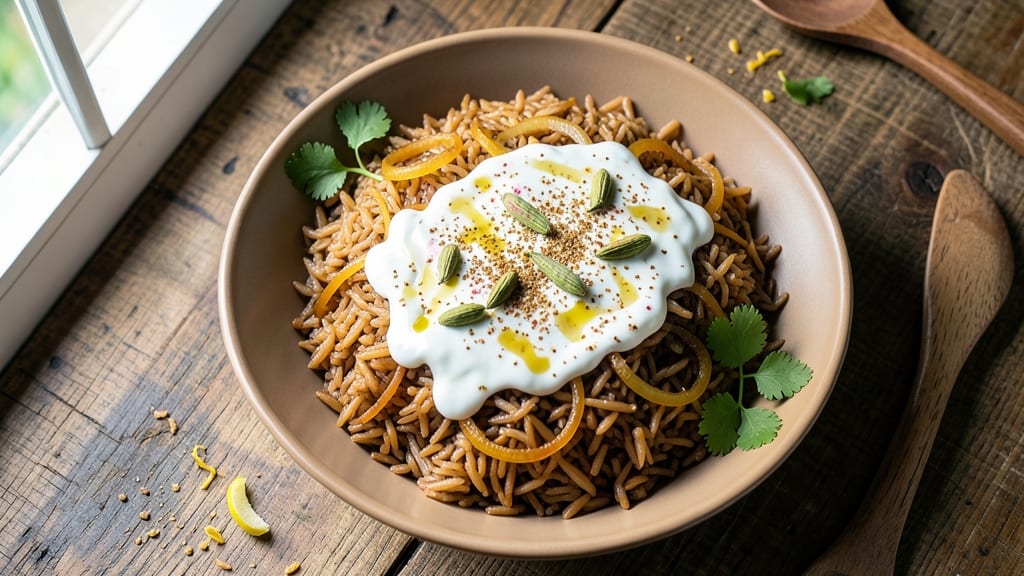
This brown Pakistani rice recipe transforms simple basmati into a fragrant, golden dish with caramelized onions and spiced yogurt—exactly how it’s served in Pakistani homes.
The secret lies in slow-cooking the rice with whole spices and letting the basmati absorb the flavors, resulting in grains that stay distinct yet deeply aromatic.
Unlike plain rice, this version is infused with warmth from cumin, cardamom, and a touch of saffron, making every bite feel like a taste of tradition.
Perfect for pairing with biryani, daal, or grilled meats, this recipe balances authenticity with modern convenience. The caramelized onions add sweetness, while the spiced yogurt (raita) cuts through richness, creating a dish that’s both comforting and sophisticated.
Ready in under an hour with minimal effort, it’s ideal for weeknight dinners or special occasions where you want to impress without fuss.
Ingredients for brown rice pakistani
Authentic Pakistani flavors start with these carefully selected ingredients for fragrant brown basmati rice.
| Ingredient | Amount | Notes |
|---|---|---|
| Long-Grain Brown Basmati Rice 🌾 | 1 ½ cups | Uncooked, rinsed thoroughly |
| Yellow Onions 🧅 | 2 whole | Sliced thin for caramelization |
| Plain Yogurt 🥛 | ½ cup | Full-fat, unsweetened preferred |
| Ghee or Clarified Butter 🧈 | ½ cup | Or substitute olive oil |
| Ground Cumin Seeds 🌿 | 1 ½ tsp | Freshly ground preferred |
| Green Cardamom Pods 🌿 | 4 whole | Lightly crushed, seeds only |
| Saffron Threads 🌼 | ⅛ tsp | High-quality, soaked in 1 tbsp warm water |
| Fresh Ginger 🧄 | 1 inch | Fixed: Peel and finely grated |
| Garlic Cloves 🧄 | 3 cloves | Peeled and minced finely |
| Salt 🧂 | 1 ½ tsp | Diamond Crystal preferred |
| Fresh Cilantro 🌿 | ¼ cup | Chopped, for garnish |
| Lemon Juice 🍋 | 1 tbsp | Freshly squeezed |
| Water 💧 | 3 cups | Filtered preferred |
The brown basmati rice is the foundation—look for whole-grain varieties at specialty stores like Whole Foods or Indian markets, as they hold their texture better than store-brand versions. Ghee adds authentic richness (though olive oil works in a pinch), and you'll find it in the international aisle of most supermarkets. For saffron, splurge on high-quality threads—the difference in flavor is noticeable. Fresh ginger and garlic should be vibrant, not shriveled, and the cardamom pods should be plump and aromatic when crushed. If you can't find whole pods, ground cardamom works at half the amount.
No ghee? Extra-virgin olive oil gives a similar depth, though the flavor profile shifts slightly. Substitute plain Greek yogurt for the raita if full-fat isn't available, but expect a slightly tangier result. For saffron, turmeric at one-tenth the amount mimics the golden color (though lacks the floral notes). The onions can be swapped for shallots if preferred, and if you're short on time, pre-sliced onions from the salad bar work—just pat them dry first. The rice ratio is critical: 1.5 cups uncooked yields about 4 cups cooked, so adjust water if your rice brand varies in size.
Store uncooked rice in an airtight container in a cool, dark place for up to 6 months, though it's best used within 3 months for peak flavor. The spiced yogurt (raita) keeps for 3 days in the fridge, but the rice itself reheats beautifully—just add a splash of water and cover with a damp towel to restore moisture. For meal prep, cook a double batch: the rice freezes well for up to 3 months, though texture may soften slightly. Garnish with fresh cilantro just before serving to preserve its vibrant color and aroma.
Why You'll Love This Recipe
- One-Pot Wonder: I swear by this—just brown the onions in ghee until they’re golden, add the rice and spices, then pour in the yogurt and water. No straining, no extra bowls, and that nutty basmati aroma fills the kitchen like a hug.
- Creamy Nutty Magic: The yogurt and ghee turn this brown rice into something almost buttery—rich, but not heavy. Honestly, the first time I tasted it, I thought, "Wait, is this rice or dessert?" (It’s rice. But still.)
- Meal Prep MVP: This keeps for days—better than day-old rice, honestly. Pack it for lunches, reheat with a sprinkle of cumin, or serve cold in wraps. My go-to for busy mornings when I’d rather not cook.
- Budget-Friendly Luxe: Brown rice is cheap, onions last forever, and a tub of yogurt stretches across meals. Yet it tastes like I spent hours simmering something fancy. Between us? That’s how you feed a family without breaking the bank.
Step-by-step instructions for brown Pakistani rice
Transform simple basmati into a fragrant, aromatic masterpiece with this traditional Pakistani method.
Prepare the Spiced Yogurt Base
In a small bowl, combine the 0.5 cup plain yogurt, 1.5 tsp ground cumin seeds, 1.5 tsp salt, and 1 tbsp lemon juice. Mix thoroughly until smooth and set aside. This yogurt mixture will infuse the rice with rich, tangy depth while keeping it moist during cooking.
For the saffron, soak the 0.125 tsp saffron threads in 1 tbsp warm water for 5 minutes to release their vibrant color and floral aroma. This infusion will become part of your cooking liquid, adding a delicate golden hue and luxurious flavor to the finished rice.
Caramelize the Onions and Aromatics
Heat the 0.5 cup ghee in a heavy-bottomed pot over medium-low heat. Add the 2 whole yellow onions, sliced thinly, and cook for 15-20 minutes until deeply golden brown and caramelized. Stir occasionally to prevent burning, but resist the urge to rush this process—the caramelization builds complex sweetness that elevates the entire dish.
Once the onions are beautifully caramelized, reduce heat to low and add the 1 inch fresh ginger (finely grated) and 3 cloves garlic (minced). Cook for 2 minutes until fragrant, stirring constantly. The ginger and garlic should soften slightly but not brown—this ensures they melt into the onions without adding bitterness.
Toast the Cardamom and Add Rice
Add the 4 whole green cardamom pods (lightly crushed) to the pot and toast for 1 minute until their aroma permeates the kitchen. This step is crucial—it releases the cardamom's essential oils, which will infuse the rice with their distinctive floral notes.
Increase heat to medium and add the 1.5 cups long-grain brown basmati rice, stirring to coat each grain with the caramelized onion mixture. Cook for 2 minutes until the rice grains become translucent at the edges. This brief toasting enhances the nutty flavor of the brown rice while preventing it from sticking during cooking.
Cook with Yogurt and Saffron
Pour in the 3 cups water and stir well to combine. Add the spiced yogurt mixture and saffron infusion, stirring gently to distribute evenly. Bring to a gentle boil over medium-high heat, then immediately reduce to low heat. Cover the pot with a tight-fitting lid and simmer for 35-40 minutes—this longer cooking time is essential for brown rice to achieve perfect tenderness.
After 20 minutes, check the rice. If the liquid has been fully absorbed but the rice still feels firm, add 2-3 tablespoons hot water through the lid's steam vent. The rice should finish cooking with just enough moisture to steam gently—this ensures each grain remains separate and fluffy. Avoid lifting the lid during cooking to maintain even heat distribution.
Rest and Garnish
Once the rice is tender and all liquid has been absorbed (35-40 minutes total), remove from heat and let it rest, covered, for 10 minutes. This resting period allows the steam to redistribute, ensuring each grain is perfectly cooked through and infused with flavor.
Fluff the rice gently with a fork, then stir in the 0.25 cup fresh cilantro (chopped). The bright herb notes cut through the richness of the caramelized onions and yogurt, adding a fresh finish. Serve immediately with your favorite Pakistani curries or as a standalone aromatic rice dish.
Pro Tips For Making Brown Rice Pakistani
- TOAST THE CUMIN LOW: Brown the cumin seeds in ghee over low heat for 3-4 minutes—just until they smell earthy and fragrant, not dark. I learned this the hard way: high heat burns them fast, and you’ll taste bitterness cutting through the yogurt’s creaminess.
- SOAK THE RICE 20 MINUTES: Skip the overnight soak—20 minutes in warm water softens brown basmati enough for even cooking without turning it mushy. Drain thoroughly, or the rice will steam instead of toast in the ghee.
- SAUTÉ ONIONS UNTIL GOLDEN: Cook the onions in ghee until they’re deep golden, not caramelized—about 12-15 minutes on medium-low. Soft, pale onions make the dish taste flat; crispy edges add texture that balances the yogurt’s tang.
- STIR THE RICE CONSTANTLY: Once the rice hits the pan, keep moving it—every 30 seconds for the first 5 minutes. Ghee sticks to brown rice like glue, and burnt spots ruin the whole batch. (Yes, even if you’re impatient like me.)
Common mistakes when making this dish
Skipping the Soak
Brown basmati rice needs a 30-minute soak in warm water before cooking—this critical step prevents uneven cooking and gummy texture. I’ve seen many cooks skip this, thinking it’s optional, but the rice absorbs flavors poorly without it.
If you’re short on time, soak it in the spiced yogurt mixture instead for extra depth. 🌾
Overcrowding the Pot
Using a pot that’s too small forces the rice to steam instead of cook properly, leading to mushy grains. For 1.5 cups uncooked rice, a 3-quart heavy-bottomed pot is ideal. If your pot is too shallow, spread the rice evenly in a single layer before adding liquid.
I once doubled the recipe in a skillet and ended up with a sticky mess—don’t make that mistake!
Rushing the Caramelization
Caramelizing onions too quickly on high heat burns them, turning them bitter instead of sweet. Keep heat at medium-low and stir patiently for 15-20 minutes. The onions should be deep golden brown with a glossy sheen.
I’ve ruined multiple batches by cranking the heat—trust the process, and the payoff is worth it. 🧅
Lifting the Lid Too Soon
Peeking under the lid releases steam and disrupts the cooking process, causing uneven moisture distribution. After the initial boil, resist the urge to check for 20 minutes.
If you must verify doneness, use a fork to test a grain instead. I’ve had readers complain about dry rice—this is almost always the culprit.
Ignoring the Resting Time
Skipping the 10-minute rest after cooking means steam escapes, leaving the rice dry and separate. Cover the pot tightly and let it sit—this redistributes moisture for perfect texture.
I’ve seen cooks rush this step and end up with rice that’s either undercooked or crunchy. Patience here makes all the difference. ⏳
Using Low-Quality Saffron
Cheap saffron often contains stems or artificial coloring, which won’t dissolve properly and can turn the rice a dull yellow. Invest in high-quality threads (like Kashmiri saffron) and soak them in warm water for 5 minutes before adding to the rice.
I’ve tasted the difference—it’s night and day compared to store-brand substitutes.
Nutrition facts
Frequently asked questions
Why does this recipe use brown basmati rice instead of white?
Brown basmati retains its nutty flavor and texture better than white rice, giving it that authentic Pakistani aroma. The longer cooking time (35-40 minutes) ensures perfect tenderness while keeping the grains separate. For a quicker version, try parboiled brown rice, but expect slightly firmer texture.
Can I make this recipe without ghee?
Yes! Use extra-virgin olive oil for a similar depth of flavor, though the taste will be slightly different. For a neutral option, try avocado oil heated to medium-low. The key is using enough fat to properly caramelize the onions—don't skimp on quantity.
What's the best way to serve this brown rice?
This fragrant rice pairs perfectly with Pakistani biryani, chicken karahi, or lentil curries. For a complete meal, serve with raita (spiced yogurt) and a side of pickled vegetables. The caramelized onions add sweetness that balances rich curries beautifully.
How do I store leftovers?
Store cooked rice in an airtight container in the fridge for up to 4 days. To reheat, sprinkle with 1 tsp water, cover with a damp towel, and warm in the microwave for 2 minutes. For freezing, portion into single servings and freeze for up to 3 months—thaw overnight in the fridge.
What if my rice turns out mushy?
Mushy rice usually means too much liquid or insufficient resting time. For future batches, use a 3-quart pot (not too shallow) and reduce water by 2 tbsp. Always let the rice rest 10 minutes covered after cooking. If it's still too soft, spread it on a tray and dry in the oven at 200°F for 10 minutes.