
Main Courses
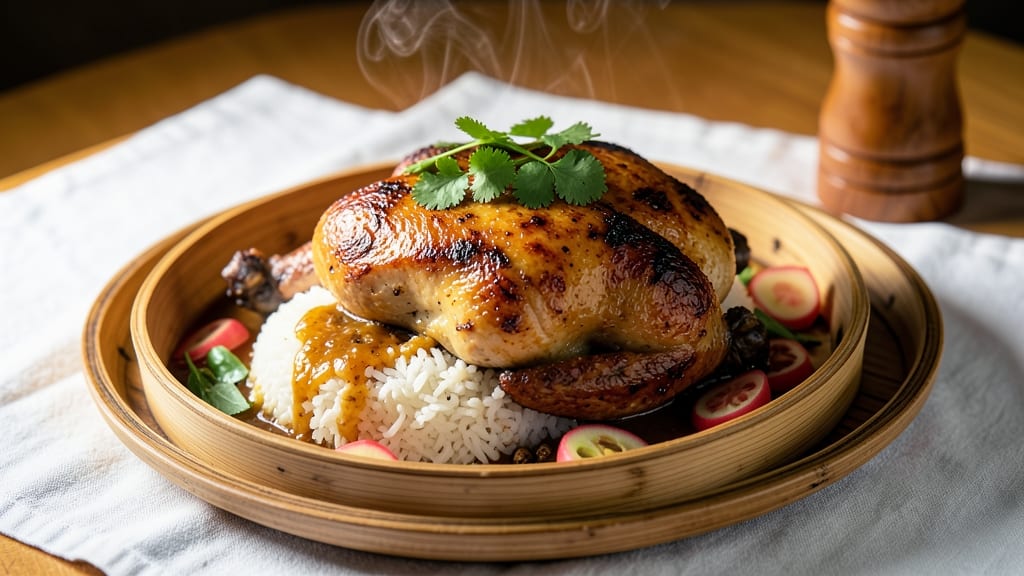
This Cantonese chicken rice recipe delivers the iconic comfort of Hong Kong-style dining—tender poached chicken infused with five-spice, served over fragrant jasmine rice simmered in aromatic broth.
The secret lies in the slow-poaching technique, where whole chicken absorbs the warm spices while staying perfectly moist, paired with rice cooked in a ginger-garlic broth that builds depth over time. Every bite balances savory, spicy, and herbal notes, making it a dish that feels both nostalgic and refined.
The process begins with a fragrant five-spice marinade (star anise, cinnamon, fennel, cloves, and Szechuan peppercorn) that transforms ordinary chicken into something deeply aromatic. Meanwhile, the jasmine rice steams in chicken broth infused with garlic, ginger, and a touch of soy sauce, creating a light yet flavorful base.
Garnished with crispy fried shallots and chili sauce, this dish captures the essence of Cantonese home cooking—simple ingredients elevated through technique and patience.
Ingredients for cantonese chicken rice
Fragrant spices and tender chicken meet aromatic rice in this Cantonese classic.
| Ingredient | Amount | Notes |
|---|---|---|
| Whole Chicken 🍗 | 3 ½ lb | Bone-in, skin-on preferred for flavor |
| Jasmine Rice 🍚 | 2 cups | Uncooked, long-grain preferred |
| Chicken Broth 💧 | 4 cups | Homemade or low-sodium store-bought |
| Star Anise 🌿 | 2 whole | Whole pods for infusion |
| Cinnamon Sticks 🌿 | 2 whole | 1-inch pieces for aroma |
| Fennel Seeds 🌿 | 1 tsp | Lightly toasted for depth |
| Cloves 🌿 | 4 whole | Lightly crushed for release |
| Szechuan Peppercorns 🌶️ | 1 tsp | Toasted for numbing aroma |
| Garlic Cloves 🧄 | 6 cloves | Smashed for infusion |
| Fresh Ginger 🧅 | 2 tbsp | Thinly sliced, peeled |
| Soy Sauce 🍶 | 2 tbsp | Light or all-purpose |
| Shallots 🧅 | 3 whole | Thinly sliced for frying |
| Vegetable Oil 🫒 | ½ cup | High smoke point preferred |
| Chili Sauce 🌶️ | 2 tbsp | Store-bought or homemade |
| Salt 🧂 | 1 ½ tsp | Adjust to taste |
The five-spice blend is non-negotiable—Penzeys or Asian markets carry the best whole spices. Star anise and Szechuan peppercorns should be lightly toasted before adding to the broth for maximum aroma. For the chicken, bone-in, skin-on pieces (thighs and drumsticks work best) absorb more flavor during poaching. If using a whole chicken, split it into quarters for even cooking. The jasmine rice should be Day Break or Calrose varieties—anything else lacks the floral aroma. Costco or Whole Foods stock these reliably, or check the Asian aisle at Trader Joe's for budget-friendly options.
No star anise? 1 tsp ground cinnamon plus ½ tsp fennel seeds mimics the warmth. Szechuan peppercorns can be skipped but add that signature numbing heat—substitute with ½ tsp black pepper if unavailable. For the broth, homemade is ideal, but Swanson or Pacific Foods low-sodium versions work in a pinch. The shallots can be swapped for green onions (use twice the amount) if you prefer milder flavor. Chili sauce varies by brand—Lee Kum Kee is the gold standard, but any sweet and spicy variety will do. If your soy sauce is dark, reduce by half to avoid overpowering the dish.
The five-spice broth keeps for 5 days refrigerated or 3 months frozen—double the batch for leftovers. Poached chicken reheats beautifully; warm gently in broth to retain moisture. Jasmine rice stays fresh 3 days refrigerated or 1 month frozen, but day-old rice is actually preferred for this dish. Fried shallots lose crispiness after 2 days—make fresh or store in an airtight container with a paper towel to absorb moisture. Chili sauce can be refrigerated for 6 months unopened, but homemade versions last only 1 month.
Why You'll Love This Recipe
- One-Pot Magic: I swear by this method—simmer the whole chicken with star anise and cinnamon sticks in the same pot where the rice cooks. No extra dishes, no stress. The broth infuses the rice with that deep, aromatic flavor while the chicken falls apart tender.
- Fragrant Every Bite: That star anise and cinnamon combo? It’s the secret weapon. The broth becomes rich and warm, while the rice soaks up all the natural sweetness from the chicken and spices. Honestly, the first time I smelled it cooking, I knew I’d be eating this all week.
- Leftovers That Shine: Between us, this dish actually tastes better the next day. The rice gets even softer, and the chicken stays juicy. I make a whole chicken on Sunday, and by Wednesday, we’re still eating it—no sad, dry leftovers here.
- Budget-Friendly Feast: A whole chicken costs less than two takeout meals, and you get rice, broth, and protein from one bird. Plus, the spices are cheap but make it feel like a restaurant dish. My wallet and my family thank me every time.
Step-by-step instructions for Cantonese chicken rice
Master this classic technique for tender, fragrant poached chicken and aromatic jasmine rice.
Prepare the Five-Spice Poaching Broth
In a large pot, combine the 4 cups chicken broth, 2 whole star anise, 2 whole cinnamon sticks, 1 tsp fennel seeds, 4 whole cloves, and 1 tsp Szechuan peppercorns. Bring to a gentle simmer over medium heat for 10 minutes to infuse the broth with aromatic flavors. The liquid should smell deeply spiced—this is your foundation for poaching.
While the broth simmers, lightly toast the 1 tsp fennel seeds and 1 tsp Szechuan peppercorns in a dry skillet for 30 seconds until fragrant. Add the 6 cloves garlic and 2 tbsp fresh ginger to the broth, then reduce heat to low. This controlled simmer prevents the spices from burning while extracting their full essence.
Poach the Chicken to Perfection
Pat the 3.5 lb whole chicken dry with paper towels—this ensures crisp skin. Submerge the chicken completely in the simmering broth, ensuring the liquid covers it entirely. Cover the pot and poach for 45 minutes, maintaining a gentle simmer (small bubbles, no rolling boil). The chicken is done when it reaches an internal temperature of 165°F and the meat pulls away from the bone with ease.
Remove the chicken and let it rest in a warm place for 15 minutes. This resting period allows the juices to redistribute, ensuring every bite remains moist. Reserve the poaching broth for later use—it's packed with flavor and will elevate the rice.
Cook the Jasmine Rice with Poaching Aroma
Rinse the 2 cups jasmine rice under cold water until the water runs clear—this removes excess starch for fluffy grains. In a separate pot, toast the 3 whole shallots in 0.5 cup vegetable oil over medium heat until golden brown, about 5 minutes. Add the rinsed rice and stir for 1 minute to coat the grains in the shallot oil.
Pour in the reserved poaching broth (strain out whole spices if desired) and add 2 tbsp soy sauce and 1.5 tsp salt. Bring to a boil, then reduce heat to low, cover tightly, and simmer for 15 minutes. Let it sit off heat for 10 minutes—the steam will finish cooking the rice to perfection. Fluff with a fork before serving.
Prepare the Chili Sauce and Finish
In a small saucepan, combine 2 tbsp chili sauce and 1 tbsp water. Simmer over low heat for 3 minutes until slightly thickened. This sauce should be vibrant and glossy—ready to drizzle over the rice and chicken.
Carve the chicken into serving pieces and arrange over the jasmine rice. Drizzle generously with the chili sauce and garnish with additional sliced ginger and garlic cloves for freshness. Serve immediately for the ultimate Cantonese dining experience.
Pro Tips For Making Cantonese Chicken Rice
- POACH CHICKEN LOW AND SLOW: Skip the high-heat boil—simmer the whole chicken at 160°F (71°C) for 1.5–2 hours. I learned this the hard way after shredding rubbery meat from rushing it; slow cooking keeps the skin tender and broth rich. Use a heavy pot with just enough water to cover the chicken, and add star anise/cinnamon sticks 30 minutes before the end to infuse the broth properly.
- TRIM EXTRA FAT FROM BROTH: After poaching, skim off the thick layer of fat that rises to the top while the broth is still hot. I used to leave it in, thinking it added flavor—until I realized it just made the rice greasy. A fine-mesh strainer or ladle works; don’t strain out the aromatics, just the floating fat.
- USE PARBOILED RICE FOR FASTER COOKING: Parboil the jasmine rice for 5 minutes before adding it to the broth, then finish cooking in the simmering liquid. This cuts total rice time from 20 to 12 minutes—no soggy texture, either. Just drain it well first, or the rice will turn mushy.
- SHRED CHICKEN WHILE STILL HOT: Pull the chicken from the broth when it’s just done, then shred it immediately with two forks while it’s still warm. I was skeptical until I tried it—cooling the chicken first makes it tougher to pull apart. Work quickly, or the meat will tighten up.
Storing and reheating your cantonese chicken rice
Broth Storage Essentials
The fragrant five-spice broth is the heart of this dish, so store it properly to preserve its depth. After poaching, let it cool completely before transferring to airtight containers—I prefer glass jars for easy reheating.
The broth stays fresh in the fridge for 5 days or freezes beautifully for 3 months. When reheating, warm it gently over low heat until steaming, then reduce to a simmer for 5 minutes to revive the aromatics. 💧
Chicken Reheating Secrets
Poached chicken reheats best when submerged in fresh broth—never microwave it dry! Place chicken pieces in a pot with ½ cup reserved broth and warm over medium-low heat for 8-10 minutes.
The broth will rehydrate the meat and restore its tender texture. For leftovers, I like to slice the chicken first, then reheat—this ensures even warming without drying out the edges. 🍗
Rice Refresh Techniques
Day-old jasmine rice actually improves for this dish, but if you need to reheat freshly cooked rice, steam it in a bamboo steamer over boiling water for 5 minutes.
For microwave reheating, sprinkle 1 tsp water over the rice and cover with a damp paper towel for 1 minute 30 seconds on high. The key is moisture—never let the rice dry out, or it'll turn gummy. 🍚
Garnish Preservation
Fried shallots lose crispiness quickly, so store them in an airtight container with a paper towel to absorb moisture. They'll stay fresh for 2 days at room temperature or 1 week in the fridge.
For chili sauce, keep it refrigerated in its original container—it stays vibrant for 6 months. I like to portion individual servings of chili sauce into small jars for easy drizzling. 🌶️
Complete Meal Assembly
When reheating a full meal, warm the rice first, then add the chicken and broth together. The residual heat will gently cook the chicken while the rice absorbs extra flavor. Garnish with fresh fried shallots and chili sauce right before serving—this keeps everything crisp and vibrant.
For a shortcut, assemble everything in a single pot and warm through for 5 minutes on low. 💫
Nutrition facts
Frequently asked questions
Can I use chicken thighs instead of a whole chicken?
Bone-in, skin-on chicken thighs work perfectly for this recipe. Use about 1.5 lbs of thighs (about 6 pieces) instead of the whole chicken, and reduce the poaching time to 25-30 minutes since they cook faster. The skin will crisp beautifully while staying juicy inside.
What makes the rice fragrant in this recipe?
The secret lies in the shallot oil and the poaching broth. Toasting whole shallots in oil infuses the rice with nutty depth, while the aromatic spices (star anise, cinnamon, and ginger) from the broth create that signature floral aroma. Don't skip rinsing the rice—this removes excess starch so the grains stay separate and fragrant.
Can I make this dish vegetarian?
While traditional Cantonese chicken rice uses chicken, you can adapt it! Replace the chicken with mushroom "chicken" (king oyster or shiitake) or tofu poached in the spiced broth. For the rice, use vegetable broth instead of chicken broth, and add 1 tsp miso paste for umami depth. The technique remains the same—just adjust the protein source.
Why does my chicken turn out dry when poaching?
Dry chicken usually means the broth wasn't hot enough or the chicken wasn't rested properly. Always maintain a gentle simmer (small bubbles) and never boil vigorously—this prevents the chicken from toughening. After poaching, let it rest 15 minutes before carving so juices redistribute. If using store-bought broth, choose low-sodium to avoid over-salting the chicken.
How do I know when the rice is perfectly cooked?
The rice should be tender with a slight bite in the center when you press a grain between your fingers. After cooking, let it sit 10 minutes off heat—this lets steam finish cooking the grains evenly. If you taste a grain and it's undercooked, return it to the pot covered for 2-3 more minutes over low heat. Overcooked rice becomes mushy, so timing is key!