
Side Dishes
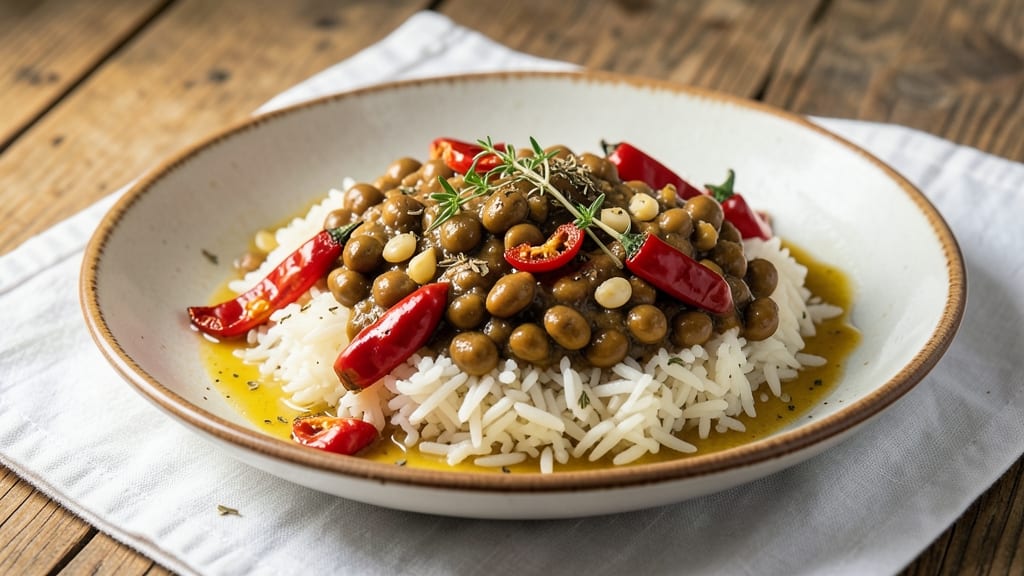
This Caribbean pigeon peas and rice recipe brings the bold, spiced coconut flavors of island kitchens straight to your table. 🌴 The secret lies in slow-cooked pigeon peas—tender, flavorful, and infused with thyme, scotch bonnet, and creamy coconut milk—that transform simple rice into a hearty, one-pan meal.
What makes this dish special is how its flavors deepen overnight, making leftovers even more delicious than the first serving.
Perfect for feeding a crowd or meal prepping, this recipe delivers authentic Caribbean taste with minimal effort. The aromatic blend of spices—garlic, ginger, and allspice—creates layers of warmth, while the coconut milk adds richness that balances the dish’s natural tanginess.
Whether you're serving it alongside grilled fish, jerk chicken, or on its own, this pigeon peas and rice is a restaurant-quality side that feels like a home-cooked embrace.
Ingredients for caribbean pigeon peas and rice
Sixteen ingredients. One-pot magic. Caribbean flavors that sing even better tomorrow.
| Ingredient | Amount | Notes |
|---|---|---|
| Pigeon Peas (Dried) 🌱 | 1 ½ cups | Rinsed for impurities, no soaking needed |
| Long-Grain White Rice 🍚 | 2 cups | Uncooked, jasmine or basmati preferred |
| Coconut Milk (Full-Fat, Canned) 🥥 | 13 ½ oz | High-quality brand like Thai Kitchen |
| Scotch Bonnet Peppers 🌶️ | 2 whole | Seeds removed for less heat |
| Fresh Thyme 🌿 | ¼ cup | Stems removed, loosely packed |
| Garlic Cloves 🧄 | 4 cloves | Minced for even distribution |
| Fresh Ginger 🧅 | ½ cup | Finely grated, about 2 oz |
| Ground Allspice 🌶️ | 1 tsp | Freshly ground preferred |
| Bay Leaves 🍃 | 2 whole | Dried, for deep flavor infusion |
| Onion (Yellow) 🧅 | 1 whole | Medium size, finely chopped |
| Vegetable Oil 🫒 | 2 tbsp | High smoke point for sautéing |
| Salt 🧂 | 1 ½ tsp | Diamond Crystal preferred |
| Black Peppercorns 🌶️ | ½ tsp | Freshly cracked for aroma |
| Lime Juice 🍋 | 2 tbsp | Freshly squeezed, about 1 lime |
| Fresh Cilantro 🌿 | 0.2 cup | Chopped, for garnish only |
Pigeon peas are the heart of this dish—look for dried, not canned—they absorb flavors like a sponge. Trader Joe's and Latin markets often carry them, but if you can't find them, gungo peas or butter beans work in a pinch. The coconut milk? Thai Kitchen or Aroy-D are my go-tos—they're rich and creamy without being watery. For the scotch bonnet, handle with care (gloves recommended) and remove seeds for a milder kick. Fresh thyme and ginger are non-negotiable here—they make all the difference between good and restaurant-quality. If you're using dried ginger, double the amount but toast it first for depth.
No scotch bonnet? Habanero or jalapeño will work, but you'll need way less (start with 1/4 pepper). Fresh thyme wilt fast? Dried thyme at one-third the amount is better than skipping it. The lime juice can be bottled, but fresh is brighter. For the allspice, whole berries toasted and ground taste like heaven—if you're in a hurry, pre-ground is fine. The onion and garlic are your flavor base, so don't rush the chopping. Carrot or celery can replace half the onion if you're prepping ahead—they hold up better to long cooking.
This dish tastes even better the next day, so make extra. Store leftovers in the fridge for 4-5 days or freeze for 3 months—the flavors meld beautifully over time. For meal prep, portion into containers with a little extra coconut milk on top to keep it moist. The rice will firm up when reheated, so spritz with water and microwave for 30 seconds. Garnish with fresh cilantro right before serving—it brightens everything up.
Why You'll Love This Recipe
- Here’s what sold me: that first bite of creamy coconut milk meeting the slow-cooked peas with a hint of Scotch bonnet fire. It’s not overwhelming—just enough to wake up your taste buds without sending you for water. (Yes, even on a Tuesday night.)
- I’ll be real: dried pigeon peas are a steal compared to canned, and coconut milk stretches farther than you’d think. A single can feeds four, and the thyme and Scotch bonnet add luxury without breaking the bank. Plus, it’s a pantry staple I never regret buying.
Step-by-step instructions for Caribbean pigeon peas and rice
Here's how to build this aromatic one-pot masterpiece—where spiced coconut and toasted rice create magic.
🍳 Step 1: Sauté the Aromatic Base
Heat the 2 tablespoons vegetable oil in a heavy pot over medium heat until shimmering. Add the finely chopped onion (1 whole) and cook for 5 minutes until soft and translucent. Here's the thing—don't rush this step. You want the onions to caramelize slightly for deeper flavor.
Add the 4 cloves minced garlic and 0.5 cup finely grated ginger, cooking for 1 minute until fragrant. Stir in the 1 teaspoon ground allspice and 0.5 teaspoon cracked black peppercorns, letting them toast for 30 seconds—this releases their essential oils and builds the spice foundation. Real talk: if you skip this step, your dish will taste flat.
🍳 Step 2: Build the Spiced Coconut Sauce
Pour in the 13.5 ounces full-fat coconut milk and bring to a gentle simmer over medium-low heat. Add the 2 whole bay leaves and 0.25 cup fresh thyme (stems removed). Let this mixture bubble quietly for 5 minutes until the coconut begins to thicken slightly—you'll see a subtle sheen develop on the surface.
Here's where the magic happens: add the 1.5 cups dried pigeon peas (rinsed) and 2 cups long-grain white rice, stirring gently to coat everything evenly. The rice should absorb the coconut milk immediately. This step ensures every grain gets infused with that signature Caribbean coconut-spice flavor. Don't walk away—stir occasionally for 2 minutes to prevent sticking.
🔥 Step 3: Simmer Until Perfectly Tender
Add 1.5 teaspoons salt and bring the mixture to a boil over high heat. Once boiling vigorously, immediately reduce to low heat, cover tightly with a lid, and simmer for 40 minutes. I know it seems counterintuitive to cover after boiling, but this prevents the rice from drying out while allowing steam to build flavor.
After 40 minutes, check for doneness—gently stir and test a rice grain. It should be tender with just a hint of bite. If it's still firm, continue cooking in 5-minute increments until perfect. The pigeon peas will soften gradually, releasing their earthy flavor into the coconut base. This is the moment that matters: patience here prevents mushy rice.
🥘 Step 4: Finish with Bright Flavors
Remove the pot from heat and let it sit covered for 10 minutes. This resting period allows the rice to finish absorbing the coconut milk and the flavors to meld completely. Stir in the 2 tablespoons lime juice and 2 whole seeded Scotch bonnet peppers (chopped), distributing them evenly throughout.
For the final touch, fold in the 0.2 cup chopped fresh cilantro—this adds freshness that cuts through the richness. Taste and adjust seasoning if needed. The dish should balance sweet coconut, spicy heat, and bright acidity. If it's too thick, add 2-3 tablespoons water to loosen it to your preferred consistency.
Pro Tips For Making Caribbean Pigeon Peas And Rice
- SOAK PEAS OVERNIGHT: I learned this the hard way—skipping the soak means tough, mealy peas that fight you every bite. Toss them in water (about 3 cups per cup of peas) for 8–12 hours, then drain. The longer they soak, the creamier they’ll get when cooked.
- SAUTE THYME UNTIL FRAGRANT: Don’t just toss in thyme stems—crush them first and fry in the oil until the pot smells like a Caribbean breeze. A minute of sizzling releases the oils that actually flavor the dish, not just float on top.
- STIR COCONUT MILK IN LAST: After the peas and rice have simmered 15 minutes, let them dry out slightly before adding coconut milk. Dumping it in too soon turns the rice into a gluey puddle—wait until the liquid reduces to a light sheen, then stir it in.
- USE BONNET PEPPER SEEDS: Save those seeds from the Scotch bonnet—roast them in a dry pan for 30 seconds, then crush into the rice. The extra heat and depth they add make the difference between "good" and "wow." (Yes, even if you’re not a pepper lover.)
Essential equipment for caribbean pigeon peas and rice
Heavy-Duty Pot
You’ll need a 6-8 quart heavy-bottomed pot with a tight-fitting lid—think Le Creuset Dutch oven or All-Clad stainless steel. The extra weight prevents scorching during the long simmer, and the thick base distributes heat evenly.
I’ve ruined lighter pots by boiling over when adding coconut milk, so don’t skimp here. A non-stick interior isn’t necessary, but it makes cleanup easier. 🔥
Wooden Spoon
A long-handled wooden spoon (like Oxo Good Grips) is your best friend for stirring without scratching the pot. Wood distributes heat better than metal and won’t react with the acidic lime juice or coconut milk.
I keep one dedicated to Caribbean dishes—it’s stained from years of thyme and ginger, but it’s worth it. Avoid plastic spoons; they melt under high heat.
Immersion Blender (Optional)
If you love ultra-smooth textures, an immersion blender (like Ninja CB101) lets you blend the pigeon peas and coconut milk directly in the pot. Pulse for 10-15 seconds after cooking to create a velvety consistency without losing the rice’s integrity.
Skip this if you prefer rustic, textured bites—both styles are delicious. Just don’t over-blend, or you’ll turn it into soup. 💫
Fine-Mesh Strainer
A stainless steel fine-mesh strainer (like OXO Good Grips) is essential for rinsing dried pigeon peas before cooking. This removes debris and prevents bitterness. I also use it to strain excess coconut milk if the dish gets too thick.
Pro tip: Rinse the peas under hot water for 30 seconds to soften them slightly before cooking—it cuts down on total simmer time. 🌱
Kitchen Timer
Set a kitchen timer (or your phone’s alarm) for the 40-minute simmer—this dish needs precise timing to avoid mushy rice. I use a timer with a loud alarm because Caribbean flavors develop slowly, and overcooking turns rice into paste.
Place the timer near your stove so you hear it over the pot’s bubbling. A visual timer (like Amazon Basics) helps if you’re multitasking. ⏰
Chef’s Knife
A sharp 8-inch chef’s knife (like Wüsthof Ikon) is non-negotiable for chopping onions, garlic, ginger, and Scotch bonnet peppers. Dull knives crush ginger and garlic, releasing bitter compounds. I also use it to finely dice the peppers—remove seeds and membranes for a milder heat.
A mandoline works for ginger if you’re prepping ahead, but hand-grating gives the best texture. 🧅
Nutrition facts
Frequently asked questions
Can I substitute pigeon peas with canned beans?
While you can use canned butter beans or gungo peas in a pinch, dried pigeon peas are ideal—they absorb the coconut-spice blend perfectly and develop a deeper flavor. If using canned, drain and rinse thoroughly to remove excess sodium, then simmer for just 10-15 minutes after adding to the pot. For best results, stick with dried peas for that authentic Caribbean texture.
How do I adjust the spice level for kids or sensitive eaters?
Remove all seeds and membranes from the Scotch bonnet peppers before chopping to reduce heat by 70%. For a milder dish, use half the amount (1 pepper instead of 2) or swap for a bell pepper—it adds sweetness without spice. Always taste before serving and adjust salt/pepper to balance flavors.
Why does my rice turn out mushy?
Overcooking is the #1 culprit—this dish requires precise timing. Use a heavy pot, reduce heat to low after boiling, and check rice doneness at 40 minutes. If it's still firm, simmer uncovered for 2-3 minutes to evaporate excess moisture. Pro tip: Stirring too often releases starch—let it cook undisturbed after the initial boil.
Can I make this recipe in an Instant Pot?
Yes! Sauté the aromatics as directed, then add all ingredients except lime juice and cilantro. Seal the lid, cook on high pressure for 12 minutes, then natural release for 10 minutes. Stir in lime juice and cilantro before serving. The pressure cooker cuts time by 30 minutes while keeping flavors intact.
What’s the best way to reheat leftovers?
Spritz cold leftovers with 1-2 tablespoons water per cup, cover with a damp paper towel, and microwave for 90 seconds on 50% power. For stovetop reheating, add 2 tablespoons coconut milk per cup and simmer covered for 5 minutes. Never reheat dry—this makes rice gummy. The dish tastes even better reheated!