
Salads
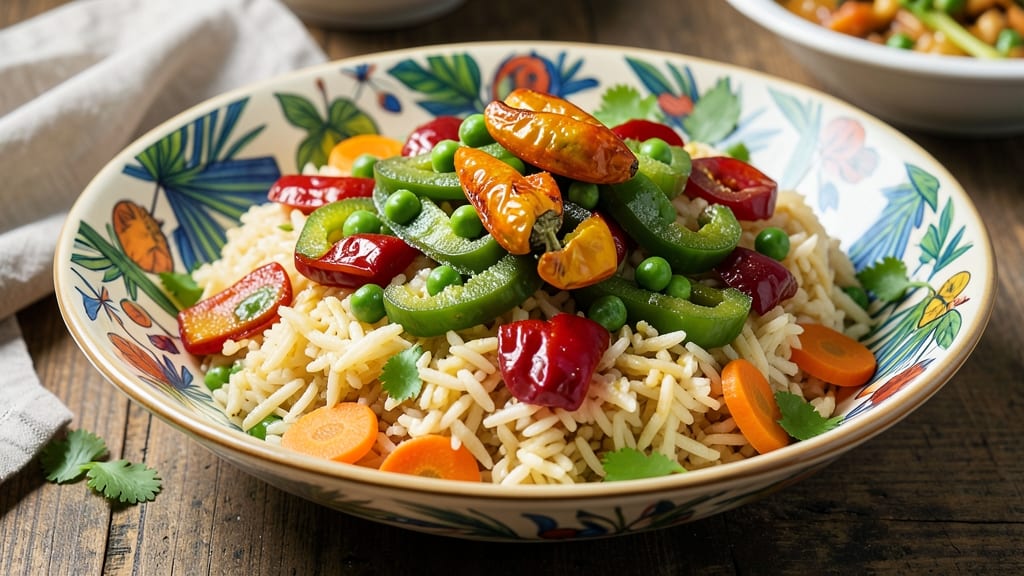
This Caribbean vegetable rice recipe brings vibrant island flavors to your one-pot dinner. 🌶️ Packed with bell peppers, peas, and carrots, it simmers in a fragrant blend of thyme, garlic, and Scotch bonnet—creating a dish that’s as colorful as it is flavorful.
The spices meld beautifully with long-grain rice, transforming simple ingredients into a hearty, aromatic meal perfect for any night of the week.
What sets this recipe apart is its bold, balanced heat—just enough to warm your palate without overwhelming it. The vegetables soften into tender perfection while absorbing the rich, spiced broth, making every bite a burst of tropical-inspired taste.
Whether served alongside grilled fish, jerk chicken, or as a standalone vegetarian dish, this rice delivers restaurant-quality flavor with minimal effort. Ready to bring the Caribbean to your kitchen?
Ingredients for caribbean vegetable rice
Caribbean flavors meet simple pantry staples in this vibrant, one-pot rice dish.
| Ingredient | Amount | Notes |
|---|---|---|
| Long-Grain White Rice 🍚 | 1 ½ cups | Uncooked, rinsed thoroughly |
| Red Bell Pepper 🌶️ | 1 whole | Diced into even pieces |
| Green Bell Pepper 🌶️ | 1 whole | Diced into even pieces |
| Carrots 🥕 | 2 medium | Diced into small cubes |
| Frozen Green Peas 🌱 | 1 cup | Thawed if frozen |
| Scotch Bonnet Pepper 🌶️ | 1 whole | Seeds removed, finely chopped |
| Garlic Cloves 🧄 | 4 cloves | Minced finely |
| Fresh Thyme 🌿 | ½ ounce | Chopped finely |
| Fresh Thyme 🌿 | 2 tbsp | Chopped finely |
| Vegetable Oil 🫒 | 2 tbsp | Neutral flavor preferred |
| Vegetable Broth 💧 | 2 cups | Low-sodium preferred |
| Tomato Paste 🍅 | 2 tbsp | Smooth texture preferred |
| Onion Powder 🧅 | 1 tsp | Freshly ground preferred |
| Ground Cumin 🌿 | ½ tsp | Toasted for depth |
| Salt 🧂 | 1 tsp | Diamond Crystal preferred |
The Scotch bonnet pepper is the heart of this dish—its heat balances beautifully with the sweetness of the bell peppers and carrots. Whole Foods and Trader Joe's carry them year-round, but if unavailable, habanero or jalapeño at half the amount will work in a pinch. For the best flavor, toast the ground cumin in a dry pan for 30 seconds before adding it to the rice—this deepens its aroma significantly. Fresh thyme should be bright green with a strong herbal scent; if using dried, reduce to one-third the amount.
No Scotch bonnet? Fresh oregano or marjoram can mimic some of its earthy notes, though the heat will be milder. The vegetable broth can be substituted with water plus 1 tbsp soy sauce for umami depth. If you prefer a creamier texture, stir in 2 tbsp coconut milk at the end of cooking. The tomato paste adds richness without overpowering—Trader Joe's squeeze tubes are perfect for this as they’re convenient and keep well. For an extra layer of complexity, add a pinch of allspice or nutmeg at the end.
This rice reheats beautifully—simply add a splash of water or broth and cover until warmed through. Store in an airtight container in the fridge for up to 5 days or freeze for 3 months in portion-sized containers. The flavors intensify overnight, so leftovers often taste even better the next day. For meal prep, cook a double batch and reheat individual servings as needed.
Why You'll Love This Recipe
- I’ll be real: this recipe costs me pennies but feels like a fancy meal. Bell peppers and carrots stretch across multiple servings, and frozen peas? Always on sale. It’s the kind of dish that makes grocery day feel like a win, no matter how tight the budget.
- One-Pot Magic: I swear by this recipe when I’m too tired to deal with multiple pans. Toss everything—rice, bell peppers, carrots, and peas—into one pot with the broth, stir once, and let it simmer. No chopping like a fine chef, no stressing over layers. Just hands-off, foolproof cooking.
- Sweet-Savory Crunch: Honestly, the way the bell peppers caramelize while the carrots stay tender? It’s the kind of balance that makes you pause mid-bite. The peas add that bright pop, and the rice soaks up all the smoky, slightly sweet flavors—like a hug in a bowl.
- Lunchbox Hero: Between us, this is my go-to for meal prep. The rice stays fluffy for days, and the veggies hold up perfectly in containers. Pack it cold for work or reheat it for dinner—it’s the same great taste either way. (Yes, even on a Tuesday night.)
Step-by-step instructions for Caribbean vegetable rice
Master this vibrant one-pot dish with bold Caribbean flavors and perfectly balanced textures.
🍳 Step 1: Sauté the Aromatics and Spices
Heat the 2 tablespoons vegetable oil in a heavy-bottomed pot over medium-high heat. Add the 4 cloves minced garlic, 0.5 ounce chopped fresh thyme, and 2 tablespoons chopped fresh thyme—this combination creates the aromatic foundation. Cook for 1-2 minutes until the garlic becomes fragrant but doesn't brown.
Next, add the 1 whole Scotch bonnet pepper (seeds removed) and 1 teaspoon onion powder, stirring constantly for 30 seconds to toast the spices. This step develops their flavors before they meld into the rice. Be careful not to let the Scotch bonnet burn—its heat will mellow as the dish cooks, but burning creates bitterness. The mixture should smell intensely aromatic with a subtle hint of spice.
🍳 Step 2: Cook the Vegetables Until Tender
Add the 1 whole diced red bell pepper, 1 whole diced green bell pepper, and 2 medium diced carrots to the pot. Stir well to combine with the spices and cook for 5-6 minutes over medium heat, stirring occasionally. The vegetables should soften slightly but retain their shape—this ensures they contribute texture rather than turning to mush.
Real talk: if the vegetables start to stick, add 1-2 tablespoons vegetable broth to deglaze the pan. The goal is even cooking without burning. You'll know they're ready when the carrots are just beginning to soften at the edges and the peppers lose their raw bite. This step builds the flavor base that will infuse the rice throughout cooking.
🥘 Step 3: Develop the Sauce Base
Stir in the 2 tablespoons tomato paste and cook for 1 minute to deepen its flavor. Add 0.5 teaspoon ground cumin and 1 teaspoon salt, then pour in the 2 cups vegetable broth, scraping up any browned bits from the bottom of the pot. Bring the mixture to a gentle simmer over medium heat—you should see small bubbles forming at the edges but not a full boil.
This sauce base is critical. The tomato paste adds umami depth while the broth carries the spices throughout the rice. Let it simmer uncovered for 3-4 minutes until slightly reduced. You'll notice the mixture thickens slightly and the flavors meld together—this is when the dish truly comes together. The aroma should now be complex, with notes of thyme, cumin, and the subtle heat from the Scotch bonnet.
👨🍳 Step 4: Add Rice and Simmer to Perfection
Add the 1.5 cups rinsed long-grain white rice, stirring gently to distribute it evenly throughout the liquid. Increase heat to medium-high and bring to a boil. Once boiling, reduce heat to low, cover the pot with a tight-fitting lid, and simmer for 20 minutes without stirring. This undisturbed cooking allows the rice to absorb liquid evenly and develop its signature texture.
Here's the thing—don't peek or stir during this time. The rice needs to steam in its own juices. After 20 minutes, uncover the pot and stir in the 1 cup thawed frozen green peas. Return to low heat and cook uncovered for another 5-7 minutes until all liquid is absorbed and the rice is tender with a slight bite at the edges. The peas should be heated through but still vibrant in color.
⏰ Step 5: Rest and Fluff for Ideal Texture
Remove from heat and let the rice rest, covered, for 5 minutes. This resting period allows the residual heat to finish cooking the rice and redistribute the flavors. After resting, fluff the rice gently with a fork to separate the grains and release any remaining steam. The final texture should be moist but not mushy, with each grain distinct and infused with the vibrant vegetable flavors.
Serve immediately while hot. The dish should have a beautiful golden hue from the caramelized vegetables, with the Scotch bonnet's heat lingering subtly throughout. Each bite should deliver a perfect balance of spice, sweetness from the bell peppers, earthiness from the carrots, and the aromatic thyme and cumin. The peas add a bright contrast that cuts through the richness of the rice.
Pro Tips For Making Caribbean Vegetable Rice
- Sear the Peppers First: Toss sliced bell peppers in a hot, oiled pan for 2-3 minutes before adding anything else—they’ll soften faster and develop that deep, caramelized flavor Caribbean rice needs. I used to skip this, and the veggies just sat there like sad, undercooked guests.
- Dice Carrots Small: Cut carrots into ¼-inch pieces so they cook through without turning to mush. Larger chunks stay crunchy and look pretty, but they’ll fight for space in the pot and end up underdone. (Yes, even if you’re impatient like me.)
- Don’t Stir the Rice: Once the rice hits the pot, resist the urge to poke it—just let it sit for 5 minutes after adding liquid. Stirring breaks the grains and turns your rice into glue. My grandmother swore by this, and she was right: the texture stays fluffy and separate.
- Save the Pea Water: Drain frozen peas but save the starchy ice water—add it to the pot with the rice. It boosts flavor and moisture without extra effort. (Your future self will thank you when the rice isn’t dry.)
Dietary considerations for caribbean vegetable rice
Vegetarian-Friendly Adaptations
This Caribbean vegetable rice is naturally vegetarian, but you can easily boost its protein content by adding ½ cup cooked black beans or ½ cup lentils during the final 5 minutes of cooking.
For a heartier dish, stir in ½ cup crumbled tofu (pre-cooked and seasoned with ½ tsp smoked paprika) along with the peas. The beans or tofu will absorb the rich, spiced broth beautifully while adding satisfying texture. 🌱
Gluten-Free Considerations
All ingredients in this recipe are naturally gluten-free, but always double-check your vegetable broth label to ensure it’s certified gluten-free. For extra flavor, use a homemade broth made from scratch or a trusted brand like Pacific Foods or Imagine.
The tomato paste and spices are also safe, but if you’re highly sensitive, opt for brands like Muir Glen for their dedicated gluten-free lines. The rice itself is gluten-free as long as it’s certified (like Lundberg Family Farms rice).
Allergen-Free Adjustments
For nut-free kitchens, this recipe requires no modifications since it contains no nuts. If you’re avoiding garlic or onions (common allergens), substitute with 1 tbsp garlic powder and 1 tbsp onion powder—though the flavor will be slightly milder.
For those with thyme allergies, replace with ½ tsp dried oregano or ½ tsp marjoram. Always taste-test after substitutions to balance flavors. The dish remains safe for most common allergies while keeping its vibrant Caribbean profile. ✨
Low-Sodium Options
To reduce sodium, skip the added salt entirely and rely on the natural flavors of the vegetables and spices. Use a low-sodium vegetable broth (like Swanson Low Sodium) and season with extra fresh thyme or Scotch bonnet pepper for depth.
If you prefer a pinch of salt, opt for Diamond Crystal kosher salt—it’s less processed than table salt and dissolves more easily. The dish will still be flavorful, with the spices carrying the show. 🧂
Spice Level Control
Adjust the heat by reducing or omitting the Scotch bonnet pepper entirely. For a milder version, replace it with ½ tsp sweet paprika or ½ tsp mild chili powder. If you love heat, add the seeds back in or include ½ tsp cayenne pepper with the spices.
The dish’s sweetness from the bell peppers and carrots naturally balances any spice, so don’t be afraid to experiment. Taste as you go—this is where the magic happens! 🌶️
Nutrition facts
Frequently asked questions
Can I use brown rice instead of white rice in this recipe?
You can absolutely try it! Brown rice will add a nutty flavor and extra fiber, but cooking times will differ. Use a 1:2.5 rice-to-liquid ratio (instead of 1:2) and increase simmering time to 30-35 minutes with occasional stirring. The texture will be heartier, but the vibrant vegetable flavors will still shine through.
What's the best way to store leftovers?
Store in an airtight container in the fridge for up to 5 days. The flavors actually improve overnight! For freezing, portion into containers and keep for 3 months. Reheat with a splash of water or broth to restore moisture. The peas may soften further when reheated, but the rice stays perfectly tender.
How can I make this dish spicier?
For extra heat, add the seeds from the Scotch bonnet or include ½ tsp cayenne pepper with the spices. You can also stir in 1-2 diced habanero peppers with the bell peppers. Remember, the sweet vegetables balance the heat beautifully—start with small amounts and adjust to taste.
Can I prepare this in a rice cooker?
Yes! Follow the same steps up to adding the rice, then combine everything in your rice cooker. Use the white rice setting and add ½ cup extra broth if needed. The cooker will handle the simmering perfectly, though you'll need to stir in peas manually at the end. The texture may be slightly firmer than stovetop, but still delicious.
What proteins pair best with this vegetable rice?
Grilled fish (like mahi-mahi or snapper) complements perfectly, but it also works beautifully with jerk chicken, black beans, or crispy tofu. For a complete meal, serve with a side of avocado slices or a simple mango salsa. The dish's bright flavors stand up to both mild and bold proteins.