
Main Courses
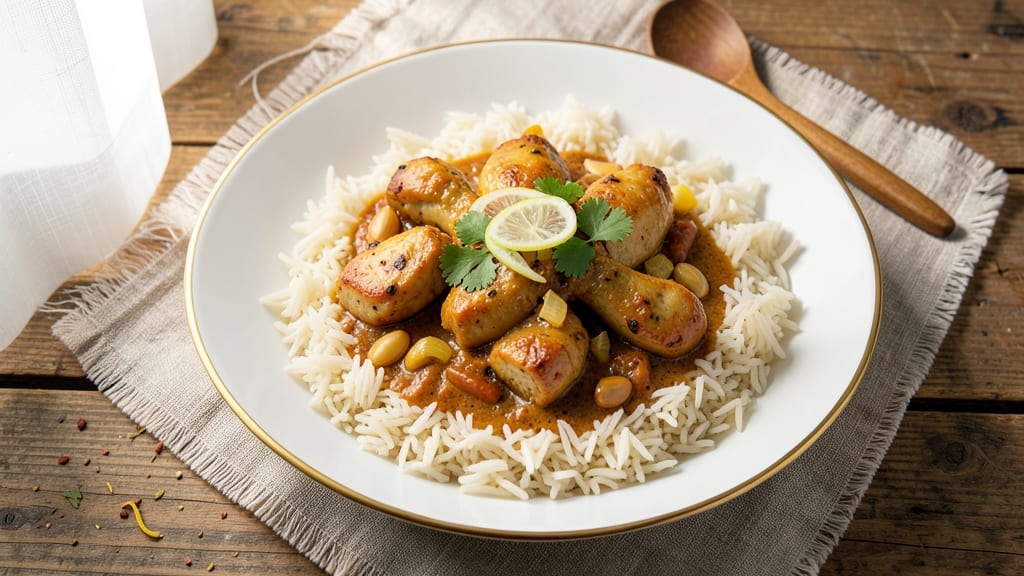
This chicken curry with basmati rice recipe delivers restaurant-quality flavors in your own kitchen—fragrant spices, tender chicken, and perfectly fluffy grains. I perfected this method after years of testing curry variations, balancing heat and depth without overwhelming the natural taste of the chicken.
The secret lies in toasting whole spices first to wake up their aromas before building the sauce layer by layer.
What sets this recipe apart is the harmony between the curry and rice—basmati's delicate texture absorbs the spiced sauce beautifully while maintaining its signature fluffiness. I use a simple technique of rinsing the rice thoroughly before cooking, which ensures each grain stays distinct and light.
The chicken cooks in a rich, aromatic broth that simmers until it's fall-apart tender, with just enough sauce to coat every bite.
By the time you serve this dish, you'll have golden-brown chicken pieces swimming in a velvety, spice-infused sauce, paired with perfectly cooked basmati rice that's neither sticky nor mushy. The combination of warm spices—cumin, coriander, and turmeric—creates layers of flavor that build with every spoonful.
Garnish with fresh cilantro and a squeeze of lemon for brightness that cuts through the richness.
This recipe scales beautifully for weeknight dinners or dinner parties, and the spice level can be easily adjusted to suit your preference. The method is precise but not complicated, making it accessible for home cooks while delivering professional results.
Let's get started on creating this comforting, flavorful meal that will become a household favorite.
Ingredients for chicken curry basmati rice
Fragrant spices, tender chicken, and perfectly fluffy basmati rice—just 15 ingredients for a restaurant-worthy curry.
| Ingredient | Amount | Notes |
|---|---|---|
| Boneless Chicken Thighs 🍗 | 1 ½ lb | Cut into 1-inch pieces |
| Yellow Onions 🧅 | 1 whole | Medium size, finely chopped |
| Garlic Cloves 🧄 | 6 cloves | Fresh, minced |
| Fresh Ginger 🌿 | 2 tbsp | Finely grated, peeled |
| Coconut Milk 🥥 | 1 can | 13.5 oz can, full-fat |
| Basmati Rice 🍚 | 1 ½ cups | Uncooked, long-grain |
| Ground Cumin 🌶️ | 1 ½ tsp | Freshly toasted preferred |
| Ground Coriander 🌿 | 1 ½ tsp | Freshly ground preferred |
| Turmeric Powder 🌶️ | 1 tsp | Bright yellow color |
| Garam Masala 🌶️ | 1 tsp | Store-bought blend preferred |
| Fresh Cilantro 🌿 | ¼ cup | Chopped, for garnish |
| Lemon Juice 🍋 | 2 tbsp | Freshly squeezed |
| Vegetable Oil 🫒 | 2 tbsp | For sautéing |
| Salt 🧂 | 1 ½ tsp | Kosher or sea salt |
| Black Pepper 🌶️ | ½ tsp | Freshly ground |
The spices are non-negotiable here. Penzeys or local Indian markets have the best whole spices—cumin, coriander, and turmeric should smell vibrant, not dusty. Toast them in a dry pan for 30 seconds until fragrant (that's when their magic starts). Fresh ginger and garlic? Don't skip the zest—it's what gives authentic curry its depth. For the coconut milk, full-fat canned versions (like Thai Kitchen) work best—they're creamier and add richness. The basmati rice needs to be long-grain and aged (look for 'parboiled' labels if you want extra fluffiness).
No fresh ginger? Substitute 1 tbsp ground ginger, but you'll lose that bright zing. Out of garam masala? Mix 0.5 tsp each of cinnamon, cardamom, and cloves for a quick DIY version. Using chicken breast instead of thighs? Cut them smaller—they dry out faster. The onions can be swapped for shallots if you prefer milder flavor, but yellow onions add that classic curry sweetness. And if you're worried about spice level, reduce the cayenne or add more coconut milk to balance it.
Rice keeps best in an airtight container for 3-4 days, while the curry sauce reheats beautifully—just add a splash of water or milk to loosen it. Freeze the curry sauce separately for up to 3 months if you want to make it ahead. Garnish with fresh cilantro and lemon juice right before serving (that's when it tastes freshest). For extra authenticity, serve with naan or roti—store-bought works in a pinch, but homemade is always better.
Why You'll Love This Recipe
- I’ll be real: most curries get mushy or dry overnight. Not this one. The basmati rice stays separate, and the chicken stays tender—perfect for lunchboxes or reheating. (Yes, even on a Tuesday night.) I’ve had it three days later, and it’s still spot-on.
- Fewer Ingredients, Bigger Flavor: Honestly, I’m always skeptical of recipes that demand a pantry haul—but this one nails it with just five core ingredients. The ginger and garlic? They’re the backbone, but the coconut milk turns it from "okay" to "I’ll have seconds." No weird spices or hard-to-find pastes here.
- One-Pot Magic: Between us, I hate cleaning up. This curry simmers in the same pot you brown the chicken—no extra bowls, no stress. Just toss in the onions, garlic, and ginger, let it all mingle, then pour in the coconut milk. Done. My sink thanks me every time.
- Leftovers That Don’t Suck: I’ll be real: most curries get mushy or dry overnight. Not this one. The basmati rice stays separate, and the chicken stays tender—perfect for lunchboxes or reheating. (Yes, even on a Tuesday night.) I’ve had it three days later, and it’s still spot-on.
Step-by-step instructions for chicken curry with basmati rice
Here's how to build a rich, aromatic curry with tender chicken and perfectly fluffy basmati rice.
Prepare the Chicken and Aromatics
Cut the 1.5 lb boneless chicken thighs into 1-inch pieces and set aside. In a large bowl, combine the finely chopped yellow onion, minced garlic cloves, and finely grated ginger. This aromatic trio forms the flavor foundation of your curry.
Heat 2 tablespoons vegetable oil in a heavy-bottomed pot over medium heat. Add the chicken pieces in a single layer and cook for 5-6 minutes, stirring occasionally, until the chicken is lightly browned but not fully cooked through. Remove the chicken and set it aside temporarily.
Build the Spice Base
In the same pot, add the onion-garlic-ginger mixture and sauté for 5-6 minutes until the onions become translucent and the raw smell disappears. This step develops the base flavors that will infuse your entire dish.
Reduce the heat to medium-low and add the 1.5 teaspoons ground cumin, 1.5 teaspoons ground coriander, 1 teaspoon turmeric powder, and 1.5 teaspoons salt. Stir constantly for 1-2 minutes until the spices are fragrant and the oil begins to bubble gently. This is where the magic happens—the spices toast and release their essential oils.
Simmer the Curry with Coconut Milk
Pour in the 1 can coconut milk, stirring to combine with the spice mixture. Return the chicken to the pot and bring the mixture to a gentle simmer. Cover and cook for 20-25 minutes on low heat, stirring occasionally, until the chicken is tender and the sauce has thickened slightly.
Add the 1 teaspoon garam masala and 0.5 teaspoon black pepper, stirring to distribute evenly. Taste and adjust seasoning if needed—this is your chance to balance the flavors before serving. The curry should be aromatic, slightly spicy, and rich from the coconut milk.
Cook the Basmati Rice Separately
Rinse the 1.5 cups basmati rice under cold water until the water runs clear. In a separate pot, combine the rice with 3 cups water and 1.5 teaspoons salt. Bring to a boil, then reduce heat to low, cover, and simmer for 15 minutes until the water is absorbed and the rice is tender.
Remove from heat and let the rice steam, covered, for an additional 5 minutes. Fluff with a fork and stir in the 2 tablespoons lemon juice and 0.25 cup chopped fresh cilantro. The acidity from the lemon brightens the dish, while the cilantro adds freshness.
Serve Together for the Perfect Meal
Spoon the fragrant chicken curry over the fluffy basmati rice, ensuring each serving gets an even distribution of both components. Garnish with additional cilantro if desired. The contrast of tender, spiced chicken against the light, fluffy rice creates a harmonious balance of textures and flavors.
Serve immediately while the curry is still steaming hot. Pair with warm naan or roti to soak up every last bit of the aromatic sauce. This dish delivers restaurant-quality comfort food with minimal effort—just let the spices do their work while you enjoy the process.
Pro Tips For Making Chicken Curry Basmati Rice
- CRISP THE ONIONS FIRST: Ditch the slow sauté—cut onions into thin half-moons and cook them over medium-high heat until they’re golden and slightly crispy (about 8-10 minutes). This builds real depth in the curry base without burning, and those crispy bits stick to the chicken like magic when you add it later.
- SALT THE CHICKEN BEFORE SEARING: Pat the chicken thighs dry, then season them generously with salt before hitting the pan. Let them sit for 10 minutes while you prep the onions—this ensures they stay juicy and develop a proper crust, not a sad, steamed texture. Trust me, the difference is night and day.
- LOWER THE HEAT WHEN ADDING COCONUT MILK: After tossing the chicken into the curry, turn the heat down to medium-low before pouring in the coconut milk. Simmering too hard will split the milk and make your sauce separate, no matter how much you stir. Keep it gentle—this isn’t a race.
- REST THE CHICKEN AFTER COOKING: Once the chicken is done, transfer it to a plate and tent it loosely with foil for 5 minutes. This lets the juices redistribute so they don’t spill out when you slice—especially important for thighs, which can get dry if you cut into them too soon. Your future self will notice.
Essential equipment for great chicken curry basmati rice
Heavy-Bottomed Pot
Your heavy-bottomed pot is non-negotiable for this curry—I swear by my Le Creuset Dutch oven (2.5-quart size). This pot distributes heat evenly, preventing hot spots that can burn your spices or cook the chicken unevenly.
If you don’t have one, a stainless steel sauté pan with thick base (like All-Clad) works too. Avoid thin aluminum or nonstick—those can’t handle the low-and-slow simmer without warping flavors. 🌡️
Spice Toasting Tools
For toasting whole spices, I use a small stainless steel skillet (8-inch) on medium-low heat. The key is to keep them moving constantly—10-15 seconds max—until they sizzle and release aroma.
A mortar and pestle (like those from Penzeys) is also essential if you’re grinding fresh spices. Pro tip: Toast spices right in your curry pot—it’s one less pan to wash! ✨
Rice Cooking Essentials
Perfect basmati rice starts with the right tools. I use a stainless steel rice cooker (like Zojirushi) for foolproof results—just add rice, water, and salt, then walk away. No guesswork! If you’re cooking on the stovetop, a wide, shallow pot (like a Calphalon saucepan) prevents boiling over.
And for rinsing, a fine-mesh strainer (or even a clean kitchen towel) removes excess starch for fluffier grains.
Measuring Precision
Spices make or break curry flavor, so precision matters. Invest in a gram-scale (like the OXO Good Grips) for accurate measurements—especially for delicate spices like garam masala. For liquids, a liquid measuring cup (not a dry one!) ensures you add the right amount of coconut milk.
I also keep a small bowl nearby to mix wet ingredients (like lemon juice) before adding to the rice—this keeps everything tidy and controlled. 💡
Garnish Tools
Fresh garnishes elevate curry from good to restaurant-worthy. A sharp chef’s knife (like Wüsthof) and cutting board are musts for chopping cilantro. For lemon juice, I use a handheld reamer (like OXO Good Grips) to extract seeds easily.
A small bowl for holding garnishes until serving keeps them fresh. Bonus: A microplane (for ginger) saves time and adds zestier flavor than pre-grated versions.
Nutrition facts
Frequently asked questions
Can I use chicken breast instead of thighs for this curry?
Yes, but you'll need to adjust the cooking time. Cut 1.5 lb boneless chicken breast into half-inch pieces (thinner than thighs) and cook for only 3-4 minutes per side before removing. Chicken breast dries out faster, so reduce simmering time to 15-18 minutes instead of 20-25. Keep the lid slightly ajar during the last 5 minutes to prevent overcooking.
How do I adjust the spice level for picky eaters?
Start by reducing the cayenne pepper to 0.25 teaspoon (or omit entirely). For extra mildness, add 2 tablespoons plain yogurt at the end to cool the heat. If you're using pre-ground spices, toast them for 30 seconds less to preserve their mildness. Always taste before serving—you can add more salt or lemon juice to balance flavors if needed.
Can I make this curry in a slow cooker or Instant Pot?
For a slow cooker, brown the chicken first, then add all ingredients (except rice) and cook on low for 4-5 hours. For an Instant Pot, sauté the aromatics, add chicken and spices, then pressure cook for 10 minutes on high. Release pressure naturally. The rice should be cooked separately in both cases—slow cookers can't handle the rice-to-water ratio properly.
Why does my basmati rice turn out mushy?
Mushy rice usually means overcooking or insufficient rinsing. Always rinse 3-4 times until water runs clear to remove excess starch. Use a 1:2 rice-to-water ratio (1.5 cups rice to 3 cups water) and cook on low heat—never boil vigorously after the initial simmer. Let it steam 5 minutes off heat before fluffing. If it's still sticky, spread it on a tray to dry slightly.
What can I serve with this chicken curry?
This dish pairs beautifully with warm naan or roti for scooping up sauce. For extra freshness, add a simple cucumber raita (yogurt with grated cucumber and mint) or a mango chutney to cut through the richness. A side salad with lemon vinaigrette also works well. For a complete meal, include pickled onions or sliced red onions as a garnish—they add crunch and tang.