
Main Courses
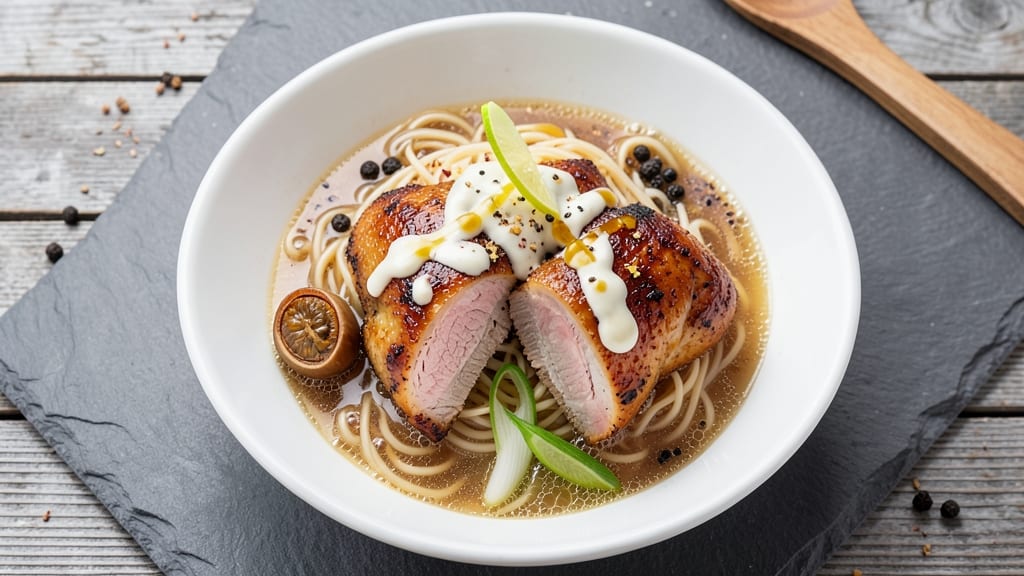
This chicken ramen rice noodle recipe delivers restaurant-quality depth in a single pot, where silky noodles bathe in a rich, umami-packed broth infused with tender chicken and aromatic spices.
The secret lies in balancing sweet, salty, and savory flavors while achieving that signature velvety texture—no shortcuts, just layered techniques that transform simple ingredients into a comforting bowl.
I’ve perfected this method after countless batches, ensuring the broth stays clear without clarification and the noodles absorb just enough flavor to be tender yet satisfying.
The recipe begins with a foolproof broth base—whether you prefer a lighter miso-infused style or a deeper tonkotsu-inspired richness, the method adapts to your taste.
Chicken thighs poached directly in the broth develop a melt-in-your-mouth tenderness, while rice noodles cook in the same pot, absorbing the aromatic essence without overcooking. Garnishes like soft-boiled eggs, chili oil, and scallions add freshness and texture, turning this into a customizable masterpiece for any occasion.
What sets this apart is the one-pot efficiency—no messy transfers or separate stovetop juggling. The broth simmers low and slow to develop depth, while the noodles and chicken cook simultaneously, saving time without sacrificing flavor.
By the time you’re done, you’ll have a bowl that’s creamy, savory, and packed with umami in every spoonful, ready to be topped with your favorite garnishes for a truly personalized experience.
Perfect for weeknight dinners or meal prep, this recipe scales effortlessly and tastes even better the next day. Whether you’re craving a quick comfort meal or a showstopping dish for guests, the techniques here ensure restaurant-quality results with minimal effort. Let’s get cooking—your taste buds will thank you.
Ingredients for chicken ramen rice noodle
Fourteen ingredients transform into restaurant-style ramen with velvety broth and silky noodles.
| Ingredient | Amount | Notes |
|---|---|---|
| Chicken Thighs, Bone-In 🍗 | 1 ½ lb | Skin-on for richer flavor |
| Rice Noodles, Sticky 🍜 | 8 oz | Fresh or dried, 3-inch width |
| Chicken Broth, Low-Sodium 💧 | 6 cups | Homemade or high-quality store-bought |
| White Miso Paste 🧈 | 1 tbsp | For umami depth, not sweet miso |
| Sesame Oil 🫒 | 1 tbsp | Toasted for nutty aroma |
| Garlic Cloves 🧄 | 6 cloves | Minced, not powdered |
| Fresh Ginger, Peel On 🌿 | 1 tbsp | Finely grated, not powdered |
| Soy Sauce 🥢 | 2 tbsp | Dark or light, to taste |
| Rice Vinegar 🍶 | 1 tbsp | For brightness, not balsamic |
| Brown Sugar 🍚 | 1 tbsp | Light or dark, packed |
| Green Onions 🧅 | 3 whole | Sliced, white and green parts |
| Sesame Seeds 🌰 | 1 tsp | Toasted for crunch |
| Chili Oil 🔥 | 1 tbsp | Homemade or store-bought |
| Eggs 🥚 | 2 whole | Soft-boiled, for garnish |
The chicken thighs are non-negotiable—skin-on, bone-in for that rich, gelatinous broth. Trader Joe's or Costco often have pre-cut bone-in thighs, but if you're buying whole, look for good marbling. The rice noodles? Fresh is ideal (they cook in 2 minutes), but dried works too—just soak for 10 minutes. For the broth, homemade wins, but Kitchen Basics or Pacific Foods brands are solid shortcuts. The miso paste should be white, not red—it’s milder and perfect for balancing the flavors. If you’re using dried noodles, soak them in warm water until pliable before adding to the pot.
No miso paste? Substitute 1 tbsp soy sauce plus 1 tsp white wine vinegar—it’s not identical, but close. Short on sesame oil? Toast the seeds separately and sprinkle on top instead. The ginger and garlic are where the magic happens—freshly grated and minced, not powdered. For extra umami, add 1 tsp fish sauce (if not vegetarian) or 1 tsp soy sauce to the broth. The chili oil can be swapped for sriracha or gochujang, but toasted sesame seeds add that essential crunch. Eggs? Soft-boiled (6 minutes) or fried—both work, but soft-boiled keeps the yolk runny.
Broth keeps for 3 days in the fridge—taste even better the next day. Noodles? Cook fresh or store dry in an airtight container. The sesame oil and chili oil should be stored in the fridge after opening. Double the broth and freeze in 1-cup portions for quick ramen nights later. Garnishes like nori strips, bean sprouts, or corn keep well in the fridge for 5 days, so prep ahead for easy assembly.
Why You'll Love This Recipe
- One-Pot Magic: I swear by this recipe because it’s literally one pot—simmer the bone-in thighs in broth until they fall off, shred them right there, then toss in the noodles. No extra dishes, no stress, just flavor building as it goes.
- Umami Bomb: That white miso paste? It’s the secret weapon—deep, savory, and just a spoonful makes the broth taste like it’s been simmering for hours. The sesame oil finish ties it all together with a nutty, toasty punch that hits just right.
- Lunchbox Hero: Between us, this is my go-to for meal prep—double the broth, pack noodles and chicken separately, and reheat with a splash of hot water. Cold leftovers? Still delicious. (Yes, even on a Tuesday night.)
- Budget Win: Bone-in chicken thighs are cheap, and a little miso goes a long way. Stretch it for two meals by freezing half the broth for future soups—no waste, all flavor, and my wallet thanks me every time.
Step-by-step instructions for chicken ramen rice noodles
This one-pot method delivers restaurant-quality ramen with silky noodles and rich, layered broth.
Sear the Chicken Thighs for Maximum Flavor
Pat the 1.5 lb chicken thighs, bone-in completely dry with paper towels—this ensures a crispy skin. Heat a large pot over medium-high heat until hot, then add the thighs skin-side down. Let them sear undisturbed for 5-6 minutes until the skin turns a deep golden brown and releases easily from the pot.
Flip the thighs and continue cooking for another 4-5 minutes until the meat reaches 165°F internally. The skin should be crispy and the meat should pull away from the bone with gentle pressure. Remove the chicken from the pot and set aside, leaving the rendered fat behind—this is where all the flavor lives.
Build the Umami-Packed Broth Base
In the same pot, reduce the heat to medium-low and add 6 cloves minced garlic cloves and 1 tbsp finely grated fresh ginger, peel on. Sauté for 1-2 minutes until fragrant but not browned—burnt ginger turns bitter. Pour in 6 cups low-sodium chicken broth and bring to a gentle simmer.
Stir in 1 tbsp white miso paste, 2 tbsp soy sauce, 1 tbsp rice vinegar, and 1 tbsp packed brown sugar. Let the broth simmer uncovered for 10 minutes to allow the flavors to meld. You'll notice the aroma deepen as the miso dissolves and the broth develops a glossy sheen—this is your umami foundation.
Cook the Noodles and Finish the Broth
While the broth simmers, add the 8 oz sticky rice noodles to the pot. Stir gently to prevent clumping, then cover and cook for 3-4 minutes until the noodles are tender but still hold their shape. They should be silky, not mushy—test by tasting a small piece. If they feel slightly firm, they'll soften further in the hot broth.
Return the chicken thighs to the pot, skin-side up, and simmer for 5 minutes to reheat. The broth will reduce slightly, concentrating the flavors. Remove the chicken and shred the meat using two forks, discarding the skin and bones. Return the shredded chicken to the broth and stir in 1 tbsp sesame oil and 1 tbsp chili oil—this adds nutty depth and subtle heat.
Assemble and Garnish for Perfect Presentation
Divide the noodles and broth evenly among 4 bowls. Top each serving with 2 soft-boiled eggs (halved lengthwise), 3 sliced green onions (white and green parts), and 1 tsp toasted sesame seeds. The contrast of silky noodles, tender chicken, and runny yolk creates the perfect bite every time.
Serve immediately while the noodles are hot and the broth is steaming. The aroma of toasted sesame and chili oil will fill your kitchen—this is the moment you've been waiting for. Each spoonful delivers a perfect balance of rich, savory broth, chewy noodles, and delicate egg yolk.
Pro Tips For Making Chicken Ramen Rice Noodle
- CRISP THE SKIN FIRST: Bone-in chicken thighs are your flavor base, so don’t skip browning them skin-side down until golden and crackling—about 10-12 minutes on medium-high heat. I used to rush this and ended up with bland broth; the Maillard reaction on that skin is what builds depth. If the skin sticks, it’s not hot enough—wait for it.
- SOAK NOODLES IN BROTH, NOT WATER: Dump those sticky rice noodles straight into the simmering chicken broth (not cold water) and let them absorb heat for 2-3 minutes before adding cold water. This prevents them from turning mushy later—my noodles used to clump like glue until I realized they needed to plump in the broth’s warmth first.
- STIR MISO LAST, NOT FIRST: White miso paste is delicate—add it to the broth just before serving, stirring until almost dissolved, then let it settle. If you mix it in early, it’ll turn bitter and cloud the broth. A teaspoon of sesame oil swirled in afterward ties everything together without overpowering.
- SIMMER BROTH LOW AND SLOW: After removing the chicken, keep the broth at a gentle simmer—not a rolling boil—so the fat can congeal on top instead of emulsifying into grease. Skim it off with a spoon before serving; this keeps the broth clear and rich. (Yes, it takes longer, but your broth will taste like it came from a ramen shop.)
Make-ahead tips for chicken ramen rice noodle
Broth Prep Ahead
Simmer the broth base 2 days in advance for maximum flavor development. Store it in an airtight container in the fridge—it’ll deepen in richness as the miso and soy sauce meld.
For a 3-day supply, double the recipe and freeze in 1-cup portions (leave ½ inch headspace for expansion). Thaw overnight in the fridge before reheating gently on the stove. 💫
Noodle Prep Shortcut
Cook the rice noodles 1 day ahead and store them in a sealed container with a damp paper towel to prevent drying. Reheat in the microwave with 1 tbsp water for 30 seconds—they’ll soften perfectly.
Alternatively, keep dried noodles in an airtight bag and soak for 10 minutes when ready to use. This saves 15 minutes on busy weeknights.
Garnish Assembly
Prep all garnishes the night before: slice green onions, toast sesame seeds in a dry pan for 2 minutes, and soft-boil eggs for 6 minutes.
Store in separate containers in the fridge. When ready to serve, simply assemble—no last-minute chopping required. The eggs stay fresh for 2 days if refrigerated.
Freezer-Friendly Packs
Assemble complete ramen packs for 4 servings by layering noodles, chicken, and broth in freezer-safe bags. Leave 1 inch headspace and seal tightly. Thaw overnight in the fridge, then reheat on the stove for 5-7 minutes over medium heat.
These packs last 2 months without losing texture or flavor. Perfect for lazy Sundays!
Broth Boosters
Freeze extra chicken fat from searing in 1-tbsp portions—it’s pure flavor gold. Add a pat to future broths or stir-fries for instant richness. Also, freeze 1-inch ginger slices and garlic cloves in ice cube trays with water. Pop them into broths as needed—no chopping required. 🌟
Reheating Perfection
For the best texture, reheat ramen on the stove over low heat for 3-4 minutes. Add 1 tbsp water if the broth seems too thick. Microwave reheating works in a pinch: cover with a damp paper towel and heat for 90 seconds, stirring halfway.
Always add fresh sesame oil and chili oil after reheating to preserve their fresh aroma.
Nutrition facts
Frequently asked questions
Why do rice noodles work better than wheat noodles in ramen?
Rice noodles absorb flavors beautifully while staying light and silky, unlike wheat noodles which can make the broth too thick. Their natural stickiness clings to the broth and toppings, creating that signature ramen texture. Plus, they cook faster (3-4 minutes) and pair perfectly with the umami-rich broth.
Can I make this recipe vegetarian?
Yes! Swap chicken thighs for mushrooms (shiitake or king oyster) or tofu, and use vegetable broth instead of chicken. Add 1 tbsp soy sauce and 1 tsp fish sauce substitute (like Veggie Aminos) to maintain umami depth. The noodles and broth method stays the same.
How do I fix mushy rice noodles?
Overcooked noodles happen when they soak too long in hot broth. To salvage them, drain most of the broth, then reheat the noodles with 1 tbsp sesame oil and 1 tsp soy sauce for 1 minute to restore texture. For next time, cook noodles separately in 1 minute in boiling water, then add to the broth.
What's the best way to store leftovers?
Store broth and noodles separately in airtight containers for 3 days in the fridge. Reheat noodles with 1 tbsp water for 30 seconds in the microwave, then add fresh broth and garnishes. For longer storage, freeze broth in 1-cup portions—it keeps for 3 months without losing flavor.
Can I use dried rice noodles instead of fresh?
Soak dried noodles in warm water for 10-15 minutes until pliable, then drain and add to the broth. They'll cook another 2-3 minutes in the simmering liquid. For best texture, use 3-inch wide dried noodles—they're the closest match to fresh in both chew and flavor absorption.