
Main Courses
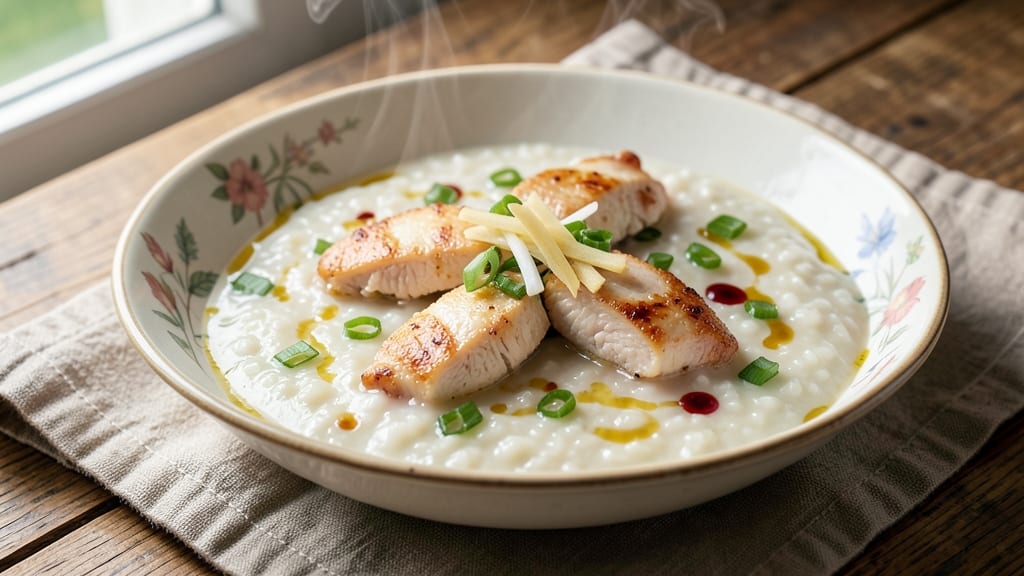
This chicken rice congee recipe delivers the comforting, silky texture and aromatic depth that makes it a staple in Asian households. 🌟 I developed this version after perfecting the balance between tender shredded chicken, fragrant ginger, and a slow-simmered broth that transforms rice into a velvety porridge—every spoonful is pure comfort in bowl form.
The secret lies in the technique: parboiling the rice until it's just tender, then simmering it low and slow with chicken and ginger until the grains break down into that signature creamy consistency.
This isn't just a dish—it's a flavor experience where each ingredient plays its part without overpowering the others.
What you'll end up with is a bowl of restaurant-quality congee where the shredded chicken stays juicy, the ginger adds bright warmth, and the broth is rich enough to coat every bite.
The texture is what makes it special—silky yet substantial, with just enough body to satisfy while being gentle enough for any meal.
Perfect for breakfast, lunch, or as a healing meal when you're under the weather. The recipe builds on traditional methods with a few modern touches that make it approachable for home cooks while keeping that authentic soulful flavor. Let's get started on creating this comforting classic.
Ingredients for chicken rice congee
The foundation of restaurant-quality congee lies in these carefully selected ingredients.
| Ingredient | Amount | Notes |
|---|---|---|
| Jasmine Rice 🍚 | 1 cup | Uncooked, long-grain preferred |
| Chicken Breast 🍗 | 1 ½ lb | Boneless, skinless, cut into bite-sized pieces |
| Fresh Ginger 🧄 | 3 tbsp | Finely grated, aromatic variety |
| Chicken Broth 🍲 | 6 cups | Homemade or high-quality store-bought |
| Green Onions 🧅 | 4 whole | Sliced, white and green parts separated |
| Sesame Oil 🫒 | 1 tbsp | Toasted, for finishing |
| Soy Sauce 🍶 | 2 tbsp | Light or all-purpose variety |
| Shaoxing Wine 🍷 | 2 tbsp | Substitute with dry sherry if unavailable |
| Garlic Cloves 🧄 | 4 cloves | Minced, for aromatic depth |
| White Peppercorns 🌶️ | ½ tsp | Freshly ground for subtle heat |
| Vegetable Oil 🫒 | 2 tbsp | High smoke point for cooking |
| Salt 🧂 | 1 tsp | Diamond Crystal preferred |
| Scallions 🧅 | 2 tbsp | Chopped, for garnish |
| Sesame Seeds 🌾 | 1 tsp | Toasted, for garnish |
The jasmine rice is non-negotiable—its delicate aroma and subtle floral notes elevate the dish beyond basic porridge. Opt for uncooked long-grain from a trusted brand like Lotus Foods or your local Asian market, where the grains maintain their integrity during the slow simmer. For the chicken breast, choose pieces of even size to ensure consistent tenderness; Costco or Whole Foods often carry pre-cut options that save time. Fresh ginger is essential for that bright, zesty warmth—organic ginger from the produce section will have the most punch, but even conventional stores carry high-quality roots if you peel and grate it yourself. The chicken broth should be rich but not overly salty; Kitchen Basics or Pacific Foods brands deliver reliable depth without bitterness.
No Shaoxing wine? Dry sherry or even a splash of white wine vinegar with a pinch of sugar will replicate the umami complexity. The soy sauce should be light—Kikkoman works universally, but Japanese tamari adds a deeper savory note. For garlic, fresh is ideal, but if you're using powder, Garlic Powder from Penzeys has more authentic flavor than generic brands. The green onions can be swapped for scallions, but the white parts add subtle sweetness that balances the dish. If you're prepping ahead, toast the sesame seeds in a dry pan until golden—they'll keep for weeks in an airtight container, ready to garnish whenever needed.
Congee reheats beautifully, but the texture degrades after 3 days in the fridge, so portion it into airtight containers with a thin layer of oil on top to preserve freshness. The chicken stays juicy for 2 days if stored separately and added back when reheating. For long-term storage, freeze the congee in single-serving portions—it’ll last 3 months, though the texture becomes slightly denser upon thawing. Garnish with toasted sesame seeds and scallions just before serving to maintain their vibrant colors and fresh flavors.
Why You'll Love This Recipe
- One-Pot Magic: I swear by this—just toss jasmine rice, shredded chicken, and broth into one pot, let it simmer. No chopping, no fuss, and honestly? The way the rice softens into that silky texture while the chicken stays tender is next-level.
- Ginger-Zing Kick: That fresh ginger—thinly sliced, not chopped—infuses the broth with warmth without overpowering. Between us, it’s the secret weapon. The green onions at the end? Just a sprinkle, but they turn this into something that feels special without trying too hard.
- Leftover Goldmine: Make a big batch on Sunday, and you’ve got breakfast, lunch, or dinner covered. The congee thickens beautifully when reheated—just add a splash of water—and it’s still just as comforting. My freezer’s full of it because it’s that reliable.
- Budget Comfort Food: Chicken breast and jasmine rice stretch further than you’d think, especially when you’re working with broth. It’s the kind of meal that makes you feel taken care of, even on days when you’re skimming the pantry. Plus, it’s way cheaper than takeout.
Step-by-step instructions for chicken rice congee
Here's how to craft velvety congee with perfectly shredded chicken and aromatic ginger.
🍳 Step 1: Cook the Chicken Until Fork-Tender
Heat the 2 tablespoons vegetable oil in a large pot over medium-high heat. Add the 1.5 lb chicken breast cut into bite-sized pieces and cook for 5-6 minutes until the chicken loses its raw color and begins to brown around the edges. This initial sear locks in flavor.
Add the 4 cloves minced garlic cloves and 3 tablespoons finely grated fresh ginger, stirring for 30 seconds until fragrant. Pour in the 2 tablespoons Shaoxing wine and deglaze the pan, scraping up any browned bits from the bottom. This step builds the aromatic foundation for your congee.
👨🍳 Step 2: Simmer Chicken in Broth for Maximum Tenderness
Add the 6 cups chicken broth and bring to a gentle boil. Reduce heat to low and simmer uncovered for 30-40 minutes, stirring occasionally, until the chicken is fork-tender and easily shreds with two forks. The broth should reduce by about 25% during this time, intensifying its flavor.
Remove the chicken from the broth using tongs and transfer to a plate. Let it cool slightly, then shred it into bite-sized pieces using two forks. Return the shredded chicken to the pot and keep warm over low heat. The chicken should be completely tender with no resistance when pierced.
🥘 Step 3: Create the Perfect Congee Texture
Return the pot to medium-low heat and add the 1 cup uncooked jasmine rice. Stir gently to distribute the rice evenly throughout the broth. The rice will begin to break down almost immediately, releasing starch that will create that signature silky texture.
Simmer uncovered for 45-50 minutes, stirring occasionally with a wooden spoon to prevent sticking. You're looking for a consistency that's thicker than oatmeal but still pourable—it should coat the back of a spoon but still move easily. If it gets too thick before reaching this texture, add 1-2 tablespoons hot water at a time to adjust.
🔥 Step 4: Season and Finish the Congee
Season the congee with 1 teaspoon salt and 0.5 teaspoon freshly ground white peppercorns, stirring well to distribute the seasoning evenly. Taste and adjust if needed—this is where all the flavors come together. The congee should be subtly salty with a hint of peppery warmth.
Stir in the 2 tablespoons soy sauce and let it simmer for another 5 minutes to allow the flavors to meld. Remove from heat and let it rest for 5 minutes to thicken slightly. This resting period allows the starches to fully gelatinize, creating that perfect velvety mouthfeel.
🍽️ Step 5: Garnish and Serve Immediately
Divide the congee among bowls. Drizzle each serving with 1 tablespoon toasted sesame oil and sprinkle with 2 tablespoons chopped scallions and 1 teaspoon toasted sesame seeds. The sesame oil adds a nutty aroma, while the scallions and sesame seeds provide fresh contrast to the rich congee.
Top each bowl with 1 whole sliced green onion, white and green parts separated. The white parts should be arranged in a circular pattern on top, while the green parts can be scattered around the edges. Serve immediately while the congee is still steaming hot—this dish is best enjoyed fresh from the pot.
Pro Tips For Making Chicken Rice Congee
- STIR CONSTANTLY FIRST 30 MINUTES: I learned this the hard way—skipping constant stirring in the first 30 minutes means you’ll end up with a pot of uneven, gummy rice. Use a wooden spoon to gently break up any clumps and scrape the bottom every 2-3 minutes, especially when the rice starts releasing starch. This isn’t the prettiest method, but it’s the tastiest.
- SHRED CHICKEN BEFORE ADDING: Sounds weird, but it works: poach your chicken breast whole (or in large chunks) until fully cooked, then shred it before mixing it into the congee. Cold, shredded chicken blends in smoother and absorbs the broth better than trying to tear it apart later. Plus, you’ll avoid that rubbery texture that sneaks in when you force-shred warm meat.
- USE GINGER JUICE NOT SLICES: Fresh ginger slices add flavor, but the juice is where the magic happens. After grating or slicing, squeeze the ginger over the broth like you’re making lemonade—about 1 tablespoon of juice per 4 cups of broth. The extra liquid infuses faster and gives the congee a deeper warmth without lingering fibrous bits.
- SALT THE BROTH HALFWAY: I skip this when I’m lazy, but the dish is noticeably better when I don’t: add only half the salt to the broth at the start, then taste and adjust after the rice has fully broken down (around 45 minutes). This lets you account for any hidden saltiness in your chicken or broth—no more guessing if you’ve overdone it.
Storing and reheating your leftovers
Refrigerator Storage
Congee stores beautifully in the fridge for up to 3 days when kept in airtight containers—I use glass Pyrex bowls with tight-fitting lids. The texture will thicken slightly, so add 2-3 tablespoons hot water when reheating to restore that silky consistency.
Store the shredded chicken separately in the broth to maintain juiciness, then mix it back in when ready to eat. 💫
Freezer Preparation
For longer storage, freeze congee in single-serving portions using quart-sized freezer bags or silicone molds. Press plastic wrap directly on the surface before sealing to prevent ice crystals.
Label with dates—it keeps for 3 months without significant texture loss, though it may become slightly denser after thawing. I always freeze garnishes separately to add freshness after reheating.
Stovetop Reheating
My preferred method is stovetop reheating over low heat with a splash of water or broth. Transfer congee to a pot and add ¼ cup liquid, then simmer uncovered for 10-15 minutes, stirring occasionally.
The gentle heat preserves the delicate texture while warming through evenly. For extra richness, add a pat of butter or drizzle with 1 teaspoon sesame oil at the end. 🔥
Microwave Technique
For quick reheating, use 50% power in 1-minute intervals, stirring between each interval. Cover with a damp paper towel to prevent drying. A quart-sized glass bowl works best—it distributes heat evenly.
Add 1-2 tablespoons hot water if the congee looks too thick after reheating. This method takes about 3-4 minutes total for complete warming.
Garnish Refresh
Never reheat garnishes—they lose their freshness. Keep scallions, sesame seeds, and sliced green onions in small containers in the fridge. Toast sesame seeds fresh each time using a dry skillet for 30 seconds—this preserves their nutty aroma.
A final drizzle of sesame oil just before serving adds that restaurant-quality finish. ✨
Meal Prep Tips
Prep congee components ahead: Cook and shred chicken, make broth, and toast garnishes in advance. Store them separately in airtight containers for up to 3 days. When ready to serve, combine everything fresh and reheat just until warm.
This approach saves 2 hours of active cooking time while keeping flavors vibrant. The key is maintaining separate storage to preserve texture and freshness. 💡
Nutrition facts
Frequently asked questions about chicken rice congee
Can I use chicken thighs instead of breast for this recipe?
Chicken thighs actually work beautifully—they stay juicier and more flavorful during the long simmer. Just increase cooking time by 10-15 minutes to ensure full tenderness. The darker meat adds richness that pairs perfectly with the fragrant ginger and silky porridge.
What's the secret to getting that perfect silky texture?
The magic happens with low-and-slow simmering and proper rice-to-liquid ratio. Use 1 cup uncooked jasmine rice to 6 cups broth—this creates the ideal starch-to-water balance. Stir occasionally with a wooden spoon to prevent sticking, and never let it boil vigorously after adding rice.
Can I make this congee vegetarian?
Yes! Replace the chicken with shitake mushrooms or tofu for protein. Use vegetable broth instead of chicken broth, and add 1 tablespoon miso paste for umami depth. The texture will still be creamy, though the flavor profile shifts toward earthy rather than savory.
Why did my congee turn out too thick?
Congee thickens as it cools—this is normal! If it's too thick while cooking, simply add 1-2 tablespoons hot water at a time while stirring. For reheating, add 2-3 tablespoons liquid per bowl. The key is maintaining low heat throughout the cooking process to control the starch release.
How can I make this dish more flavorful?
Boost the aroma by adding 1 star anise pod or 1-inch cinnamon stick during the chicken simmering stage. Remove before serving. For extra depth, stir in 1 teaspoon fish sauce with the soy sauce at the end. The ginger should be freshly grated—this makes all the difference in brightness!