
Main Courses
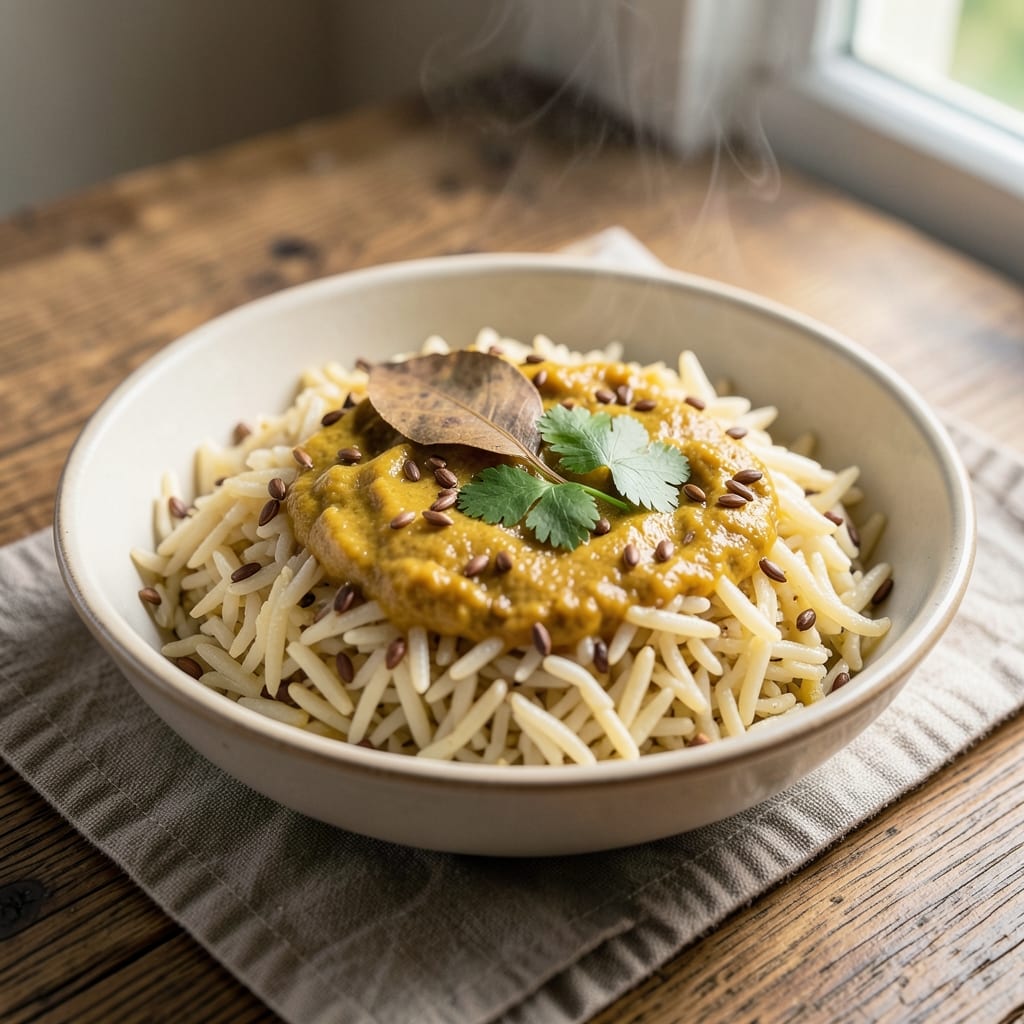
Ajwain rice transforms simple basmati into a fragrant, earthy masterpiece with just a handful of spices and carom seeds. This North Indian classic balances nutty ajwain with warm cumin and turmeric, creating a dish that's both comforting and deeply flavorful. The key lies in proper tempering—where ajwain's distinctive aroma becomes the star—before letting the rice absorb its magic during cooking.
What makes this recipe special is its versatility. You can keep it simple with just rice, or add potatoes, peas, or even meat for a heartier meal. The tempering process isn't just about flavor—it's about texture too, where ajwain's unique bitterness mellows into a warm, aromatic finish that pairs perfectly with yogurt-based raita or a cooling cucumber salad on the side.
The result is perfectly cooked basmati with each grain separate yet clinging together just enough, infused with the earthy warmth of ajwain and the gentle spice of cumin. The dish carries the soul of home cooking—simple ingredients elevated through technique—and serves as both a weeknight staple and a showstopper for guests.
Whether you're making it for a family dinner or meal prep, this ajwain rice delivers restaurant-quality results with minimal effort. The secret is patience in the tempering and letting the spices bloom fully before adding the rice—a small detail that makes all the difference.
Ingredients for ajwain rice
Simple spices and fragrant basmati create this aromatic North Indian staple.
| Ingredient | Amount | Notes |
|---|---|---|
| Basmati Rice 🍚 | 1 cup | Uncooked, long-grain preferred |
| Ajwain Seeds (Carom Seeds) 🌿 | 1 tbsp | Whole, lightly crushed |
| Ground Cumin 🌶️ | ½ tsp | Freshly ground preferred |
| Turmeric Powder 🧂 | ¼ tsp | Bright yellow, no additives |
| Ghee or Vegetable Oil 🫒 | 3 tbsp | Ghee adds authentic flavor |
| Bay Leaves 🍃 | 2 whole | Fresh or dried |
| Green Cardamom Pods 🌿 | 4 whole | Lightly crushed |
| Cloves 🌶️ | 2 whole | Lightly crushed |
| Black Peppercorns 🌶️ | 5 whole | Crushed lightly |
| Salt 🧂 | 1 tsp | Adjust to taste |
| Water 💧 | 2 cups | Room temperature preferred |
| Fresh Cilantro Leaves 🌿 | ¼ cup | Chopped, for garnish (optional) |
| Lemon Wedges 🍋 | 1 whole | For serving (optional) |
Ajwain seeds are the heart of this dish, so look for whole seeds at Indian grocery stores—they're more potent than pre-ground versions. Spicewalla or Patanjali brands are reliable if you're shopping at mainstream stores. The bay leaves and cardamom should be plump and fragrant, not dried out. For ghee, Amul or Gowardhan are excellent choices, though any good-quality ghee works. If you can't find ajwain, fennel seeds at half the amount provide a similar earthy note, though the flavor won't be identical.
No ajwain? Fennel seeds at half the amount work in a pinch, though the flavor won't be identical. Substituting vegetable oil for ghee is fine—just remember it won't carry the same depth of flavor. For cardamom, green pods are essential—black cardamom has a completely different taste. The bay leaves can be omitted if unavailable, but they add subtle earthiness that complements the ajwain. If you're adding potatoes or peas, cook them separately and mix in at the end to avoid overcooking the rice. The lemon wedges are purely for serving—don't skip them, they brighten the dish beautifully.
Store cooked ajwain rice in an airtight container for 3-4 days in the fridge, though it's best enjoyed fresh. For meal prep, portion into single servings before refrigerating to maintain texture. The spices lose potency over time, so if you're making this regularly, buy whole spices and grind them fresh as needed. Reheat gently with a splash of water to restore moisture—microwaving can make the rice rubbery. The dish pairs perfectly with raita or a simple cucumber salad, which helps cut through the richness.
Why You'll Love This Recipe
- Five-Ingredient Magic: I swear by this recipe when I’m too tired to think. Just basmati rice, ajwain seeds, cumin, turmeric, and a splash of ghee—no chopping, no fuss. The ajwain alone transforms plain rice into something aromatic and satisfying.
- Earthy Crunch Alert: That first bite of toasted ajwain seeds? It’s like a tiny, flavor-packed surprise in every mouthful. The cumin and turmeric warm it up, while the ghee adds a richness that makes this rice feel like a hug in bowl form.
- Lunchbox Hero: Between us, this is my go-to for meal prep. Pack it cold or reheat it—it stays fluffy and fragrant. Honestly, my kids grab it over store-bought rice every time, and I haven’t even tried to make it fancy.
- Budget-Friendly Staple: A cup of basmati and a handful of ajwain stretch for days. I make a big batch on Sundays, and it lasts through the week without wilting. Plus, the spices cost pennies compared to pre-mixed seasoning blends.
Step-by-step instructions for ajwain rice
Here's the method for fragrant, aromatic ajwain rice that balances earthy carom with delicate spices.
Toast the Whole Spices and Ajwain Seeds
Heat the 3 tablespoons ghee or vegetable oil in a medium pot over medium heat. Add the 2 whole bay leaves, 4 whole green cardamom pods, 2 whole cloves, and 5 whole black peppercorns. Toast for 1 minute until the spices release their aroma—you'll notice a warm, citrusy fragrance fill the kitchen.
Next, add the 1 tablespoon ajwain seeds (carom seeds). Toast for another 30 seconds until they turn a rich golden brown and become fragrant. Be careful not to burn them—they should smell pungent but not bitter. Remove the pot from heat immediately after topping to preserve their flavor.
Bloom the Ground Spices
Return the pot to low heat and add the 0.5 teaspoon ground cumin and 0.25 teaspoon turmeric powder. Stir for 30 seconds until the spices bloom and release their oils—you'll see them darken slightly and smell more intense. This step develops the depth of flavor in your rice.
Add the 1 cup basmati rice and stir for 1 minute to coat the grains evenly with the spices. The rice should absorb the aromatic oils and take on a subtle golden hue. This ensures every grain carries the signature ajwain flavor.
Cook the Rice with Ajwain Infusion
Pour in the 2 cups water and add the 1 teaspoon salt. Bring to a gentle boil, then reduce heat to low. Cover the pot with a tight-fitting lid and cook for 12-15 minutes—the rice should be tender but still slightly firm to the tooth. Avoid lifting the lid during cooking to prevent steam escape.
After 10 minutes, check the rice by pressing a grain between your fingers. It should be soft but not mushy. If it's undercooked, continue cooking for another 2-3 minutes. The ajwain seeds will infuse the rice with their distinctive earthy aroma during this time.
Rest and Fluff the Rice
Turn off the heat and let the rice sit covered for 5 minutes. This resting period allows the steam to redistribute, ensuring each grain is perfectly cooked. After resting, gently fluff the rice with a fork to separate the grains and release any remaining steam.
For serving, transfer the rice to a serving dish. Garnish with the 0.25 cup chopped fresh cilantro leaves and serve with 1 whole lemon wedge on the side. The ajwain rice should have a fragrant aroma with a subtle earthy bite from the carom seeds, balanced by the warm spices.
Pro Tips For Making Ajwain Rice
- Bloom the Ajwain: Toast the whole ajwain seeds in the same ghee/oil you cook the rice—just until they sizzle and release their aroma (about 15 seconds). I used to add them raw, and the flavor was always muted. This step makes the difference between "meh" and "oh wow." ---
- Soak Rice, Not Overdo: Give basmati rice a 20-minute soak in warm water, then drain completely—no soggy grains. I learned this the hard way when my rice turned mushy; the soak softens the outer layer, but excess water ruins the texture. Drain it well, even if it feels dry. ---
- Low and Slow Finish: Once the rice absorbs the liquid, switch to the lowest heat setting and cover the pot. The residual steam will cook the rice evenly without burning it. I used to rush this, and the bottom always stuck—this method guarantees fluffy, separate grains every time. ---
- Ghee Over Oil: Skip the vegetable oil if you can—ghee’s higher smoke point and nutty flavor elevate the dish. If you’re using oil, at least heat it until it shimmers (not smoking) before adding spices. The extra effort makes the rice taste richer, even if you’re just eating it with yogurt.
Dietary considerations for this ajwain rice
Gluten-Free Friendly
Ajwain rice is naturally gluten-free since it relies solely on rice, spices, and ghee/oil. The key is ensuring all spices are certified gluten-free—especially if you're using pre-ground cumin or turmeric from bulk bins. I always check labels for potential cross-contamination warnings. The dish is safe for celiacs or gluten-sensitive individuals as long as you avoid gluten-containing additives in your spices. 🌱
Low-FODMAP Adaptations
For those following a low-FODMAP diet, ajwain rice can be modified by omitting the ajwain seeds (which are high in fructans) and substituting with ½ tsp fennel seeds instead. Also, use low-FODMAP turmeric (up to 0.25 tsp) and ensure your cardamom and cloves are in the safe range. The remaining spices—cumin, bay leaves, and peppercorns—are all low-FODMAP when used in these quantities.
Vegetarian and Vegan Options
This recipe is already vegetarian, but for a vegan version, simply replace the ghee with vegetable oil—I recommend coconut oil for its neutral flavor and plant-based nature. The dish remains rich and aromatic while being completely plant-based. Garnish with extra cilantro and lemon wedges to add freshness. The ajwain's earthy notes shine even without dairy. 🥑
Protein Additions
For a more balanced meal, add ½ cup cooked chickpeas or ½ cup paneer cubes to the rice during the final 5 minutes of cooking. Alternatively, stir in ½ cup sautéed mushrooms for an umami boost. If you prefer meat, cook ½ cup ground chicken or lamb separately with mild spices and mix it in at the end. These additions work beautifully without overpowering the ajwain's signature flavor.
Spice Sensitivity Adjustments
If you're sensitive to strong spices, reduce the ajwain seeds to ½ tbsp and omit the black peppercorns. The remaining spices—cumin, turmeric, and cardamom—provide warmth without heat. For extra mildness, toast the spices for 30 seconds less to preserve their aroma without intensifying their flavor. The dish will still be fragrant and satisfying, just gentler on the palate. 🌿
Nutrition facts
Frequently asked questions
What makes ajwain rice different from regular basmati rice?
The magic lies in the ajwain seeds (carom seeds), which give this rice its distinctive earthy, slightly bitter aroma. Unlike plain basmati, ajwain rice is tempered with these seeds along with warm spices like cumin and cardamom, creating a complex flavor profile that's both aromatic and satisfying. The ajwain's unique bitterness mellows beautifully during cooking, leaving behind a warm, nutty finish that's unmistakable.
Can I use regular rice instead of basmati?
While basmati is ideal for its light texture and aroma, you can use jasmine rice or long-grain white rice in a pinch. For best results, rinse the rice thoroughly before cooking to remove excess starch. Keep in mind that basmati's delicate grains separate more easily, which is key for showcasing the ajwain's flavor. Short-grain rice like sushi rice won't work well—the grains will turn mushy.
Why does my ajwain rice taste bitter?
Over-toasting the ajwain seeds is the most common cause of bitterness. Toast them for just 30 seconds until golden brown—no longer! If you've already burned them, reduce the amount to ½ tbsp and add a pinch of sugar to balance the flavor. The bitterness should mellow during cooking, but if it's still too strong, try using fennel seeds instead next time.
How do I make ajwain rice less spicy?
Skip the black peppercorns and reduce the ajwain to ½ tbsp. The remaining spices—cumin, turmeric, and cardamom—will still provide warmth without heat. For extra mildness, toast the spices for 30 seconds less to preserve their aroma without intensifying their flavor. The dish will remain fragrant and satisfying, just gentler on the palate.
What's the best way to store leftover ajwain rice?
Transfer to an airtight container and refrigerate for up to 3-4 days. For meal prep, portion into single servings before refrigerating to maintain texture. Reheat gently with a splash of water—microwaving can make the rice rubbery. The ajwain's flavor actually improves slightly after resting, making leftovers taste even more aromatic.