
Main Courses
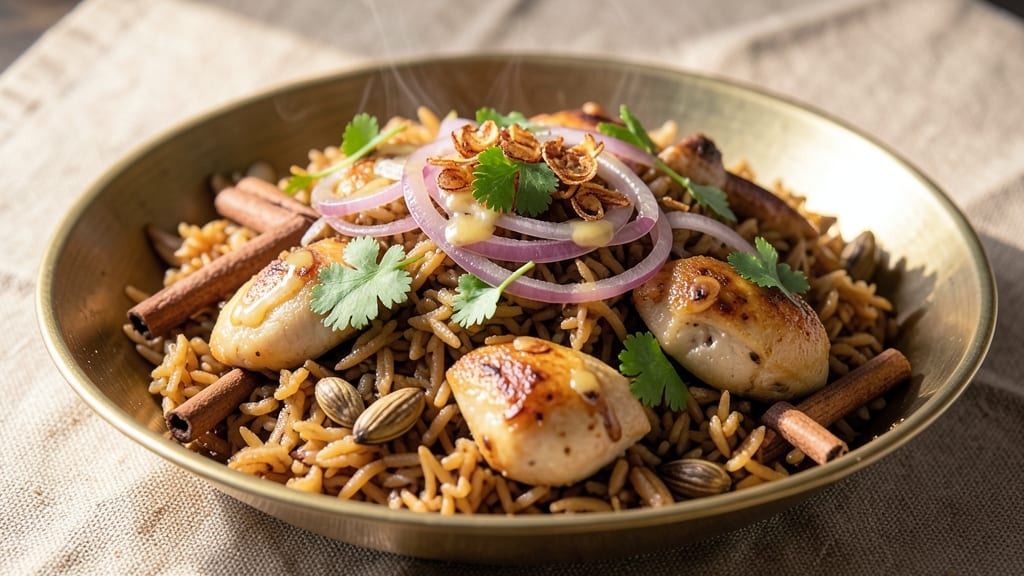
This brown rice pulav recipe transforms everyday basmati into a fragrant, aromatic masterpiece with just five simple spices and a toasted celery garnish.
The secret lies in perfectly balancing brown rice's nutty texture with warm spices that infuse the grains while cooking, creating that signature pulav aroma that fills every kitchen. Unlike traditional white rice pulav, brown rice adds earthy depth while maintaining the dish's signature fluffiness when prepared correctly.
What makes this recipe stand out is the layering technique—whole spices toasted in ghee before adding rice, followed by a slow simmer that allows flavors to meld without overcooking the grains. The toasted celery garnish adds both visual appeal and a subtle crunch that contrasts beautifully with the tender rice.
This method delivers restaurant-quality results at home with minimal effort, perfect for weeknight dinners or special occasions where you want to impress without stress.
Ingredients for brown rice pulav
Five spices, one pot, and the secret to restaurant-quality brown rice pulav at home.
| Ingredient | Amount | Notes |
|---|---|---|
| Brown Basmati Rice 🌾 | 1 ½ cups | Uncooked, rinsed thoroughly |
| Ghee 🧈 | ½ cup | Clarified butter for rich flavor |
| Bay Leaves 🌿 | 2 whole | Fresh or dried, light brown color |
| Cardamom Pods 🌿 | 6 whole | Green pods, lightly crushed |
| Cinnamon Sticks 🌿 | 2 whole | 1-inch pieces, lightly toasted |
| Cloves 🌿 | 4 whole | Whole, lightly crushed |
| Black Peppercorns 🌶️ | 1 tsp | Whole, lightly crushed |
| Celery Stalks 🥬 | 2 whole | Thinly sliced, for garnish |
| Water 💧 | 3 cups | Filtered or spring water preferred |
| Salt 🧂 | ½ tsp | Diamond Crystal preferred |
| Lemon Juice 🍋 | 1 tbsp | Freshly squeezed, for brightness |
| Fresh Cilantro 🌿 | ¼ cup | Chopped, for garnish |
The spices are where this dish shines. Whole spices toasted in ghee release their oils gradually, infusing the rice with deep, aromatic layers. For the best quality, grab organic whole spices from Whole Foods or your local Indian grocery—they're usually fresher than the supermarket bins. Look for vibrant colors: bay leaves should be light brown, cardamom pods green and plump, and cinnamon sticks should have a rich, warm hue. If you can't find whole spices, ground versions work in a pinch, but toast them in the ghee first to wake up their flavors. The brown basmati rice? Lundberg or Uncle Ben's are reliable brands, but any long-grain brown rice will do.
No ghee? Butter or coconut oil works just fine—just know the flavor will be slightly different. Running out of cardamom? Substitute with 1 tsp ground cardamom, but it won't have the same depth. The celery garnish is non-negotiable for that signature crunch, but if you're out, thinly sliced green onions make a decent stand-in. Fresh cilantro brightens everything up, but if you're not a fan, skip it or use mint instead. The lemon juice at the end is what ties all the warm spices together—don't skip it, even if it seems like an afterthought.
This pulav keeps beautifully in the fridge for 4-5 days, though the texture gets slightly softer with time. For best results, store it in an airtight container with a paper towel pressed on top to absorb any moisture. Reheat gently on the stove with a splash of water—microwaving can turn the rice mushy. The toasted celery garnish? Make it fresh before serving, as it loses its crunch quickly. If you're prepping ahead, toast the celery and store it separately—it'll stay crisp longer that way.
Why You'll Love This Recipe
- One-Pot Magic: I swear by this recipe when I’m too tired to wash extra bowls—just brown rice, ghee, and whole spices simmer together until fragrant. The rice cooks right in the pot, no straining, no fuss, and that ghee-infused aroma? It fills the whole kitchen before the dish even hits the table.
- Warm Spice Hug: Here’s what sold me—the way cinnamon and cardamom bloom in the ghee before the rice even goes in. It’s not just flavor; it’s like a cozy spice blanket wrapping around every grain. Honestly, I’ve tried pulavs with less, and this combo is the difference-maker.
- Lunchbox Hero: Between us, this is my go-to for packed lunches. The rice stays firm for days, and the spices keep it interesting—no sad, soggy leftovers here. I’ll often add veggies when prepping, but even plain, it’s the kind of meal that makes my coworkers ask, “What’s in this?”
- Budget Bright Spot: Brown rice is cheaper than white, and ghee—even a little—stretches the flavor so well. I make this for big family dinners or when I’m feeding guests, and no one bats an eye at the cost. Plus, the leftovers? They’re my secret weapon for lazy evenings.
Step-by-step instructions for fragrant five-spice basmati pulav
This aromatic rice dish delivers perfect texture and layered spice flavors through precise technique.
Toast the Whole Spices in Ghee
Heat the 0.5 cup ghee in a heavy-bottomed pot over medium-low heat until it melts completely and begins to shimmer. Add the 2 whole bay leaves, 6 whole cardamom pods, 2 whole cinnamon sticks, 4 whole cloves, and 1 tsp black peppercorns all at once.
Stir constantly for 3-4 minutes until the spices release their essential oils and become deeply fragrant. You'll see them darken slightly and smell an intoxicating blend of warm cardamom, sweet cinnamon, and earthy pepper. Remove the pot from heat immediately after to prevent burning—over-toasting turns spices bitter.
Rinse and Add the Brown Basmati Rice
While the spices toast, rinse the 1.5 cups brown basmati rice under cold water until the water runs clear. This removes excess starch that would make the rice gummy. Drain thoroughly in a fine-mesh strainer and shake gently to remove all moisture.
Return the pot with toasted spices to medium heat and add the drained rice. Stir for 1-2 minutes until every grain is lightly coated with the ghee and spice mixture. The rice should sizzle gently and take on a golden hue—this ensures maximum flavor absorption.
Cook with Water and Salt
Pour in the 3 cups water and add the 0.5 tsp salt. Bring to a gentle boil, then immediately reduce heat to low. Cover the pot with a tight-fitting lid and cook for 35-40 minutes without lifting it. The rice needs undisturbed cooking to develop its characteristic nutty flavor and firm texture.
After 25 minutes, check for doneness by gently shaking the pot—if the rice is tender but still has a slight bite, continue cooking. If it's perfectly tender with no liquid remaining, remove from heat immediately. Overcooking turns brown rice mushy, so watch carefully during the final 5 minutes.
Finish with Lemon and Garnish
Once the rice is perfectly tender, stir in the 1 tbsp lemon juice and let it sit covered for 5 minutes. This brightens the flavors and prevents the rice from drying out. Fluff gently with a fork to separate the grains while preserving their shape.
Transfer to a serving dish and garnish with thinly sliced celery stalks and 0.25 cup chopped fresh cilantro. The celery adds a subtle crunch while the cilantro provides fresh contrast to the warm spices. Serve immediately while still hot for the best texture and aroma.
Pro Tips For Making Brown Rice Pulav
- TOAST THE RICE FIRST: Brown basmati rice has a stubborn outer layer—dry it in a pan with 1 tablespoon ghee for 2-3 minutes until it smells nutty and slightly fragrant. I learned this the hard way: skipping this step makes the rice chewy no matter how long you soak it.
- USE WHOLE SPICES, NOT POWDER: Crush cardamom pods and cinnamon sticks lightly with the side of your knife before adding them to the ghee. Whole spices release flavor gradually, while powder burns instantly and tastes bitter. Yes, even if you’re impatient like me—this isn’t the step to rush.
- DON’T SKIP THE DOUBLE BOIL: After the initial cook, let the rice sit covered for 5 minutes, then add ¼ cup hot water and stir gently. This second steam ensures even cooking without turning the rice mushy. My grandmother swore by this, and she was right: the texture is noticeably better when you do it.
- SAVE TIME WITH COLD SOAK: Soak the rice in cold water for at least 30 minutes instead of rinsing repeatedly. Brown rice benefits from hydration, not agitation—this cuts prep time in half while keeping the grains intact. (Your future self will thank you.)
Wine and beer pairings for this dish
Crisp White Wine
For this aromatic brown rice pulav, I recommend a dry Riesling or Sauvignon Blanc—both wines cut through the rich ghee and spices beautifully. The acidity in these whites refreshes your palate between bites of the nutty brown rice.
Look for a German Riesling with mineral notes or a New Zealand Sauvignon Blanc with citrus brightness. Serve slightly chilled (45-50°F) to enhance the lemony finish. 🍷
Light-Bodied Red
If you prefer red wine, opt for a Pinot Noir with red fruit undertones and low tannins. The delicate berry flavors complement the cardamom and cinnamon without overpowering the dish. I love a Willamette Valley Pinot—its earthy notes actually enhance the brown rice's nuttiness.
Keep it at 60-65°F to let the wine's acidity shine alongside the lemon juice in the pulav.
Indian-Inspired Beer
For beer lovers, a light lager like Kingfisher or Heineken works surprisingly well. The crisp, clean profile balances the warm spices without competing. If you want something more adventurous, try a German Helles Lager—its subtle malt sweetness pairs perfectly with the toasted celery garnish.
Serve at 45°F to maintain crispness. 🍺
Non-Alcoholic Options
Don't drink alcohol? A sparkling mint lemonade elevates the dish without alcohol. Mix 2 cups sparkling water, 1 tbsp fresh lemon juice, 2 tbsp honey, and 4 mint leaves.
The effervescence cleanses the palate between bites of the spiced rice. For a savory twist, try cucumber-peppermint iced tea—its coolness contrasts the warm spices wonderfully.
Regional Pairing Twist
In South India, this pulav is often paired with filter coffee—a strong, spiced brew that complements the cardamom in the rice. If you're serving with curry, a lightly sweetened coconut water enhances the dish's tropical notes.
For a modern twist, try a ginger-infused soda—the zingy kick mirrors the black peppercorns in the spice blend. 💡
Nutrition facts
Frequently asked questions
Why does brown rice take longer than white rice in this recipe?
Brown rice retains its bran layer, which requires more time to soften properly. This recipe's 35-40 minute cooking time ensures the grains stay firm yet tender with that signature nutty flavor. The key is patience—undisturbed cooking at low heat prevents mushiness while developing the aromatic spices.
Can I substitute white rice for brown rice in pulav?
Technically yes, but you'll lose the dish's earthy depth and health benefits. White rice cooks in 15-18 minutes and absorbs flavors differently, resulting in a lighter texture. For authenticity, stick with brown basmati—it's worth the extra time for that restaurant-quality pulav experience.
What's the best way to store leftover pulav?
Keep leftovers in an airtight container for 4-5 days. Store the celery garnish separately to maintain its crunch. Reheat gently with 1-2 tbsp water over low heat—microwaving can turn the rice gummy. For best texture, reheat only what you'll serve immediately.
How do I adjust this recipe for a rice cooker?
Use the same 1.5 cups brown rice to 3 cups water ratio, but add the toasted spices directly to the rice cooker. After cooking, let it sit for 10 minutes before fluffing and adding lemon juice. The rice cooker's even heat distribution works perfectly for this method.
What if my pulav turns out too dry?
This usually happens if the heat was too high. Next time, reduce to low heat after boiling and use a tight-fitting lid. If it's already dry, sprinkle 1-2 tbsp warm water and cover for 5 minutes. For extra moisture, stir in 1 tbsp yogurt before serving.