
Main Courses
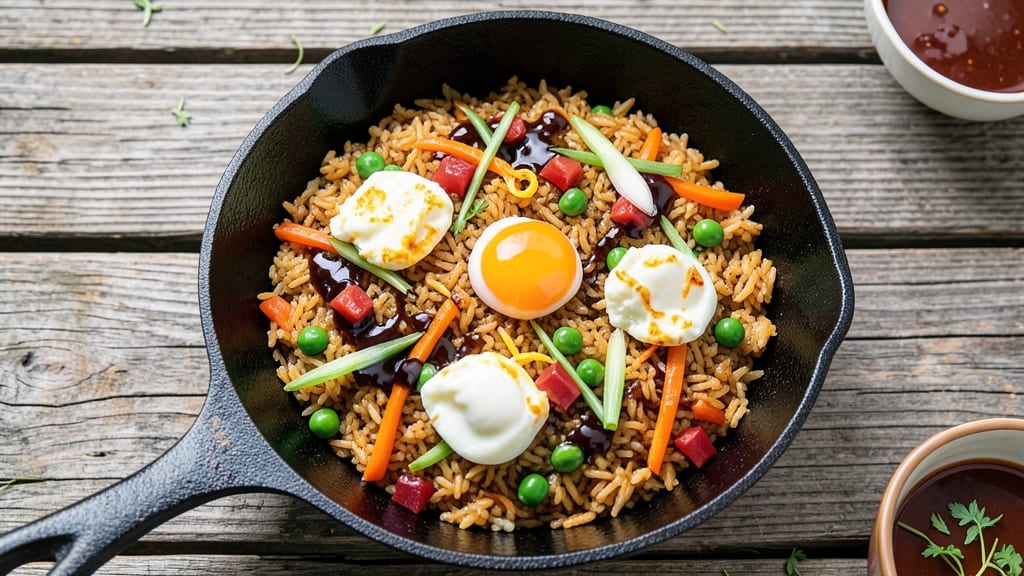
This camping fried rice recipe transforms simple pantry staples into crispy, wok-style bites that taste better than takeout. The secret lies in high-heat searing—perfect for camp stoves—and prepping ingredients at home to minimize mess.
With just 15 minutes of active cooking, you’ll have a satisfying meal that’s easy on your pack and hard on hunger.
Use day-old rice (or pre-cooked grains) for better texture, and scramble eggs directly in the skillet for that signature eggy richness. Customize with whatever veggies or proteins you have on hand—this recipe adapts to whatever’s in your cooler.
The result? A crispy, flavorful dish that feels like a restaurant meal, even in the backcountry.
Ingredients for camping fried rice
Pantry staples and a few fresh aromatics create this crispy, wok-style camping fried rice.
| Ingredient | Amount | Notes |
|---|---|---|
| Day-Old Cooked White Rice 🍚 | 4 cups | Cold or room temperature preferred |
| Large Eggs 🥚 | 4 whole | Freshly cracked for scrambling |
| Vegetable Oil 🫒 | ½ cup | High smoke point for searing |
| Frozen Mixed Vegetables 🥕 | 1 ½ cups | Peas, carrots, corn blend |
| Green Onions 🧅 | ½ cup | Sliced thin for garnish |
| Soy Sauce 🍶 | 3 tbsp | Light or all-purpose |
| Sesame Oil 🫒 | 1 tbsp | Toasted for aroma |
| Garlic Cloves 🧄 | 3 cloves | Minced for flavor |
| Ginger Root 🌿 | 1 tbsp | Freshly grated |
| Salt 🧂 | ½ tsp | Adjust to taste |
| Black Pepper 🌶️ | ¼ tsp | Freshly ground |
| Optional Protein 🍗 | 1 cup | Diced ham, chicken, or tofu |
| Optional Spices 🔥 | 1 tsp | Red pepper flakes or sriracha |
The rice is the star—day-old works best (that means pre-cooked at home). Daylight or jasmine rice holds up better to high heat than basmati. If you're packing rice pre-cooked, use a rice cooker or insulated bag to keep it warm. For the veggies, frozen mixed blends save space and cook fast—just toss in whatever's in your cooler. Green onions add freshness, but scallions or chives work too. The key to crispy texture? High heat and minimal stirring—just like restaurant-style fried rice.
No soy sauce? Coconut aminos or tamari are great swaps. Fresh ginger and garlic can be swapped for paste or powdered versions (use half the amount). Running low on sesame oil? Toasted peanut oil gives a similar nutty depth. The optional protein can be anything—leftover chicken, canned tuna, or marinated tofu. For extra heat, gochujang or chili crisp add complexity. And if you're packing spices, smoked paprika gives a campfire vibe.
Prep ahead at home: chop all veggies, measure spices, and pre-cook rice. Store everything in small reusable containers to save space. The eggs scramble best when cooked directly in the pan—no need to pre-mix. This keeps 2 days in the fridge if you're not eating it fresh. For leftovers, reheat in a skillet with a splash of water to restore crispiness. Freezes well for up to 3 months if you're planning a multi-day trip.
Why You'll Love This Recipe
- No Chopping Needed: I keep a bag of frozen mixed veggies in my cooler—just toss them straight from the bag into the hot oil. No prepping, no mess, and still packed with crunch.
- Eggy Comfort in Minutes: That first crack of the egg into the sizzling rice? Pure magic. The yolks get just runny enough to coat every grain, turning it into something hearty and satisfying—like a hug in a bowl.
- Campfire to Table: Between us, this is my secret weapon for lazy evenings or when the weather’s too nice to be inside. The rice soaks up any leftover spices or even a splash of soy sauce, so it’s always adaptable.
- Leftovers? Better Than Fresh: Honestly, it tastes even better the next day. The flavors meld together, and the rice gets that perfect texture—slightly firm, not mushy. I make a big batch and eat it for days.
Step-by-step instructions for crispy wok-fried rice
Here's how to turn day-old rice into restaurant-quality fried rice with perfect texture every time.
Scramble the Eggs Until Just Set
Crack all 4 whole large eggs into a bowl and whisk vigorously until the yolks and whites are fully combined. Heat 1 tablespoon of the vegetable oil in your wok or large skillet over medium-high heat until shimmering. Pour in the eggs and let them sit undisturbed for 5-7 seconds—this creates a soft curd that'll break into silky strands.
Using a spatula, gently push the eggs from one side to the other, creating soft curds that'll cook evenly. Once the eggs are just set but still slightly runny in the center (about 20-25 seconds), remove them from the wok and set aside. Don't overcook—they'll finish cooking with the rice. The eggs should look like delicate, slightly glossy ribbons when done correctly.
Stir-Fry Aromatics and Protein
In the same wok, add the remaining 0.375 cup vegetable oil and swirl to coat the bottom evenly. Add the 1 cup optional protein (if using) and stir-fry for 2-3 minutes until browned and cooked through. Remove the protein and set aside with the eggs.
Add the 3 cloves minced garlic cloves and 1 tablespoon freshly grated ginger root to the wok, stirring constantly for 30 seconds until fragrant. You'll smell that sweet, zesty aroma—this is your cue that the aromatics are ready. If they start to brown too quickly, reduce heat to medium to prevent burning.
Cook the Vegetables Until Tender-Crisp
Add the 1.5 cups frozen mixed vegetables to the wok and stir-fry for 3-4 minutes over medium-high heat until they're heated through but still retain a slight bite. The peas should pop when bitten, and the carrots should be tender but not mushy. If the vegetables release too much moisture, increase heat slightly to evaporate the excess.
Push the vegetables to one side of the wok and add the 4 cups day-old cooked white rice to the empty space. Use the spatula to break up any large clumps of rice. Let the rice sit undisturbed for 1 minute to begin developing those golden-brown patches that create the perfect texture.
Combine and Season for Maximum Flavor
Pour the 3 tablespoons soy sauce and 1 tablespoon sesame oil over the rice and stir vigorously for 1-2 minutes until the sauce is evenly distributed. Add the scrambled eggs and cooked protein back to the wok, mixing everything together thoroughly. Sprinkle with 0.5 teaspoon salt and 0.25 teaspoon black pepper, then add the 1 teaspoon optional spices if using.
Continue cooking for another 2 minutes until the rice is heated through and the edges are beginning to crisp. The rice should be hot throughout, with some slightly charred spots from the wok's surface. If the mixture looks dry, add 1-2 tablespoons water to steam the rice and create a more cohesive texture.
Finish with Green Onions for Freshness
Remove the wok from heat and stir in the 0.5 cup sliced green onions, reserving a small handful for garnish. Taste and adjust seasoning if needed—you might want to add a bit more soy sauce for saltiness or a splash of sesame oil for richness. The fried rice should be flavorful with each bite delivering a balance of savory, umami, and slightly sweet notes.
Serve immediately while still hot, garnished with the reserved green onions. The rice should be crispy around the edges with soft, fluffy centers, and each bite should deliver that perfect combination of eggy richness, tender vegetables, and savory seasoning. This dish is best enjoyed fresh off the wok when the textures are at their peak!
Pro Tips For Making Camping Fried Rice
- CRANK THE HEAT FIRST: Don’t start slow—get that pan screaming hot before adding oil. I used to baby it, and the rice would steam instead of sear, turning soggy by the time I added eggs. High heat for 30 seconds first locks in texture, and the eggs get that perfect crispy edge.
- THAW VEGGIES IN HOT WATER: Dump frozen mixed veggies in a bowl of boiling water for 2 minutes before draining. This cuts down on cooking time later and keeps them from releasing excess water into your rice. (Yes, even if you’re impatient like me—it’s worth the 60 seconds.)
- SCRAMBLE EGGS SEPARATELY: Push the eggs to one side of the pan and let them cook undisturbed until just set—about 20 seconds. Then mix them into the rice. I learned this the hard way: stirring too soon makes them rubbery, and scrambling them first guarantees they’ll turn out dry.
- USE COLD, DRY RICE: Grab that day-old rice straight from the fridge—no need to thaw it. The chill keeps it from turning mushy, and the dry grains absorb the oil better. (Pro move: Spread it out on a tray first to cool evenly.)
Common mistakes when making this dish
Overcrowding the Pan
I’ve made this mistake more than once—dumping all the rice into the wok at once, thinking I’m saving time. Big mistake! Overcrowding steams the rice instead of crisping it, turning your perfect fried rice into a mushy, sad pile.
Instead, work in batches if needed, or spread the rice out in a single layer. Let it develop those golden-brown patches for 1 minute before stirring. Those crispy bits are what make camping fried rice taste like a restaurant dish. 🔥
Skipping the Day-Old Rice
Freshly cooked rice is too moist and clumps together, no matter how much oil you add. The starches need time to dry out slightly—this is non-negotiable for crispy texture. If you’re cooking at home, make extra rice the night before and store it uncovered in the fridge.
For camping, pre-cook rice at home and pack it in a breathable container. Trust me, the texture difference is night and day.
Low and Slow Heat
Camping stoves can be finicky, but you need medium-high to high heat for that wok hei (breath of the wok) effect. If your flame is too low, the rice will steam instead of sear.
Use a wok with sloped sides to maximize surface area, and adjust your stove’s heat setting if possible. A 12-inch carbon steel wok works best for even heat distribution. If your stove lacks control, preheat the wok for 2 minutes before adding ingredients.
Underseasoning the Eggs
The eggs carry a lot of flavor in fried rice, so don’t treat them like an afterthought. Season them lightly with a pinch of salt and pepper before scrambling—they’ll absorb the soy sauce and aromatics later.
I also like to add a tiny splash of sesame oil to the egg mixture for extra depth. Pro tip: If your eggs taste bland after cooking, boost the soy sauce in the final step. The eggs should taste like part of the dish, not an add-on.
Ignoring the Resting Time
After cooking, let the fried rice sit for 1-2 minutes off the heat. This lets the flavors meld and the rice absorb any remaining juices. Skipping this step means you’ll end up with dry, separate ingredients instead of a cohesive dish.
Cover the wok loosely with a lid or foil to trap heat while resting. This is especially important when cooking over uneven campfire heat—it evens out the temperature and keeps everything hot. 💡
Using Cold Ingredients
Cold rice, veggies, or eggs straight from the cooler will cool down your wok and require extra oil to compensate. Before cooking, let everything sit at room temperature for 10-15 minutes. For veggies, thaw frozen mixes in a bowl of warm water for 5 minutes to speed up cooking.
If you’re in a hurry, use a small camp stove to gently warm ingredients while prepping. Cold ingredients = longer cook times and less crispy results.
Nutrition facts
Frequently asked questions about camping fried rice
Can I make this recipe with fresh rice instead of day-old?
Fresh rice is too moist and will turn mushy—this recipe requires day-old or pre-cooked rice for that perfect crispy texture. If you must use fresh rice, spread it on a tray and refrigerate uncovered for 1-2 hours to dry it out slightly. For camping, pre-cook rice at home and pack it in a breathable container.
What's the best way to pack ingredients for a multi-day trip?
Use small reusable containers to save space—pre-chop veggies, measure spices, and pre-cook rice at home. Store eggs in their shells (cleaned and dry) in a cooler with ice packs. For proteins like ham or tofu, use vacuum-sealed bags to prevent drying. Keep sauces (soy, sesame oil) in squeeze bottles for easy pouring.
How do I adjust this for a one-burner camp stove?
Use a 12-inch carbon steel wok for even heat distribution. Cook in two batches if needed—first stir-fry aromatics and protein, then set aside before adding rice. Preheat the wok for 2 minutes over the flame to maximize heat. If your stove lacks control, use medium-high heat consistently and avoid overcrowding.
Can I substitute frozen veggies with fresh ones?
Fresh veggies work, but they release more moisture and require longer cooking times. If using fresh, chop small (pea-sized) and cook them first to remove excess water. Frozen veggies are ideal for camping—they’re pre-portioned, thaw quickly, and won’t spoil as fast. For fresh, try bell peppers or snap peas if you have space in your cooler.
Why did my fried rice turn out dry?
Overcooking or insufficient sauce are the usual culprits. Add 1-2 tablespoons water at the end to steam the rice, or stir in a splash of soy sauce for moisture. For camping, pack extra soy sauce or broth to adjust as you cook. Also, avoid stirring too much—let the rice develop crispy edges for 1 minute before mixing.