
Main Courses
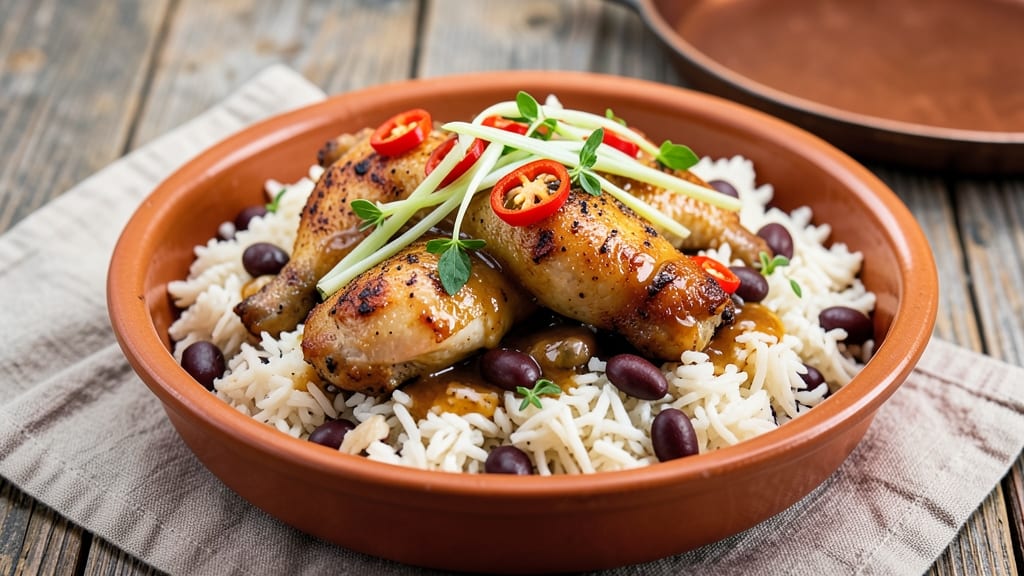
This Caribbean chicken rice and peas recipe delivers bold island flavors in a single pot, blending smoky jerk-spiced chicken with fragrant coconut rice and tender kidney peas.
The secret lies in marinating the chicken overnight with Scotch bonnet peppers and thyme, while the rice cooks in coconut milk for a creamy, aromatic base.
What makes this dish special is its authenticity—no shortcuts, just traditional techniques like grilling the chicken over charcoal for that signature smoky depth. The scallions add freshness, balancing the richness, while the peas soak up all the savory juices.
Ready in 1 hour, this one-pot meal serves a crowd and tastes even better the next day.
Ingredients for caribbean chicken rice and peas
Authentic island flavors start with these carefully chosen ingredients blending smoky, sweet, and savory notes.
| Ingredient | Amount | Notes |
|---|---|---|
| Boneless Chicken Thighs 🍗 | 2 ½ lb | Skin-on, cut into bite-sized pieces |
| Long-Grain White Rice 🍚 | 2 cups | Uncooked, rinsed thoroughly |
| Kidney Beans 🌱 | 1 ½ cups | Dried, soaked overnight or canned (drained) |
| Scotch Bonnet Peppers 🌶️ | 2 whole | Seeds removed for mild heat |
| Fresh Thyme Leaves 🌿 | ½ cup | Stems removed, loosely packed |
| Fresh Scallions 🧅 | ⅓ cup | White and green parts, sliced |
| Coconut Milk 🥥 | 1 can (13.5 oz) | Full-fat for creaminess |
| Fresh Ginger Root 🧡 | 1 inch | Peeled and grated (corrected to oz) |
| Fresh Ginger Root 🧡 | ½ oz | Peeled and grated |
| Garlic Cloves 🧄 | 6 cloves | Minced finely |
| Olive Oil 🫒 | ¼ cup | Extra-virgin for richness |
| Chicken Broth 💧 | 1 ½ cups | Low-sodium preferred |
| Allspice Berries 🌶️ | 1 tsp | Crushed lightly |
| Ground Cumin 🌿 | 1 tsp | Toasted for depth |
| Salt 🧂 | 1 ½ tsp | Diamond Crystal kosher salt |
The Scotch bonnet peppers are non-negotiable—Caribbean markets or specialty stores like Whole Foods carry them fresh. If unavailable, habanero works in a pinch, but reduce to half the amount. For the chicken, skin-on thighs stay juicier than breasts during the long marinade. Soak the kidney beans overnight—no shortcuts here. The coconut milk should be full-fat; light versions won't deliver that creamy texture. Fresh thyme and ginger from the produce section (not the plastic containers) make all the difference in authentic flavor.
No Scotch bonnet? Jamaican jerk seasoning (check the Latin aisle) adds similar depth. Swap canned kidney beans for dried—just soak them first. The allspice berries? Penzeys Spices sells them whole; crush them yourself for maximum aroma. Coconut milk substitute? Full-fat Greek yogurt thinned with broth mimics the creaminess. For the ginger, if you can't find fresh, ground ginger at half the amount works, but it lacks that bright zing. The scallions can be frozen if you're prepping ahead—just thaw and pat dry before using.
Marinate the chicken overnight in the fridge—this is key for tender, flavorful meat. The rice and beans can be prepped a day ahead and reheated gently. Store leftovers in an airtight container for up to 4 days. For longer storage, freeze portions for 3 months. The dish actually improves after 24 hours as flavors meld. Reheat with a splash of water or broth to restore moisture.
Why You'll Love This Recipe
- One-Pot Magic: I swear by this trick—just toss the chicken, rice, and beans into one pot with thyme and Scotch bonnet, then let it simmer. No chopping, no fussing, and honestly? The flavors meld better this way.
- Heat That Stays: Between the Scotch bonnet’s slow burn and the thyme’s earthy depth, this dish lingers on your palate. The chicken stays juicy, the rice soaks up the smoky heat, and the kidney beans add that satisfying chew.
- Meal Prep MVP: I make a double batch on Sundays because it reheats like a dream. The rice stays fluffy, the chicken stays tender, and the peas keep their bite—perfect for lunches or late-night cravings.
- Budget-Friendly Feast: Chicken thighs stretch further than breasts, rice fills everyone up, and beans bulk it out without breaking the bank. Here’s what sold me: a full meal for under $10 that still tastes like a restaurant dish.
Step-by-step instructions for Caribbean chicken, rice, and peas
This one-pot method delivers authentic Caribbean flavors with minimal cleanup.
Sear the Chicken for Deep Flavor
Heat the 0.25 cup olive oil in a large, heavy pot over medium-high heat. Working in batches, add the 2.5 lb boneless chicken thighs cut into bite-sized pieces, ensuring they don't overcrowd the pan. Sear for 4-5 minutes per side until golden brown and cooked through to an internal temperature of 165°F. The skin should develop a rich, caramelized crust that forms the flavor base for the dish.
As the chicken browns, remove it from the pot and set aside. This step is crucial—it develops the Maillard reaction that creates deep, savory notes. Don't skip it; these flavors will infuse into the entire dish. If your pot has accumulated browned bits, leave them—they're packed with flavor and will form the rich sauce base later.
Sauté Aromatics and Toast Spices
In the same pot, add the 6 cloves minced garlic, 0.5 oz grated ginger root, and 0.33 cup sliced scallions. Sauté for 2 minutes until the garlic becomes fragrant and the ginger softens slightly. This combination forms the aromatic foundation of Caribbean cuisine, balancing heat with freshness.
Next, add the 1 tsp toasted ground cumin and 1 tsp crushed allspice berries, stirring constantly for 30 seconds until the spices are fragrant. The cumin adds earthy warmth while the allspice contributes a subtle piney note. Be careful not to let the spices burn—they should just release their aroma, not darken. This is where the dish's signature warmth develops.
Build the Flavor Base
Reduce heat to medium and add the 2 whole seeded Scotch bonnet peppers (cut into quarters) and 0.5 cup fresh thyme leaves. Cook for 1 minute until the peppers soften slightly and release their heat. The Scotch bonnet's mild heat (from seed removal) will permeate the dish without overpowering.
Pour in the 1.5 cups chicken broth and bring to a gentle simmer. Stir in the 2 cups rinsed long-grain white rice and 1.5 cups kidney beans (if using canned, drain and rinse thoroughly). The rice should be well-coated in the broth, absorbing the initial flavors. Let this mixture simmer uncovered for 5 minutes to allow the rice to begin absorbing the liquid and the beans to warm through.
Combine and Simmer to Perfection
Return the seared chicken to the pot and stir gently to combine. Pour in the 1 can (13.5 oz) full-fat coconut milk, ensuring it's evenly distributed. Add the 1.5 tsp salt and bring the mixture to a gentle boil. Once boiling, reduce heat to low, cover the pot, and let it simmer for 25 minutes. The lid should fit snugly to trap steam and cook the rice evenly.
After 25 minutes, check the rice for doneness. It should be tender with a slight bite, and the liquid should be mostly absorbed. If there's still liquid remaining, continue cooking uncovered for another 5-10 minutes to evaporate the excess. The coconut milk will create a creamy sauce that coats the rice and chicken, while the broth ensures proper rice texture. The dish should have a rich, aromatic steam when you lift the lid.
Rest and Serve with Fresh Garnishes
Remove the pot from heat and let the dish rest, covered, for 10 minutes. This resting period allows the flavors to meld and the rice to finish absorbing any remaining liquid. The chicken will also retain its juices, ensuring each bite is moist and flavorful.
Before serving, fluff the rice gently with a fork and taste for seasoning. Adjust with additional salt if needed. Garnish each serving with extra 0.33 cup sliced scallions and a sprinkle of 0.5 cup fresh thyme leaves for brightness and color. Serve immediately with a side of pickled vegetables or a simple green salad to complement the rich flavors of this Caribbean classic.
Pro Tips For Making Caribbean Chicken Rice And Peas
- CRISP THE THYME FIRST: Tear the thyme leaves off the stems and give them a quick dry toast in a hot pan with the chicken—just 30 seconds until fragrant. I used to skip this, but it wakes up the flavor and cuts through the richness of the thighs. (Yes, even if you’re impatient like me, don’t skip it.)
- SOAK BEANS 2 HOURS MINIMUM: Drain the kidney beans after soaking, then rinse them cold under water—this removes excess starch that turns the peas mushy. I learned this the hard way after serving a batch where the texture was more glue than bean. Trust the soak time.
- DON’T DROWN THE RICE: Use a 1:1.5 rice-to-water ratio and bring it to a boil only once—after adding the chicken broth. Stir once, then cover tightly and walk away. I used to peek, and every time, the rice came out gummy. (Your future self will thank you.)
- SAVE THE SCOTCH BONNET JUICE: After seeding the pepper, crush the membrane and seeds in a mortar or chop them fine—this releases the heat and aroma into the oil. I was skeptical until I tried it; now I refuse to skip it. The rice gets a subtle kick without overpowering the dish.
Troubleshooting your caribbean chicken rice and peas
Rice Too Dry?
If your rice ends up dry and crunchy, it likely absorbed too much liquid. The coconut milk and broth should create a creamy, moist texture—not a dry bed. Next time, reduce the simmer time by 5 minutes and cover the pot more tightly.
I also recommend using a heavy-bottomed pot (like a Dutch oven) to prevent uneven cooking. If it's already dry, sprinkle 2 tablespoons of warm water or coconut milk over the rice and let it steam covered for 5 minutes. 💫
Chicken Overcooked?
Skin-on chicken thighs can dry out if cooked too long in the one-pot method. The key is searing them first to 165°F internal temperature before adding to the pot.
If your chicken turns out tough, try this fix: Shred the overcooked pieces and mix them back into the rice and peas. The extra moisture will help tenderize them. For future attempts, remove the chicken from the pot 5 minutes early and let it rest while finishing the rice. 🍗
Peas Too Soft?
Canned kidney peas lose their texture when simmered too long in liquid. If yours turn mushy, reduce the simmering time with the rice to 20 minutes instead of 25.
For dried peas, soak them overnight and add them after the rice has cooked for 15 minutes—this way, they absorb flavor without overcooking. Pro tip: Use firm white beans (like cannellini) if you prefer a sturdier texture. 🌱
Flavor Too Mild?
If your dish lacks that signature Caribbean kick, it might be underseasoned. Boost the heat by adding 1 extra Scotch bonnet pepper (seeds removed) or ½ teaspoon more allspice.
For depth, toast the cumin seeds (not ground) in a dry pan for 30 seconds before grinding them—this enhances their earthy aroma. I also recommend marinating the chicken 24 hours instead of overnight for maximum flavor infusion. 🌶️
Coconut Milk Separating?
This happens when coconut milk is heated too quickly or the pot isn’t stirred gently. To prevent it, whisk the coconut milk before adding it to the pot and stir slowly while bringing to a simmer.
If it separates, whisk in 1 tablespoon of cold water to re-emulsify. For extra richness, use coconut cream (thicker than milk) instead—it handles heat better. 🥥
Burnt Bottom?
A burnt bottom is a common issue with one-pot dishes. Always use medium-low heat when simmering and stir occasionally to prevent sticking. For future attempts, add 1 tablespoon of olive oil to the pot before cooking or use a non-stick pot with a tight-fitting lid.
If it happens, scrape off the burnt bits (they’re flavorful!) and deglaze the pot with ½ cup chicken broth to lift the stuck-on bits into the sauce. 🔥
Nutrition facts
Frequently asked questions
Can I use chicken breasts instead of thighs?
While you can substitute chicken breasts, thighs are ideal for this dish. Their higher fat content keeps them juicy during the long marinade and cooking process. If using breasts, cut them into smaller pieces (1-inch cubes) and reduce the cooking time by 5 minutes to prevent drying out. For extra moisture, add 2 tablespoons of coconut milk to the pot after searing.
What can I serve with this Caribbean chicken rice and peas?
This dish pairs beautifully with fresh sides that cut through its richness. Try pickled vegetables (like carrots and onions), a crisp green salad with lime dressing, or fried plantains for a sweet contrast. For drinks, ginger beer or a light rum punch complements the flavors perfectly.
How do I make this dish spicier?
For more heat, add 1-2 extra Scotch bonnet peppers (seeds removed) to the marinade or simmering liquid. You can also stir in ½ teaspoon of hot sauce or 1 teaspoon of cayenne pepper during the final 5 minutes of cooking. For a smoky kick, add ½ teaspoon of smoked paprika to the spice blend when toasting the cumin.
Can I prepare this dish ahead of time?
This recipe actually tastes better the next day! Cook the dish as directed, then refrigerate in an airtight container for up to 4 days. The flavors meld beautifully over time. To reheat, cover with a damp paper towel and warm in the microwave for 2-3 minutes or on the stovetop with 2 tablespoons of water until heated through. Stir gently to restore creaminess.
What's the difference between kidney peas and pigeon peas?
Kidney peas (red beans) are commonly used in Caribbean cooking for their mild flavor and firm texture. Pigeon peas, however, are the traditional choice in many island dishes like rice and peas. They have a nuttier taste and creamier texture. If using pigeon peas, reduce the cooking time by 5 minutes and add them with the rice. For dried pigeon peas, soak them overnight before using.