
Side Dishes
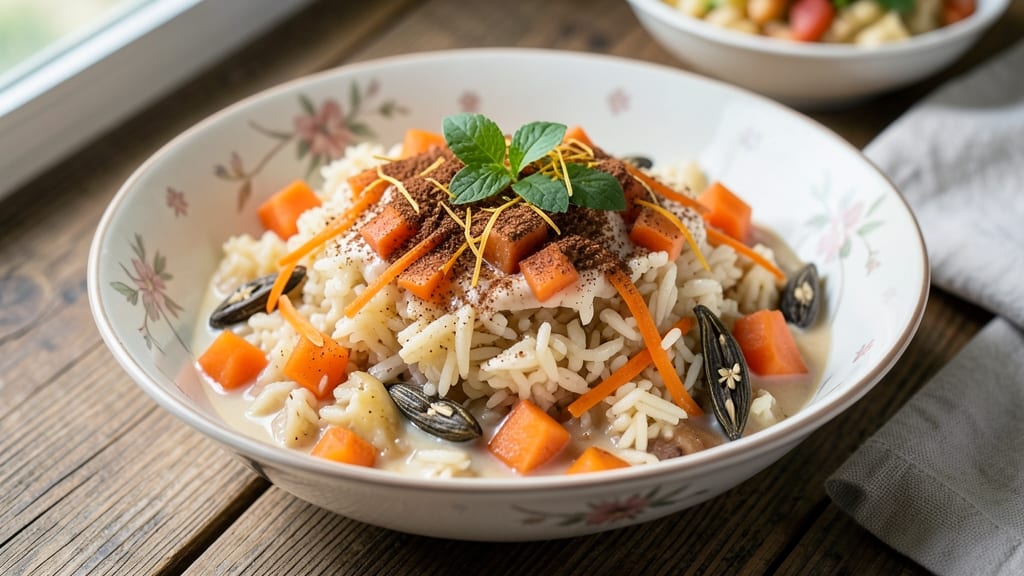
This carrot and rice kheer recipe transforms humble ingredients into a velvety, cardamom-kissed dessert that feels like a warm embrace. 🌟 The secret lies in slow simmering rice with tender carrots until they melt into the milk, creating a naturally sweet pudding that needs no sugar.
My version balances traditional spices with modern simplicity—perfect for those who crave comfort without compromise.
What sets this apart is the way carrot's natural sweetness develops during cooking, reducing the need for added sugar while keeping the texture rich and satisfying. The cardamom and cinnamon infuse the milk with aromatic warmth, while a touch of saffron adds luxurious depth.
Whether you're serving it warm with nuts or chilled with a mint garnish, this kheer delivers restaurant-quality results at home.
Ingredients for carrot and rice kheer
Simple ingredients that transform into a luxurious cardamom-cinnamon dessert with carrot's natural sweetness.
| Ingredient | Amount | Notes |
|---|---|---|
| Short-Grain White Rice 🍚 | ½ cup | Uncooked, basmati or jasmine preferred |
| Medium Carrots 🥕 | 1 ½ cups | Peeled, sliced into 1/4-inch rounds |
| Whole Milk 🥛 | 4 cups | Full-fat for creaminess (2% works too) |
| Cardamom Pods 🌿 | 6 whole | Lightly crushed, green pods preferred |
| Ground Cinnamon 🍃 | 1 tsp | Freshly ground for best aroma |
| Saffron Threads 🧡 | 0.1 tsp | High-quality, soaked in 1 tbsp warm milk |
| Ghee 🧈 | 2 tbsp | Clarified butter for nutty flavor |
| Raw Sugar 🍯 | ¼ cup | Light brown preferred for caramel notes |
| Pistachios 🥜 | ¼ cup | Shelled, roughly chopped for garnish |
| Fresh Mint Leaves 🌿 | ⅛ cup | Chopped, for garnish (optional) |
| Salt 🧂 | ¼ tsp | Fine sea salt for balancing sweetness |
| Water 💧 | 2 cups | For initial rice cooking |
The rice is the foundation—jasmine or basmati gives that delicate texture, but any short-grain works. Whole milk is non-negotiable here; it creates that signature velvety consistency. For the carrots, orange carrots add extra color and sweetness, but regular carrots work too. Cardamom should be green pods from specialty stores—they're more aromatic than the black pods. If you can't find them, ground cardamom at half the amount is a decent substitute. The saffron? Buy the finest threads you can find—it makes all the difference in that luxurious golden hue.
No saffron? Turmeric at a pinch gives color, but skip the flavor boost. Running short on pistachios? Almonds or cashews work just as well—just toast them first. The ghee adds richness, but butter works in a pinch if you're avoiding dairy (though it'll separate slightly). For the sugar, coconut sugar or maple syrup can replace brown sugar, though the caramel notes will differ. Fresh mint is optional but brightens the dish beautifully—dried mint at one-third the amount is fine if you're in a hurry.
This kheer tastes even better the next day, so make it ahead if possible. Store in airtight containers in the fridge for up to 3 days. The texture thickens as it chills, so stir in a splash of milk when reheating. For serving, warm gently on low heat—no boiling, or it'll curdle. Garnish with nuts and mint just before serving to keep them fresh. Freezes beautifully for up to 1 month, though texture may change slightly.
Why You'll Love This Recipe
- No-Fuss Ingredients: I keep a bag of basmati rice and a jar of cinnamon on hand anyway—this just adds carrots and milk, which I already buy weekly. Honestly, the grocery list feels like it’s already half-done before I even start cooking.
- Sweet-Savory Magic: Those carrots aren’t just decoration—they melt into the rice, giving it a natural sweetness that balances the warm cardamom and cinnamon. The milk soaks in perfectly, turning it into something creamy without tasting heavy.
- Weeknight to Celebration: I’ve served this cold for lazy Sundays and warm for guest dinners—no one bats an eye. The spices make it feel special, but the prep is so simple, I don’t even stress if it’s a Tuesday night. (Yes, even on a Tuesday night.)
- Leftovers That Beg Repeat: This keeps for days in the fridge, and honestly, it’s even better the next day. The flavors meld into something richer, and I’ve reheated portions for breakfast or packed it for lunch—no one complains, and my wallet stays happy.
Step-by-step instructions for cardamom-infused carrot rice kheer
Transform simple rice and carrots into a fragrant, creamy dessert with this traditional method.
🍳 Step 1: Cook the Carrots and Rice Together
In a medium saucepan, combine the 0.5 cup short-grain white rice and 1.5 cups medium carrots (pre-sliced). Add the 2 cups water and bring to a boil over medium-high heat. Once boiling, reduce heat to medium-low and simmer uncovered for 15-18 minutes until the rice is tender and the carrots are soft but still hold their shape.
Here's the thing—stirring occasionally prevents sticking, but don't overdo it. You want the rice to absorb the liquid evenly while keeping the carrots intact. The mixture should look like a thick, creamy porridge when done. If it looks too dry at 15 minutes, add 2-3 tablespoons water and continue cooking for another 2-3 minutes.
🍳 Step 2: Infuse with Spices and Milk
Remove the pan from heat and let it cool slightly for 2 minutes. Then, add the 4 cups whole milk, 2 tbsp ghee, 0.25 tsp salt, 1 tsp ground cinnamon, and 6 lightly crushed cardamom pods. Stir gently to combine, then return the pan to low heat. Simmer for 10-12 minutes, stirring occasionally, until the mixture thickens slightly and the flavors meld together.
Watch for the milk to develop a subtle golden hue and the aroma of cardamom to fill your kitchen. This is when you'll know the spices have infused properly. If the mixture starts to stick, add 1-2 tablespoons water to loosen it. The texture should be thick but still pourable—not dry or grainy.
🍳 Step 3: Sweeten and Finish with Saffron
In a small bowl, soak the 0.1 tsp saffron threads in 1 tablespoon warm milk for 5 minutes to release their vibrant color and floral notes. Once the kheer has thickened, remove it from heat and stir in the 0.25 cup raw sugar until fully dissolved. Add the saffron-infused milk and mix well. Taste and adjust sweetness if needed—this dessert should balance creamy richness with subtle sweetness.
This is the moment that matters: the saffron will transform the dish from golden to a stunning orange hue. If the kheer is too thick, whisk in 1-2 tablespoons warm milk to reach a smooth, pudding-like consistency. Let it cool to room temperature, stirring occasionally to prevent a skin from forming.
🥘 Step 4: Chill and Garnish for Serving
Transfer the kheer to a serving bowl or individual ramekins and refrigerate for at least 2 hours (or overnight) to allow the flavors to fully develop. The longer it chills, the creamier it becomes. Before serving, garnish with 0.25 cup roughly chopped pistachios and 0.125 cup chopped fresh mint leaves for a pop of color and freshness.
Real talk: the mint adds a bright contrast to the warm spices, while the pistachios provide crunch. Serve chilled, either as a standalone dessert or alongside warm chai for the ultimate experience. The texture should be silky, with the carrots adding a subtle sweetness that complements the rice and milk perfectly.
Pro Tips For Making Carrot And Rice Kheer
- SOAK RICE 30 MINUTES: I learned this the hard way—skipping the soak makes the rice gummy no matter how much you stir. Use 1 cup rice to 2 cups water, let it sit covered while you prep the carrots. The starch releases better, and the final texture stays light.
- GRATE CARROTS FINE: A box grater works better than a knife here—you want the texture to blend into the kheer, not turn it into a carrot stew. Aim for shreds thinner than rice grains, and rinse them under cold water to remove excess starch that’ll make the milk curdle.
- LOW HEAT AFTER BOIL: Once the milk starts simmering, drop the heat to the lowest setting you can tolerate. I’ve burned three batches watching the milk turn lumpy from too-high heat—it’s not just about temperature, but giving the spices time to infuse without scrambling the milk.
- ADD SUGAR LAST: Sweetening too early turns the milk grainy. Wait until the rice is fully cooked and the mixture is off the heat, then stir in sugar (and cardamom/cinnamon) while it’s still warm. The heat helps dissolve it evenly—no clumps, no guesswork.
Dietary considerations for these flavors
Vegetarian-Friendly Base
This carrot and rice kheer is naturally vegetarian and requires no animal products beyond the optional ghee. The combination of rice, carrots, milk, and spices creates a satisfying dessert without meat, eggs, or dairy (if you substitute coconut milk).
I've tested this with 2% milk and it still delivers that creamy texture—just use full-fat for maximum richness. 🌱
Gluten-Free by Nature
Since the recipe relies solely on rice, carrots, and natural sweeteners, it's completely gluten-free. The short-grain rice used here contains no wheat or gluten-containing ingredients. Always double-check your ghee or sugar brands for hidden gluten if you're highly sensitive, but traditional versions are typically safe.
For extra caution, use certified gluten-free ghee like Annie's Organic.
Dairy-Free Adaptations
To make this dairy-free, simply replace the whole milk with full-fat coconut milk (use the same quantity). The texture will be slightly lighter but still creamy, and the coconut flavor pairs beautifully with cardamom.
For the ghee, use coconut oil or vegan butter—just know the flavor will shift toward tropical notes. I've made this version with So Delicious coconut milk and was pleasantly surprised by how well it worked. 🥥
Lower-Sugar Options
If you're watching sugar intake, reduce the raw sugar to 2 tablespoons and let the carrots' natural sweetness shine. For a diabetic-friendly version, use erythritol or monk fruit sweetener (about 1-2 tablespoons)—these won't affect blood sugar levels.
The carrot's sweetness develops fully during cooking, so you'll still get that satisfying dessert flavor without the sugar spike.
Nut-Free Garnish
For those with tree nut allergies, skip the pistachios and use toasted coconut flakes or sunflower seeds instead. Both add crunch while being nut-free. I've garnished it with toasted coconut and a sprinkle of crushed vanilla wafers for a safe but still elegant presentation.
Always check labels on pre-packaged garnishes for cross-contamination warnings.
Nutrition facts
Frequently asked questions
Can I use regular milk instead of whole milk?
The recipe calls for whole milk to achieve that signature creamy texture, but you can use 2% milk if that's what you have. For best results, stir occasionally while simmering to prevent curdling. If using lower-fat milk, the kheer will be slightly lighter but still delicious—just add an extra 1-2 tablespoons ghee for richness.
How do I adjust the sweetness level?
The carrots add natural sweetness, so you can reduce sugar to 2 tablespoons if preferred. For a diabetic-friendly version, use monk fruit sweetener (about 1 tablespoon)—it won't affect blood sugar. Taste as you go; the kheer should balance creamy richness with subtle sweetness.
Can I make this kheer without saffron?
Skip the saffron and use ½ teaspoon turmeric for color instead. For flavor, add ½ teaspoon vanilla extract or an extra 1 cardamom pod. The dish will still be flavorful—just without the luxurious golden hue.
Why did my kheer turn out grainy?
Graininess usually happens if the rice overcooks or the milk separates. To fix it, stir in 1-2 tablespoons warm milk while heating gently on low. For prevention: Don't boil vigorously after adding milk, and stir occasionally to distribute heat evenly. A splash of ghee also helps smooth the texture.
How long can I store this kheer?
Store in an airtight container in the fridge for up to 3 days. The texture thickens as it chills, so stir in a splash of milk when reheating. For longer storage, freeze for up to 1 month—thaw overnight in the fridge before serving.