
Side Dishes
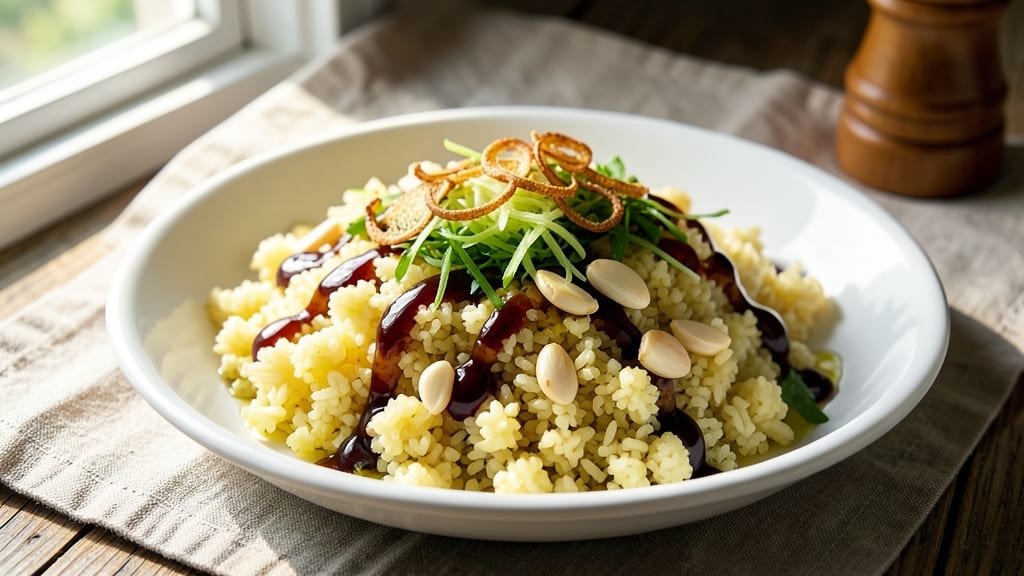
This cauliflower rice Asian recipe transforms a simple vegetable into a restaurant-worthy side dish with just 15 minutes of active cooking. The secret lies in achieving that signature wok hei flavor—smoky, aromatic, and packed with umami—through high-heat stir-frying and a fragrant ginger-soy glaze that coats every grain.
I developed this method after years of experimenting with low-carb Asian sides, and it consistently delivers crisp-tender texture and bold flavors that stand up to any main dish.
What sets this recipe apart is the balance of techniques: first, we create a flavorful base with garlic, ginger, and chili oil that infuses the cauliflower rice, then we achieve that coveted crispy texture through proper wok-frying.
The ginger-soy glaze adds a glossy finish while keeping the dish light and fresh. Unlike many cauliflower rice recipes that result in mushy grains, this method ensures each piece maintains its integrity while absorbing maximum flavor.
By the time you plate this dish, you'll have golden-brown cauliflower rice with crisp edges and tender centers, all coated in that fragrant ginger-soy glaze. The aroma alone will have everyone asking what's for dinner, and the texture provides the perfect contrast to richer main dishes.
This recipe proves that cauliflower rice doesn't have to be boring—it can be the star of your meal.
For added protein, simply stir in pan-seared tofu, shrimp, or mushrooms during the final minute of cooking. The dish reheats beautifully and keeps well in the refrigerator for up to three days, making it perfect for meal prep. Let's get cooking!
Ingredients for cauliflower rice asian
These 14 ingredients create restaurant-style cauliflower rice with crisp edges and fragrant glaze.
| Ingredient | Amount | Notes |
|---|---|---|
| Fresh Cauliflower 🥬 | 1 lb | Riced with food processor (or grated) |
| Extra-Virgin Olive Oil 🫒 | 2 tbsp | For high-heat stir-frying |
| Garlic Cloves 🧄 | 4 cloves | Minced for aromatic base |
| Fresh Ginger 🌿 | 1 tbsp | Finely grated (peeled) |
| Chili Oil 🌶️ | 1 tbsp | Or substitute chili crisp |
| Low-Sodium Soy Sauce 🍶 | 2 tbsp | For umami depth |
| Sesame Oil 🫒 | 1 tsp | Toasted for nutty aroma |
| Toasted Sesame Seeds 🌾 | 1 tsp | For garnish (optional) |
| Green Onions 🧅 | 3 whole | Thinly sliced for freshness |
| Fresh Cilantro 🌿 | ¼ cup | Chopped for brightness |
| Vegetable Oil 🫒 | 1 tbsp | For high-heat wok-frying |
| Lime Juice 🍋 | 1 tbsp | Freshly squeezed |
| Salt 🧂 | ½ tsp | Kosher or sea salt |
| White Pepper 🌶️ | ¼ tsp | Freshly ground |
The cauliflower is the star, so grab a fresh head—Trader Joe's or Whole Foods carry the best quality. For ricing, pulse in a food processor until rice-like (not too fine). The ginger and garlic need to be freshly minced—pre-minced jars lack the punch. Chili oil adds heat and depth, but if you're sensitive, reduce to 0.5 tbsp. I always double-check my soy sauce is low-sodium since we're not adding extra salt later. For sesame oil, Kadoya or La Choy are my go-tos—they're affordable and flavorful.
No chili oil? Sriracha or gochujang mixed with a little oil works in a pinch. Fresh ginger too expensive? Powdered ginger at half the amount is fine, but you'll lose some brightness. The green onions can be swapped for scallions, and cilantro can be omitted if you dislike its flavor. For extra protein, pan-sear tofu or mushrooms separately and add during the final minute. The lime juice should be freshly squeezed—bottled won't give the same zing. If you're meal prepping, hold off on the sesame seeds and cilantro until serving to keep things fresh.
The cauliflower rice keeps best in the fridge for 3 days—it actually tastes better the next day as flavors meld. Store in an airtight container with a paper towel to absorb excess moisture. For reheating, 20 seconds in the microwave with a splash of water keeps it crisp. Freezing isn't ideal since it turns mushy, but if you must, blanch first. The lime juice and fresh herbs should always be added post-reheating. This dish is perfect for batch cooking—make a big batch and use it as a base for bowls all week.
Why You'll Love This Recipe
- No-Rice Nightmare Solved: I swear by this when I forget rice—just pulse the cauliflower, toss it in a hot pan with olive oil, and let the garlic and ginger sizzle until the kitchen smells like a street cart. Five minutes, zero regrets.
- Umami Bomb Combo: That chili oil hitting the wok with the garlic? Instant flavor explosion. The crispy edges on the cauliflower soak up the oil like a sponge, while the ginger adds a zing that lingers. Honestly, I’ve skipped takeout for this alone.
- Double-Duty Side: Make a big batch on Sunday—it’s perfect cold in salads, reheated with eggs for breakfast, or tossed with leftover protein. My kids ask for it more than actual rice, and it’s my secret for stretching meals without extra shopping.
- Budget-Friendly Hero: Fresh cauliflower is cheaper than rice, lasts forever in the fridge, and turns into this dish with just a few pantry staples. I’ll be real: I’ve made this on a $5 grocery run when I was broke in college, and it still tasted like I’d spent hours.
Step-by-step instructions for wok-fried cauliflower rice
Here's how to transform simple cauliflower into a fragrant, wok-fried masterpiece with perfect texture every time.
Prep the Cauliflower Rice for Maximum Crunch
Start by cutting the 1 lb fresh cauliflower into florets, removing any tough stems. Pulse in a food processor until you achieve rice-sized pieces—about ¼-inch diameter. Spread the cauliflower rice on a clean kitchen towel and gently squeeze out any excess moisture. This step is crucial because wet cauliflower rice will steam instead of crisp up during cooking.
Transfer the dried cauliflower rice to a large bowl and toss with 2 tbsp extra-virgin olive oil, 0.5 tsp salt, and 0.25 tsp white pepper. Let it marinate for 10 minutes while you prep the rest of your ingredients. The oil will help create that beautiful caramelized crust we're after, and the salt enhances all the flavors once everything comes together.
Build the Aromatic Ginger-Soy Base
Heat 1 tbsp vegetable oil in a wok or large skillet over high heat until shimmering. Add the 4 cloves minced garlic cloves and 1 tbsp finely grated fresh ginger, stirring constantly for 30-45 seconds until fragrant but not browned. This quick cooking preserves their bright flavors rather than letting them turn bitter.
Pour in the 2 tbsp low-sodium soy sauce and 1 tbsp chili oil, stirring vigorously to combine. Let the mixture simmer for 1 minute until slightly reduced—you'll notice the aromas intensify as the soy sauce cooks down. This flavorful base will infuse the cauliflower rice with umami depth and a subtle kick of heat.
Wok-Fry the Cauliflower Rice to Golden Perfection
Add the marinated cauliflower rice to the wok in a single layer, spreading it out evenly. Stir-fry for 4-5 minutes over high heat, working quickly to prevent overcrowding. You'll hear the rice sizzling and see it develop golden brown spots—that's your signal it's cooking properly.
Once the cauliflower rice is 80% cooked (still slightly firm to the touch), drizzle in 1 tsp sesame oil and toss everything together. The sesame oil adds that nutty aroma that makes this dish truly Asian-inspired. Cook for another 1-2 minutes until the cauliflower rice is tender yet still holds its shape with a satisfying bite.
Finish with Bright Herbs and Zesty Lime
Remove the wok from heat and stir in the 0.25 cup chopped fresh cilantro and 3 thinly sliced green onions. Add the 1 tbsp freshly squeezed lime juice and toss gently to combine. The acidity from the lime brightens all the flavors and cuts through the richness of the sesame oil.
Taste and adjust seasoning if needed—you might want to add a splash more soy sauce for saltiness or a bit of lime juice for brightness. Transfer to serving bowls and garnish with 1 tsp toasted sesame seeds for that final crunchy, nutty accent. Serve immediately while the cauliflower rice is still crisp-tender and the aromas are at their peak.
Pro Tips For Making Cauliflower Rice Asian
- USE A MANDOLINE FOR RICE: I learned this the hard way—grating cauliflower by hand leaves uneven, mushy bits that turn to soup. A mandoline with the thinnest blade setting gives you perfectly consistent "rice" that toasts evenly. (Yes, even if you’re impatient like me.)
- TOAST IN BATCHES: High heat is your friend here, but don’t crowd the pan. Split your cauliflower rice into 2-3 batches if needed—this keeps it crisp instead of steaming into a sad, limp pile. I know, I know, but trust the process.
- MINCE GINGER FINE: Skip the food processor for ginger—it turns to mush. Use a sharp knife and chop it into a paste so fine you can barely see the fibers. This makes a real difference in flavor distribution, especially when stir-frying with garlic.
- SALT THE CAULIFLOWER FIRST: Toss freshly grated cauliflower rice with a pinch of salt and let it sit for 5 minutes before cooking. This draws out moisture, so it crisps up better and doesn’t turn into a wet mess when you add the oil. (Your future self will thank you.)
Essential equipment for this recipe
High-Heat Wok
A carbon steel wok is my go-to for this recipe because it heats up quickly and retains that signature wok hei flavor. Look for a 14-inch wok with a flat bottom—Made In woks are affordable and excellent for home cooks.
If you don’t have a wok, a heavy-bottomed cast iron skillet (like Lodge) works just as well. The key is getting the pan smoking hot before adding oil—this creates the crispy texture we want. 🔥
Food Processor
You’ll need a food processor to rice the cauliflower efficiently. I recommend a high-quality model like the Cuisinart DLC-10BCNY or Ninja BN601 for consistent results. Pulse the florets until they’re ¼-inch rice-sized pieces—not too fine, or they’ll turn mushy.
If you don’t have a food processor, a box grater works in a pinch, but it’s more labor-intensive. 🥬
Tongs or Spatula
Use a long-handled pair of tongs or a wide spatula to stir-fry the cauliflower rice. Tongs give you better control for tossing without overcrowding the pan, which is crucial for achieving that crispy texture.
I prefer stainless steel tongs (like OXO Good Grips) because they’re durable and heat-resistant. A silicon spatula also works well if you’re gentle with it. ✨
Kitchen Towel
A clean kitchen towel is essential for drying the cauliflower rice before cooking. After pulsing the cauliflower in the food processor, spread it on the towel and gently squeeze out excess moisture.
This step prevents steaming and ensures a crispy finish. Microfiber towels work best because they absorb moisture without leaving fibers behind. 🧻
Measuring Spoons
Precision matters with small ingredients like sesame oil and chili oil. Use stainless steel measuring spoons (like OXO Good Grips) for accuracy—even ½ tsp too much can overpower the dish.
I keep a set on my stovetop for quick access while cooking. For the lime juice, a small squeeze bottle makes it easier to measure and add without spills. 🍋
Optional: Protein Prep Tools
If you’re adding tofu, shrimp, or mushrooms, you’ll need a separate pan or bowl. For tofu, I recommend a nonstick skillet (like Calphalon) to achieve a golden crust. Shrimp should be patted dry with paper towels before cooking for the best texture.
A small mixing bowl is handy for tossing protein with a little soy sauce or cornstarch before adding it to the wok. 🍳
Nutrition facts
Frequently asked questions
Can I use frozen cauliflower rice instead of fresh?
Fresh cauliflower rice yields the best texture, but you can use frozen in a pinch. Just thaw it completely first, then squeeze out all excess moisture with a clean towel—this is critical to prevent steaming. The flavor won't be quite as vibrant, but it still works well for stir-frying. For best results, pulse fresh cauliflower when possible.
How do I add protein to this recipe?
For vegetarian options, pan-sear extra-firm tofu (pressed and cubed) or shiitake mushrooms until golden, then add during the final 1-2 minutes of cooking. For pescatarian versions, use shrimp or scallops—toss them with 1 tsp soy sauce and ½ tsp cornstarch before adding. Cook protein separately first to avoid overcooking.
Why did my cauliflower rice turn mushy?
Overcrowding the pan or cooking at low heat causes steaming instead of crisping. Always use high heat and work in batches if needed. Also, ensure you've squeezed out all moisture from the cauliflower rice before cooking—this is the #1 reason for mushy results. Start with small batches and increase heat if the rice isn't browning properly.
Can I make this recipe ahead of time?
Yes! Store cooked cauliflower rice in an airtight container with a paper towel to absorb moisture. It keeps well in the fridge for 3 days—flavors actually improve as they meld. Reheat for 20 seconds in the microwave with a splash of water to restore crispness. Hold off on adding fresh herbs until serving to maintain brightness.
What's the best way to serve this dish?
This cauliflower rice makes an excellent base for Asian-inspired bowls. Serve with grilled proteins, fresh veggies, and a drizzle of peanut sauce or sriracha mayo. It also pairs beautifully with teriyaki chicken, beef stir-fry, or even as a side for sushi rolls. The crispy texture contrasts perfectly with creamy or saucy dishes.