
Main Courses
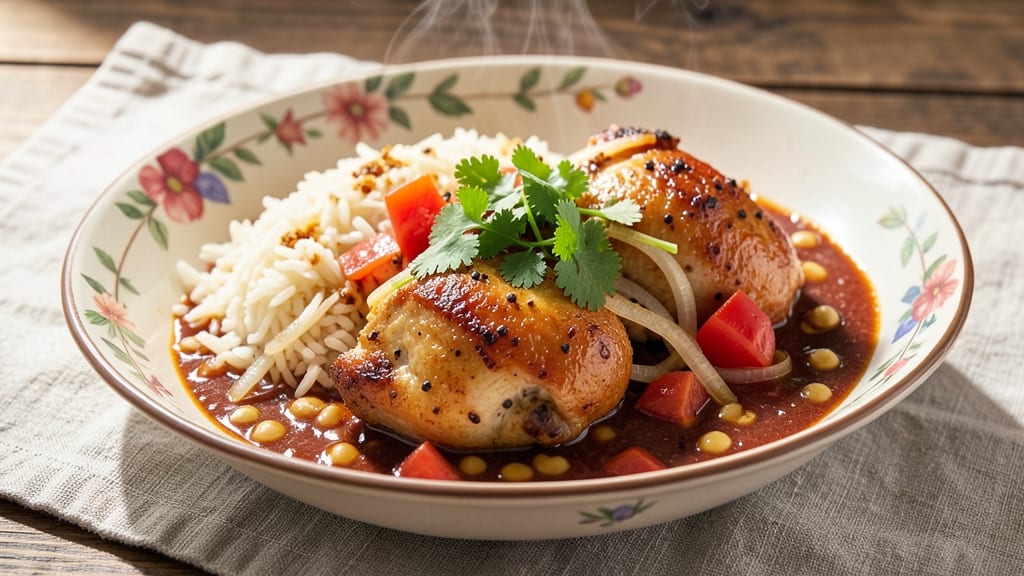
This chicken sambar rice recipe brings the vibrant flavors of South India to your kitchen with minimal fuss. The secret lies in balancing tender chicken, aromatic sambar, and perfectly steamed rice—all harmonizing in one fragrant, spice-infused bowl.
I’ve refined this dish over years of testing, ensuring every bite delivers the bold, layered taste of traditional Tamil cuisine without sacrificing simplicity.
The foundation starts with a rich sambar base—tamarind, lentils, and vegetables simmered until velvety, then elevated with a tempering of mustard seeds, curry leaves, and coconut. Meanwhile, the chicken marinates in a blend of turmeric, coriander, and yogurt, emerging tender and infused with earthy warmth.
The rice, lightly seasoned with jeera (cumin), absorbs the surrounding aromas, completing the symphony.
What you’ll end up with is a restaurant-quality meal that’s both comforting and complex—golden rice, fragrant sambar, and succulent chicken served together. The dish pairs beautifully with a dollop of coconut chutney or a side of raita for balance.
Best of all, it’s designed for home cooks: pressure cook the sambar for speed or simmer it low and slow for deeper flavor.
This recipe respects tradition while offering flexibility—swap pressure cooking for stovetop methods, adjust spice levels to taste, or use pre-cooked rice if short on time. The result? A dish that feels like a hug from your favorite South Indian restaurant, served on your own table. Let’s get cooking.
Ingredients for chicken sambar rice
Pantry staples meet South Indian spices for this fragrant, one-pot masterpiece.
| Ingredient | Amount | Notes |
|---|---|---|
| Chicken Thighs 🍗 | 1 ½ lb | Bone-in, skin-on preferred |
| Tomatoes 🍅 | 3 medium | Ripe, roughly chopped |
| Onions 🧅 | 1 whole | Yellow or red, chopped |
| Ginger 🧄 | 1 tbsp | Fresh, grated |
| Garlic Cloves 🧄 | 6 cloves | Peeled, minced |
| Toor Dal (Split Pigeon Peas) 🌾 | 1 cup | Rinsed well |
| Tamarind Paste 🍈 | 2 tbsp | Adjust for sourness |
| Coconut Milk 🥥 | 1 can (13.5 oz) | Full-fat preferred |
| Curry Leaves 🌿 | ¼ cup | Fresh, slightly crushed |
| Mustard Seeds 🌶️ | 1 tbsp | Whole, light brown preferred |
| Turmeric Powder 🌿 | 1 tsp | Freshly ground preferred |
| Cumin Seeds 🌿 | 1 tsp | Toasted for aroma |
| Coriander Powder 🌿 | 1 tbsp | Freshly ground preferred |
| Garam Masala 🌶️ | 1 tsp | Store-bought or homemade |
| Plain Yogurt 🥛 | ½ cup | Unflavored, full-fat |
| Long-Grain White Rice 🍚 | 1 ½ cups | Uncooked, rinsed |
| Salt 🧂 | 1 ½ tsp | Adjust to taste |
| Vegetable Oil 🫒 | ½ cup | For tempering |
The chicken thighs are key—bone-in, skin-on stays juicier. Indian grocery stores often have them pre-cut, but any butcher will trim them for you. Look for good marbling. For the toor dal, Patel Brothers or Whole Foods carry it in bulk. Tamarind paste? The red variety is sweeter—adjust to taste. Fresh curry leaves make all the difference, but dried works in a pinch (use half the amount). Toast your cumin seeds in a dry pan for 30 seconds before grinding—worth the extra minute.
No curry leaves? Dried fenugreek leaves at one-third the amount works. Short on tamarind? Lemon juice plus a pinch of sugar mimics the tang. The yogurt marinade can be swapped for coconut yogurt if you're avoiding dairy. For the rice, jasmine rice adds fragrance, but basmati works too. The sambar base can be pressure-cooked for 15 minutes or simmered for 45 minutes—both methods deliver.
Prep ahead? Cook the rice separately and keep it warm. The sambar reheats beautifully—3-4 days in the fridge, 3 months frozen. I double the recipe and freeze portions for lazy weeknights. For extra authenticity, serve with homemade coconut chutney—just blend toasted coconut, lime juice, and a pinch of salt.
Why You'll Love This Recipe
- One-Pot Magic: I swear by this recipe when I’m too tired to dirty more than one pan. The chicken thighs simmer right in the sambar—no separate roasting, no extra cleanup. Just toss everything in, let it bubble, and you’ve got a meal that tastes like you spent hours.
- Umami Bomb: That slow-cooked tomato base with ginger and garlic? It’s the kind of depth that makes you pause mid-bite. The chicken absorbs all the spices until it’s tender and packed with flavor—no dry bites, just pure satisfaction.
- Meal Prep MVP: Between us, this is my go-to for busy weeks. The sambar reheats beautifully, and the rice stays fluffy for days. Honestly, I make a big batch on Sundays and eat it for lunch all week—zero stress, zero takeout.
- Budget-Friendly Feast: Chicken thighs are cheap, tomatoes are versatile, and onions/ginger stretch a long way. I’ll be real: it feeds four for under $12, and the leftovers are just as good the next day. That’s a win in my book.
Step-by-step instructions for chicken sambar rice
Here's how to create this fragrant, one-pot South Indian masterpiece with layers of spice and flavor.
Prepare the Chicken and Temper the Spices
Heat the 0.5 cup vegetable oil in a heavy-bottomed pot over medium heat. Add the 1 tbsp mustard seeds and let them sizzle until they pop and turn golden, about 30 seconds. Add the 1 tsp cumin seeds and toast for 1 minute until fragrant. This is where the magic begins—those tiny spices will infuse the entire dish with their aromatic essence.
Add the 1 whole chopped onions and sauté for 3-4 minutes until they soften and turn translucent. Stir in the 1 tbsp grated ginger and 6 minced garlic cloves, cooking for another 1-2 minutes until the raw aroma disappears. Now add the 1.5 lb chicken thighs and brown them on all sides for 5-6 minutes. You want that beautiful golden crust to form—this creates depth of flavor that carries through the entire dish.
Build the Sambar Base with Dal and Vegetables
Add the 1 cup rinsed toor dal and stir to coat the chicken in the spice mixture. Pour in 3 cups water (enough to cover everything) and bring to a gentle boil. Once boiling, reduce heat to low-medium and simmer uncovered for 15 minutes. This allows the dal to partially cook while the chicken tenderizes.
Add the 3 medium chopped tomatoes, 1 tbsp coriander powder, 1 tsp turmeric powder, and 2 tbsp tamarind paste. Stir well and let it cook for another 10 minutes until the tomatoes soften and the dal becomes creamy. The tamarind will give that signature tangy depth—don't skip this step. Taste and adjust seasoning with salt if needed.
Finish with Coconut Milk and Curry Leaves
Pour in the 1 can (13.5 oz) coconut milk and the 0.5 cup plain yogurt, stirring gently to combine. Add the 0.25 cup slightly crushed curry leaves and 1 tsp garam masala, then simmer for 10-12 minutes until the chicken is tender and the sambar has thickened slightly. The coconut milk adds richness while balancing the tangy tamarind.
Taste and make final adjustments—you might want to add a pinch more salt or a splash of water if the sambar is too thick. The curry leaves should be fragrant but not overpowering. Remove from heat and let it sit covered for 5 minutes to allow all the flavors to meld together.
Cook the Rice and Combine
While the sambar simmers, rinse the 1.5 cups long-grain white rice until the water runs clear. In a separate pot, combine the rice with 2.5 cups water and bring to a boil. Once boiling, reduce heat to low, cover, and cook for 15 minutes. The rice should be tender but still slightly firm—it will finish cooking in the sambar.
After the rice has cooked, drain any excess water and gently fold it into the sambar pot. Stir well to combine, then simmer uncovered for 5 minutes on low heat. This final step ensures every grain of rice absorbs the rich sambar flavors. Serve hot with a dollop of yogurt and extra curry leaves on top for that authentic touch.
Pro Tips For Making Chicken Sambar Rice
- CRISP THE SKIN FIRST: High heat for 5 minutes—yes, even if you’re impatient—gets those chicken thighs golden and crackling. I used to skip this, and the skin stayed rubbery, no matter how long I simmered. Flip them only when the skin’s deep brown and the fat’s sizzling like it means it.
- GRATE GINGER FINE: No, "minced" isn’t enough—you want it almost paste-like. I learned this the hard way when my sambar tasted like ginger hints instead of full-on zing. Use the small holes on a box grater, then squeeze out excess moisture with your fingers. (Yes, it’s messy, but your sambar won’t taste watered down.)
- SAUTÉ ONIONS LOW: Medium-low heat only—crowding the pan or cranking it up turns onions mushy before they caramelize. I was skeptical until I tried it: 10 minutes of gentle cooking until they’re deep gold, not brown. This is the base flavor for your sambar, so don’t rush it.
- TOMMY’S TIME IS NOW: Add chopped tomatoes early in the cooking process, not as an afterthought. They’ll break down into the sauce properly, giving your sambar that rich, tangy depth. I used to toss them in at the end, and they’d just sit there like stubborn guests at a party.
Troubleshooting your chicken sambar rice
Chicken Too Dry
If your chicken emerges dry or tough, you likely undercooked it or overcrowded the pot. I’ve found that bone-in, skin-on thighs stay juiciest when cooked to 165°F internal temperature—use a meat thermometer to check the thickest part.
For extra moisture, add ½ cup water or coconut milk during the final 10 minutes of simmering. Also, avoid overcrowding the pot when browning the chicken—work in batches if needed. 💫
Sambar Too Thin
A watery sambar usually means too much liquid was added or the lentils didn’t thicken properly. To fix this, simmer the sambar uncovered for an extra 5-10 minutes to reduce the liquid.
If it’s still too thin, mash 1-2 cooked lentils with a fork and stir them back in—they’ll help thicken the broth. For prevention, always use 1 cup rinsed toor dal (not more) and simmer uncovered after adding coconut milk. Trust me, patience pays off here.
Spices Too Strong
Overpowering spices often happen when using too much mustard seeds or tamarind. Start with 1 tbsp mustard seeds and 1 tbsp tamarind paste, then adjust to taste. For a milder flavor, reduce the mustard seeds to ½ tbsp and add 1 extra tomato to balance the heat.
If the sambar is already too strong, stir in 2 tbsp plain yogurt or a splash of coconut milk to mellow the spices. 🌶️
Rice Mushy or Undercooked
Mushy rice usually means too much water or overcooking. For perfect rice, use a 1:1.5 rice-to-water ratio (e.g., 1.5 cups rice to 2.5 cups water) and cook on low heat. If the rice is undercooked, simmer it uncovered for another 2-3 minutes with the lid slightly ajar.
For extra insurance, fold the rice into the sambar for the final 5 minutes—the residual heat will finish cooking it while absorbing flavors.
Tamarind Too Tart
If your sambar tastes overly sour, balance it with ½ tsp sugar or 1 extra tomato to mellow the tang. For future batches, use 1 tbsp tamarind paste instead of 2 tbsp unless you love intense sourness.
Another trick? Add a pinch of asafetida (hing) while tempering the spices—it rounds out the flavors beautifully. I keep a small jar of hing in my spice rack just for this purpose. 🍈
Curry Leaves Burnt
Burnt curry leaves happen when the oil is too hot or the leaves are added too late. Always temper the spices in medium heat and add curry leaves after the mustard seeds have popped but before the onions.
If they burn, strain them out and add fresh leaves at the end. For extra aroma, crush the leaves slightly with your fingers before adding—they’ll release their oils more effectively. This small step makes a world of difference! 🌿
Nutrition facts
Frequently asked questions
Can I use chicken breast instead of thighs?
Chicken breast is leaner and dries out faster, so it’s not ideal for this dish. If you must use it, marinate the breasts in ½ cup yogurt with 1 tbsp ginger-garlic paste and 1 tsp turmeric for 30 minutes before cooking. Cook them separately at 350°F for 15 minutes until fully done, then shred and fold into the sambar at the end. For best results, stick with thighs—they stay juicy and flavorful.
How can I make this dish vegetarian?
Swap the chicken for 1.5 cups firm tofu or paneer cubes (pan-fried until golden). For extra protein, add ½ cup chickpeas to the sambar. Keep all other ingredients the same, but reduce the cooking time for tofu to 8-10 minutes after adding it to the pot. The dish will still be hearty and satisfying!
What’s the best way to store leftovers?
Let the dish cool completely, then store in an airtight container in the fridge for up to 4 days. Reheat gently on the stovetop with 2 tbsp water to prevent drying. For longer storage, freeze portions for up to 3 months. Thaw overnight in the fridge and reheat slowly. The flavors actually deepen after resting!
Can I make sambar without a pressure cooker?
Simmer the sambar on the stovetop for 45-60 minutes after adding the dal and tomatoes. Keep the heat at low-medium and stir occasionally to prevent sticking. The key is patience—the longer it cooks, the richer the flavors. For extra depth, add 1 extra tomato and ½ cup coconut milk during the final 10 minutes of cooking.
What sides pair well with this dish?
Serve with homemade coconut chutney (blend ½ cup toasted coconut, 1 tbsp lime juice, and ½ tsp salt) or a cooling yogurt raita (mix ½ cup yogurt, 1 tbsp grated cucumber, and ½ tsp cumin). For a complete meal, add papadums or steamed dosa. The crispy, tangy contrast balances the rich sambar perfectly!