
Main Courses
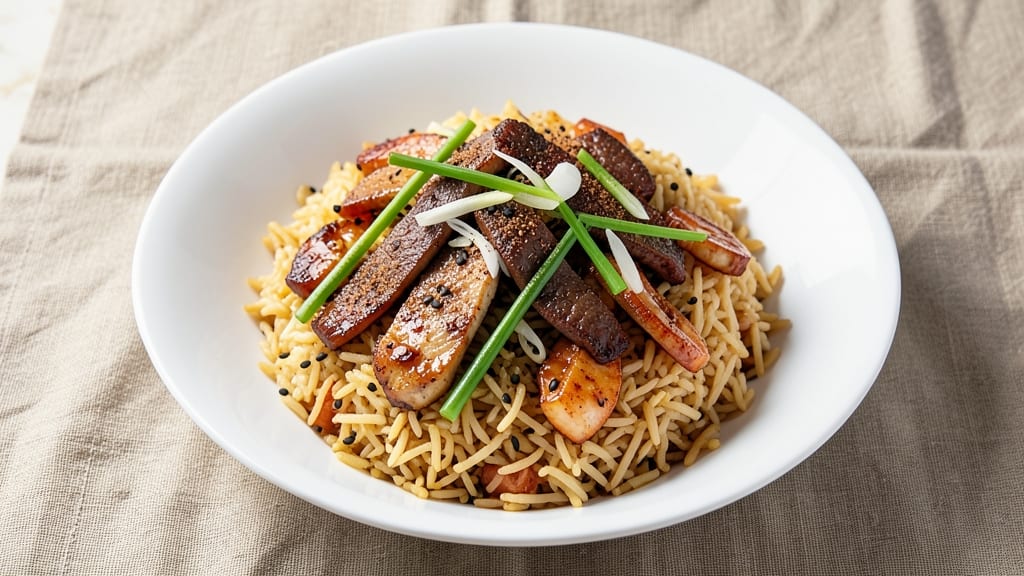
This Chinese Basmati fried rice recipe transforms simple ingredients into a restaurant-worthy dish with crispy edges, tender grains, and aromatic five-spice crunch. The secret lies in using Basmati rice—its long grains stay distinct and fluffy, avoiding the sticky texture of jasmine rice while absorbing flavors beautifully.
I developed this version after years of perfecting the wok hei technique at home, ensuring every bite delivers that signature smoky aroma.
The dish features perfectly stir-fried rice with scrambled eggs, protein of your choice, and a fragrant sauce balanced with soy, oyster, and a touch of sweetness. The five-spice blend adds depth, while scallions and sesame seeds provide freshness and texture.
Unlike traditional Chinese fried rice, this version highlights Basmati’s light, separate grains—ideal for those who prefer texture over mushiness. Ready in under 30 minutes, it’s a weeknight game-changer that still feels special.
Ingredients for chinese basmati fried rice
Basmati rice, golden eggs, and aromatic five-spice blend create restaurant-quality fried rice at home.
| Ingredient | Amount | Notes |
|---|---|---|
| Long-Grain Basmati Rice 🍚 | 2 cups | Uncooked, day-old preferred |
| Large Eggs 🥚 | 4 whole | Fresh, room temperature |
| Protein of Choice 🍗 | 1 lb | Chicken breast, shrimp, or tofu |
| Scallions 🧅 | ½ cup | White and green parts, sliced |
| Sesame Seeds 🌾 | 1 tbsp | Toasted for extra crunch |
| Five-Spice Powder 🌶️ | 1 tsp | Homemade or store-bought blend |
| Light Soy Sauce 💧 | 3 tbsp | Kikkoman preferred |
| Dark Soy Sauce 💧 | 1 tbsp | For color depth |
| Oyster Sauce 🍶 | 1 tbsp | Vegetarian version if needed |
| Honey 🍯 | 1 tsp | For subtle sweetness |
| Neutral Oil 🫒 | 2 tbsp | Peanut or vegetable oil |
| Garlic Cloves 🧄 | 3 cloves | Minced for aromatic base |
| Ginger Root 🌿 | 1 tbsp | Fresh, grated |
| Salt 🧂 | ½ tsp | Diamond Crystal preferred |
| White Pepper 🌶️ | ¼ tsp | Freshly ground |
The Basmati rice is non-negotiable here—its long grains stay distinct and fluffy, unlike jasmine rice which can turn mushy. Day-old rice works best as it's drier and absorbs flavors better, but if using freshly cooked, spread it on a tray to cool quickly. For the best quality, Lundberg Family Farms or Tilda Basmati are excellent choices, available at most grocery stores or specialty Asian markets. The five-spice powder should be a balanced blend of star anise, clove, fennel, cinnamon, and Sichuan peppercorn—Penzeys Spices carries a fantastic pre-mixed version if you don't want to blend your own.
Protein flexibility is key—chicken breast stays tender when stir-fried quickly, while shrimp cooks in minutes but should be added at the end to avoid overcooking. For a vegetarian option, extra-firm tofu pressed and cubed works beautifully. The soy sauces should be light and dark varieties—Kikkoman for light, and Lee Kum Kee for dark—never substitute with regular soy sauce as it lacks the depth. Fresh ginger and garlic are essential for that signature wok hei aroma, but if you're short on time, minced jarred ginger (like Mrs. Dash) works in a pinch, though fresh is always superior.
Prep ahead to save time: cook the rice and let it cool completely before stir-frying. The eggs should be scrambled separately and kept warm in a low oven while you finish the rice. For storage, leftovers keep for 3-4 days in an airtight container, but the texture softens slightly over time. To reheat, add a splash of water and stir-fry for 2-3 minutes—this restores the crisp edges. Freezing isn't recommended as the rice grains can become mushy when thawed, but you can freeze the sauce components separately if you'd like to make it fresh later.
Why You'll Love This Recipe
- One-Pan Magic: The whole thing happens in one skillet—no fancy equipment, no extra dishes. I swear, I’ve made this on a tiny apartment stove with a single pan, and it still comes out perfect. Just toss in the day-old basmati (that’s the secret), crack in those eggs, and let the wok heat work its magic.
- Crispy, Creamy, Perfect: That first bite? Crunchy edges from the rice, silky eggs, and a whisper of toasted sesame seeds—it’s like a flavor hug. Honestly, the scallions add this bright punch that cuts through whatever protein you’re using, whether it’s leftover chicken or cheap shrimp.
- Lunchbox Hero: Between us, this is my go-to for meal prep. I make a big batch on Sundays, portion it into containers, and boom—tasty lunches for the week. The basmati holds up better than jasmine, and the sesame seeds keep it interesting even when reheated. (Yes, even on a Tuesday night.)
- Budget Win: I can feed four people for under $10 using this recipe—seriously. Basmati rice is cheap, eggs are dirt cheap, and whatever protein you’ve got (even canned tuna) stretches into something that feels fancy. Plus, leftovers taste just as good the next day, so zero waste.
Step-by-step instructions for Chinese Basmati fried rice
Master this wok technique for perfectly crispy rice and silky eggs every time.
Prepare the Protein and Aromatics
Slice the 1 lb Protein of Choice into thin, even strips or bite-sized pieces—uniform size ensures even cooking. Pat dry with paper towels to remove excess moisture, which prevents steaming instead of searing. In a small bowl, combine the 3 cloves Garlic Cloves (minced) and 1 tbsp Ginger Root (grated) with 0.5 tsp Salt and 0.25 tsp White Pepper. This aromatic blend will infuse the protein with depth of flavor.
Heat 1 tbsp Neutral Oil in a wok or large skillet over medium-high heat until shimmering. Add the protein and cook for 4-5 minutes, stirring occasionally, until it reaches 165°F for poultry or 145°F for seafood (or until tofu is golden). Remove and set aside on a plate—this prevents overcooking while you work on the rice. The protein should have a slight char on the edges but remain tender inside.
Toast the Five-Spice and Sesame Seeds
In the same wok, add the remaining 1 tbsp Neutral Oil over medium heat. Sprinkle in the 1 tsp Five-Spice Powder and toast for 30 seconds until fragrant—you’ll smell warm cinnamon, star anise, and clove notes. Immediately add the 1 tbsp Sesame Seeds and toast for another 30 seconds until they turn golden and release their nutty aroma. Remove the wok from heat and pour the spices into a small bowl to set aside.
This step builds the aromatic foundation of your fried rice. The five-spice adds warmth, while the toasted sesame seeds contribute a delicate crunch that contrasts beautifully with the soft rice. Don’t skip this—it’s what elevates home-cooked fried rice to restaurant quality.
Scramble the Eggs with Precision
Wipe out the wok with a paper towel to remove any residual oil or spices. Return it to medium heat and add the 4 whole Large Eggs (room temperature). Let them sit undisturbed for 5 seconds before gently pushing them around the pan with a spatula, creating soft curds. Cook for 20-25 seconds until the eggs are just set but still slightly runny in the center—this texture is crucial for that signature "wet" fried rice consistency.
Remove the eggs from the wok and set aside with the protein. The eggs should be creamy and custard-like, not dry or rubbery. If they cook too long, they’ll lose their silky quality and become tough. This is where patience pays off—rushed eggs ruin the dish.
Stir-Fry the Rice to Perfection
Add the 2 cups Long-Grain Basmati Rice (day-old works best—it’s drier and won’t turn mushy) to the wok. Break up any clumps with your spatula and spread the rice evenly. Stir-fry over high heat for 2-3 minutes, letting the rice absorb the residual heat and dry out slightly. This step is critical—it prevents soggy rice and ensures each grain stays distinct.
Pour in the 3 tbsp Light Soy Sauce, 1 tbsp Dark Soy Sauce, 1 tbsp Oyster Sauce, and 1 tsp Honey. Stir vigorously for 1-2 minutes until the rice is evenly coated and glistens with sauce. The dark soy sauce will give the rice its signature deep amber color, while the honey adds a subtle sweetness that balances the savory flavors.
Combine and Finish with Aromatics
Return the scrambled eggs and protein to the wok. Add the 0.5 cup Scallions (white and green parts, sliced) and the reserved five-spice and sesame seed mixture. Toss everything together for 1-2 minutes until the scallions are bright green and the rice is heated through. Taste and adjust seasoning—you may need a pinch more salt or a splash of light soy sauce to balance the flavors.
Serve immediately while the rice is still hot and the eggs retain their creamy texture. The dish should be vibrant, with contrasting textures—crispy rice, silky eggs, and a fragrant five-spice crunch. Each bite should deliver a harmonious blend of savory, sweet, and umami flavors, with the aromatic spices lingering on the palate.
Pro Tips For Making Chinese Basmati Fried Rice
- USE DAY-OLD RICE: Basmati rice loses its clump when fresh—it turns gummy if you fry it straight from the pot. I learned this the hard way after making a sad, sticky pile. Let it cool completely, spread it on a tray, and refrigerate overnight. The grains will dry out just enough to sizzle properly when you hit the wok.
- SCRAMBLE EGGS FAST: High heat is your friend here. Crack eggs into a hot, oiled wok and let them sit for 3 seconds before stirring—this gives them a chance to set slightly, so they don’t turn into a greasy mess. Push them to one side, add a splash of soy sauce, and scramble just until set. Overcooking kills the silkiness.
- CUT PROTEIN SMALL: Big chunks of chicken or shrimp don’t cook evenly, and you’ll end up with dry edges while the center stays cold. Thinly slice chicken breast against the grain or chop shrimp into ½-inch pieces. They’ll cook in seconds, so you can focus on getting that rice crispy without burning the rest.
- SALT THE RICE: Toss the cold rice with ½ teaspoon salt per cup before frying—it seasons the grains evenly and prevents blandness. I used to skip this, thinking the soy sauce would handle it, but the rice always tasted flat. A pinch of white pepper here adds depth without overpowering.
Regional styles of this recipe
Cantonese Style
This version keeps the Basmati rice but leans into classic Cantonese techniques—high heat, quick stir-frying, and a focus on wok hei (breath of the wok). I add 1 tbsp Shaoxing wine when cooking the protein for depth, and finish with ½ tsp white pepper for that signature Cantonese kick.
The sauce ratio shifts slightly: 2 tbsp light soy, 1 tbsp dark soy, and ½ tbsp oyster sauce to keep it bright. Garnish with extra scallions and a sprinkle of crispy fried shallots for texture. 🔥
Sichuan Spicy Twist
For heat lovers, swap the five-spice for 1 tsp Sichuan peppercorns toasted and ground, plus ½ tsp chili flakes. Add 1 tbsp doubanjiang (fermented chili bean paste) when stir-frying the rice, and finish with 2 tbsp chili oil (homemade or store-bought like Lao Gan Ma).
The Basmati holds up well to the heat, and the peppercorns add a numbing tingles. Serve with extra scallions and a side of pickled vegetables to balance the spice. 🌶️
Hong Kong Street Food
This version mimics Hong Kong's iconic fried rice by adding ½ cup diced char siu (Chinese BBQ pork) and 2 tbsp hoisin sauce to the rice during stir-frying. The Basmati’s distinct grains contrast beautifully with the sticky-sweet char siu.
Top with crushed peanuts for crunch and a drizzle of chili sauce (like Lee Kum Kee) for heat. The dish is sweeter and stickier than the standard version, but the Basmati prevents mushiness. 🗺️
Vegetarian Adaptation
Replace protein with 1 cup mixed vegetables (bell peppers, carrots, snap peas) and ½ cup cubed tofu pressed for 20 minutes. Boost umami with 1 tbsp vegetarian oyster sauce and ½ tsp MSG (optional).
The Basmati’s light texture works perfectly with veggies, and adding 1 tbsp corn kernels mimics the texture of shrimp. Finish with a sprinkle of toasted sesame seeds and extra scallions. 🌱
Singapore-Inspired
Infuse the dish with Singaporean flavors by adding 1 tsp lemongrass paste (or 2 tbsp minced lemongrass) when cooking the protein, and ½ tsp turmeric to the rice for color. Use 1 tbsp kecap manis (Indonesian sweet soy sauce) instead of honey for sweetness.
Garnish with cilantro and a squeeze of lime. The Basmati’s neutral flavor lets these tropical notes shine. 🍋
Nutrition facts
Frequently asked questions
Why does this recipe use Basmati rice instead of jasmine?
Basmati rice's long grains stay distinct and fluffy when stir-fried, avoiding the mushy texture common with jasmine rice. The aromatic notes of Basmati also complement the five-spice blend beautifully, while its lighter texture balances the rich flavors of the sauce and protein.
Can I use freshly cooked rice instead of day-old?
Freshly cooked rice works in a pinch, but it contains too much moisture and will turn mushy when stir-fried. For best results, spread freshly cooked rice on a tray and let it dry slightly at room temperature for 30 minutes before using. Alternatively, refrigerate it for 1-2 hours to remove excess moisture.
What's the secret to getting crispy edges on the rice?
High heat and proper rice texture are key! Use day-old rice (or dried fresh rice) and stir-fry over high heat for 2-3 minutes before adding sauce. The rice should sizzle slightly when it hits the wok—this creates those coveted crispy edges while keeping the centers tender.
How do I adjust the spice level for picky eaters?
Start by reducing the five-spice powder to ½ tsp and omit the chili flakes entirely. For extra mildness, replace the dark soy sauce with an additional 1 tbsp light soy sauce—it's less intense in color and flavor. The honey already adds subtle sweetness to balance any remaining savory notes.
Can I make this recipe ahead of time?
While fried rice is best served fresh, you can prepare components ahead: cook the rice and refrigerate for up to 2 days, or freeze cooked protein and eggs separately. Reheat by stir-frying with a splash of water for 2-3 minutes to restore crisp edges. The five-spice and sesame seeds should be added fresh for maximum aroma.