
Main Courses
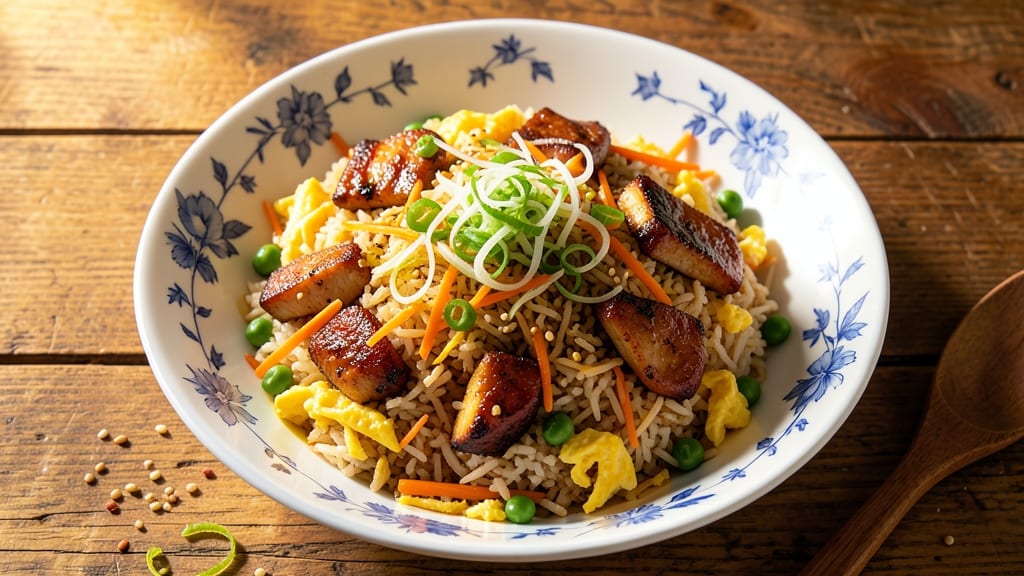
A Chinese restaurant egg fried rice recipe delivers the perfect balance of textures—crispy rice edges, silky egg ribbons, and tender veggies—all achieved with a wok and high heat. The secret lies in using day-old rice, stir-frying proteins and veggies separately, and tossing everything together at the last moment to lock in that smoky, savory aroma. This recipe recreates the restaurant experience at home, where every bite is packed with flavor and satisfying crunch.
Start with cold, slightly dried rice to prevent mushiness, and work quickly over high heat to develop those signature crispy edges. The eggs are scrambled separately for smooth, silky ribbons that melt in your mouth, while the proteins and veggies are stir-fried until just tender.
A splash of soy sauce, a drizzle of oyster sauce, and a sprinkle of green onions elevate the dish to restaurant-quality, making it a weeknight staple that feels like a takeout splurge without the wait.
Ingredients for chinese restaurant egg fried rice
Cold rice, fresh eggs, and stir-fried veggies—these are the building blocks of perfect wok-fried rice.
| Ingredient | Amount | Notes |
|---|---|---|
| Day-Old Cooked White Rice 🍚 | 4 cups | Cold and slightly dried |
| Large Eggs 🥚 | 4 whole | Fresh, room temperature |
| Chicken Breast 🍗 | 1 lb | Boneless, skinless, diced small |
| Carrots 🥕 | 1 cup | Diced into small pieces |
| Green Onions 🧅 | ¼ cup | Chopped, both green and white parts |
| Peas 🌱 | ½ cup | Frozen or fresh, thawed |
| Light Soy Sauce 🥢 | 2 tbsp | High-quality brand preferred |
| Oyster Sauce 🍜 | 1 ½ tbsp | Authentic Chinese brand |
| Sesame Oil 🫒 | 1 tbsp | Toasted, for aroma |
| Vegetable Oil 🫒 | 2 tbsp | High smoke point |
| Salt 🧂 | ½ tsp | Adjust to taste |
| White Pepper 🌶️ | ¼ tsp | Freshly ground preferred |
The rice is non-negotiable: day-old, cold, and slightly dried—this prevents mushiness and gives those crispy edges. Look for jasmine or long-grain rice at Asian markets for the best texture. Chicken breast should be diced uniformly—small pieces cook faster and stay tender. Carrots and peas? Frozen works perfectly—no need to thaw, just drain well. Green onions add freshness, but the white parts are where most of the flavor lives, so chop them too.
No soy sauce? Coconut aminos in a pinch, though the flavor won’t be identical. Oyster sauce can be swapped for hoisin plus a dash of soy sauce, but it’ll be sweeter. Sesame oil is all about aroma—use the toasted variety for that nutty depth. If you’re short on time, pre-cook the chicken and veggies ahead and reheat in the wok. The eggs? Scramble them separately for those silky ribbons—over-mixing makes them rubbery.
Rice keeps 3-4 days in the fridge if stored in an airtight container. Prep the proteins and veggies ahead, but keep the eggs fresh until cooking. This dish reheats beautifully—just stir-fry again over high heat with a splash of water to restore crispiness. Portion leftovers into containers for quick lunches, but eat within 2 days for best texture.
Why You'll Love This Recipe
- No Leftover Waste: I swear by using day-old rice—it’s the secret to that perfect texture. No soggy mess, no sad rice scraps. Just toss in whatever’s left in your fridge (that half-eaten chicken breast? Yes, that’s your protein).
- One-Pan Magic: Honestly, this dish is my lazy night hero. High heat, quick stir-fry, and boom—you’ve got a restaurant-quality plate. The eggs scramble fast, the chicken stays juicy, and the carrots? They caramelize just enough to make it feel fancy.
- Budget-Friendly Feast: Between us, this recipe stretches a dollar like nobody’s business. A few eggs, some chicken, and veggies you already have? That’s a full meal for half the takeout cost. My wallet and my family thank me every time.
- Crowd-Pleaser Always: Here’s what sold me—it’s the one dish my picky eaters actually finish. The eggs add richness, the green onions bring freshness, and the slight crunch from the carrots keeps it interesting. Serve it for lunch, dinner, or even a potluck. No complaints.
Step-by-step instructions for Chinese restaurant egg fried rice
Here's how to transform simple ingredients into restaurant-quality fried rice with perfect texture and flavor.
Prep and Season the Protein and Vegetables
Cut the 1 lb chicken breast into small, even pieces about ¼-inch thick. This size ensures quick cooking and even browning. In a bowl, toss the chicken with 0.5 tsp salt and 0.25 tsp white pepper, mixing until fully coated. Set aside.
Peel and dice the 1 cup carrots into small, uniform pieces—about ¼-inch cubes. Chop the 0.25 cup green onions, separating the white and green parts. If using frozen peas, thaw them completely. This prep work ensures everything cooks evenly and adds texture contrast to your fried rice.
Cook the Chicken and Vegetables
Heat a large wok or skillet over high heat until it's very hot. Add 2 tbsp vegetable oil and swirl to coat the bottom evenly. Add the seasoned chicken and cook for 3-4 minutes until lightly browned and cooked through. Remove the chicken with a slotted spoon and set aside.
In the same wok, add a bit more oil if needed, then add the carrots. Stir-fry for 2 minutes until they begin to soften slightly. Add the white parts of the green onions and cook for 30 seconds until fragrant. Add the peas and cook for another 1 minute until heated through. Return the chicken to the wok and mix everything together.
Scramble the Eggs Perfectly
Push the chicken and vegetable mixture to one side of the wok. Add another 1 tbsp vegetable oil to the empty space. Crack the 4 whole large eggs into the wok and let them sit for 5-10 seconds until they begin to set slightly at the edges. Use a spatula to gently scramble the eggs into soft, silky ribbons.
Once the eggs are mostly set but still slightly runny in the center, mix them into the chicken and vegetable mixture. The eggs should coat the ingredients evenly. Remove the wok from heat for a moment to prevent overcooking the eggs.
Combine and Season the Fried Rice
Add the 4 cups day-old cooked white rice to the wok, breaking up any clumps with your spatula. Drizzle the 2 tbsp light soy sauce and 1.5 tbsp oyster sauce over the rice, tossing everything together. The rice should be well-coated with sauce and slightly sticky but not wet.
Add the green onion tops and 1 tbsp sesame oil, tossing everything together for 1-2 minutes until the rice is heated through and begins to develop crispy edges. The sesame oil will add a nutty aroma that's essential for authentic flavor.
Finish with High Heat for Crispy Edges
Increase the heat to high and continue tossing the rice for another 2-3 minutes until it's golden brown in spots and the edges are crispy. This high-heat finish is what gives restaurant-style fried rice its signature texture. Taste and adjust seasoning if needed—you might want to add a bit more soy sauce or salt.
Serve immediately while the rice is hot and crispy. The combination of silky eggs, tender chicken, and perfectly seasoned rice creates a dish that's both comforting and restaurant-worthy. Enjoy with extra green onions on top for freshness and color.
Pro Tips For Making Chinese Restaurant Egg Fried Rice
- CHOP CHICKEN THIN: I learned this the hard way—thinly sliced chicken cooks faster and stays juicier. Aim for ¼-inch slices (about 3-4 per breast) and pat them very dry before cooking. Wet chicken will steam instead of sear, and you’ll end up with sad, gray pieces.
- SCRAMBLE EGGS LAST: Start by cooking everything except the eggs—rice, chicken, veggies—until the chicken is nearly done. Then push everything to one side of the wok, add a splash of oil, and scramble the eggs in the empty space. This keeps the eggs creamy and prevents them from turning rubbery from sitting in the mix too long.
- USE COLD RICE: Day-old rice is non-negotiable, but if you’re in a pinch, spread freshly cooked rice on a tray and pop it in the freezer for 10 minutes. Cold rice fries up crispier and absorbs flavors better—no one wants mushy, gluey rice in their takeout-style dish.
- SAVE TIME WITH PREP: While the chicken marinates (or rests if you’re skipping that step), chop all your veggies—carrots in matchsticks, green onions sliced into ½-inch pieces—and store them in separate containers. When you’re ready to cook, toss them in one by one in this order: carrots first (they take longest), then chicken, then green onions at the very end. No last-minute chopping chaos.
Serving suggestions for this chinese restaurant egg fried rice
Classic Garnishes
Top your fried rice with extra chopped green onions for a pop of color and freshness. I like to sprinkle them right before serving so they stay vibrant. A drizzle of toasted sesame oil adds nutty aroma—just ½ tsp is enough to elevate the dish.
For a restaurant touch, add crushed roasted peanuts (2 tbsp) for crunch and texture. 🌿
Sauce Variations
Swap the soy-oyster sauce combo for hoisin sauce (1 tbsp) mixed with 1 tsp soy sauce for a sweeter, richer flavor. For spice lovers, add ½ tsp chili crisp or 1 tsp sambal oelek when tossing the rice.
I keep a small bowl of extra sauce on the table so everyone can adjust to taste. 🌶️
Protein Swaps
Replace chicken with shrimp (1 lb, peeled and deveined) for a seafood twist—just cook them for 1-2 minutes until pink. For vegetarian, use tofu (1 lb firm, pressed and cubed) and add 1 tsp garlic powder when stir-frying.
I love adding diced ham (½ cup) for a smoky depth. 🍤
Side Pairings
Serve with steamed broccoli or bok choy for a light, fresh contrast. A simple cucumber salad with rice vinegar and sesame seeds cuts through the richness. I also recommend egg rolls or spring rolls for an appetizer that complements the meal. 🥗
Beverage Pairings
Pair with a jasmine green tea or oolong tea to cleanse the palate between bites. For something stronger, a light lager like Tsingtao balances the dish's savory notes. I often sip iced hibiscus tea for a refreshing, slightly tart contrast. 🍵
Make-Ahead Tips
Prep all ingredients ahead—chop veggies, cook proteins, and store separately in airtight containers. Keep the eggs fresh until cooking. Reheat in the wok with 1 tbsp oil and 1 tbsp water over high heat for 3-4 minutes to restore crispiness. 💡
Nutrition facts
Frequently asked questions
Why does restaurant-style fried rice need day-old rice?
Freshly cooked rice is too moist and sticky, making it impossible to achieve those crispy edges. Day-old rice has dried out slightly, giving it the perfect texture to absorb flavors and develop wok-hei (smoky aroma) while staying separate. Spread leftover rice on a tray after cooking to dry it out faster if needed.
What's the secret to getting crispy edges like in restaurants?
High heat is key! Use a wok or large skillet over maximum heat and toss the rice continuously for the last 2-3 minutes. The edges will turn golden brown while the center stays tender. A splash of water can help create steam for extra crispiness.
Can I make this with fresh rice? What's the workaround?
Fresh rice works if you spread it on a baking sheet and refrigerate for 1-2 hours to dry it out. For immediate results, microwave the rice for 1 minute after cooking to remove excess moisture, then spread it out to cool. Just don't skip the drying step!
How do I prevent the eggs from turning rubbery?
Scramble them separately in the wok until just set (about 5-10 seconds after cracking), then gently fold them into the rice. Overmixing or cooking too long makes eggs tough. Keep the heat high but not smoking to maintain silky texture.
What's the best way to reheat leftovers?
Reheat in the wok over high heat with 1 tbsp oil and 1 tbsp water, tossing constantly for 3-4 minutes until crispy again. Microwaving kills the texture—always use the wok method for restaurant-quality results. Add a splash of soy sauce if needed.