
Main Courses
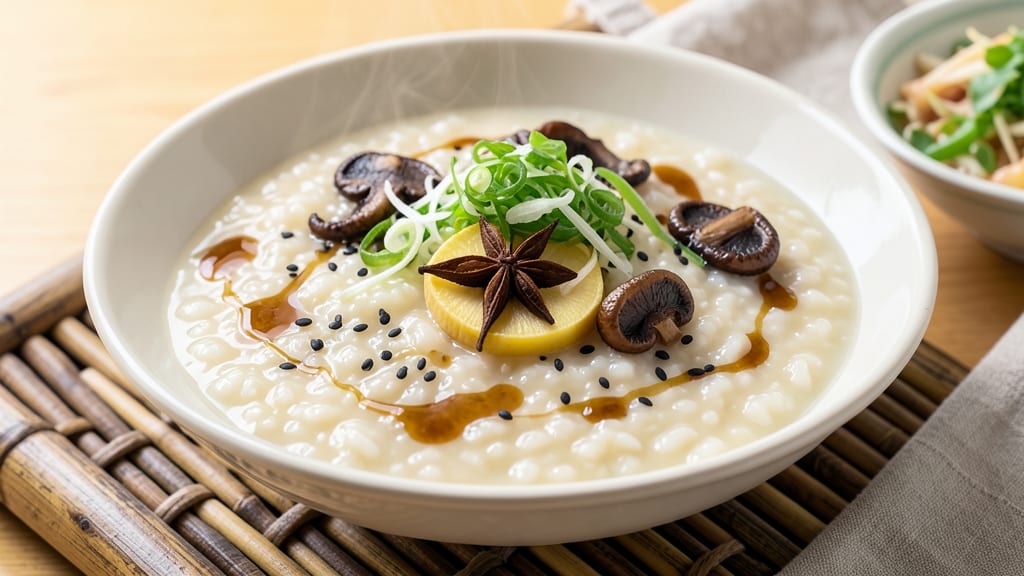
This Chinese rice congee recipe transforms simple jasmine rice into a velvety porridge that soothes the soul and warms the body. 💛 The secret lies in long, gentle simmering—turning grains into a delicate, fragrant broth that's both comforting and nourishing.
Unlike heavy soups, congee offers a light yet satisfying meal, perfect for breakfast or recovery days.
The aromatic blend of ginger and star anise infuses the porridge with a delicate warmth, while optional toppings like century eggs, mushrooms, or crispy pork add depth. This dish isn’t just food—it’s tradition, healing, and a taste of home in every spoonful.
The texture is what makes it special: silky yet brothy, with each bite melting effortlessly.
What sets this recipe apart is its versatility. Start with a savory base, then customize with sweet toppings like red bean paste or honey for a dessert-like twist.
The process is simple: soak the rice, simmer low and slow, and let the flavors develop naturally. No fancy equipment needed—just patience and a pot.
Whether you're recovering from illness, craving comfort, or exploring Chinese cuisine, this congee delivers. Serve it steaming hot with your favorite toppings, and let the gentle flavors transport you. Ready to make the perfect bowl?
Ingredients for chinese rice congee
Simple grains and aromatic spices transform into this comforting Chinese rice porridge.
| Ingredient | Amount | Notes |
|---|---|---|
| Jasmine Rice 🍚 | 1 cup | Uncooked, long-grain preferred |
| Water 💧 | 6 cups | Filtered or spring water preferred |
| Fresh Ginger 🧄 | 1 inch | Thinly sliced, peeled |
| Star Anise 🌟 | 2 whole | Lightly crushed for aroma |
| Dried Shitake Mushrooms 🍄 | 2 whole | Rehydrated in warm water |
| Light Soy Sauce 🥄 | 1 tbsp | Kikkoman preferred |
| Sesame Oil 🫒 | 1 tsp | Toasted, for finishing |
| Salt 🧂 | ½ tsp | Kosher or sea salt |
| Green Onions 🧅 | 3 whole | Thinly sliced, for garnish |
| Red Bean Paste 🍫 | ½ cup | Optional sweet topping |
| Crispy Pork 🐷 | ½ cup | Optional savory topping |
| Century Eggs 🥚 | 2 whole | Optional traditional topping |
Jasmine rice is the heart of congee—look for Thai or Vietnamese brands at Asian markets for the best texture. Soak the rice for at least 4 hours (overnight is ideal) to ensure a silky finish. Costco or H Mart usually carry high-quality jasmine rice in bulk. Fresh ginger should smell vibrant and not woody; star anise should be whole with a strong, sweet aroma. Dried shitake mushrooms add depth—soak them in warm water for 20 minutes before using. The soy sauce matters too: Kikkoman is reliable, but any light soy will work.
No fresh ginger? Ground ginger at half the amount works in a pinch, but fresh is ideal. Star anise hard to find? Anise seeds or a pinch of cinnamon can mimic the warmth. For shitake mushrooms, cremini or white mushrooms work if dried aren't available. The red bean paste can be swapped for black sesame paste or honey for a different twist. Crispy pork? Store-bought char siu from the grocery store freezer section is perfect—just slice thinly. Century eggs are tricky to find outside Asian markets, but duck eggs or hard-boiled eggs work as a substitute.
Congee tastes even better the next day—store leftovers in an airtight container in the fridge for up to 5 days. Reheat gently on the stove with a splash of water. For freezing, portion into ice cube trays—thaw and reheat as needed. The toppings are best added fresh, but you can prep them ahead: slice green onions and store in a sealed container for 3-4 days in the fridge. The crispy pork stays crispy for 2 days if refrigerated properly.
Why You'll Love This Recipe
- No-Stress Simplicity: I swear by this—just rice, water, and a few pantry staples. No chopping, no fussing, no last-minute grocery runs. That star anise and ginger? Toss them in whole, let the pot do the work. Honestly, I’ve made this while scrolling through my phone.
- Umami Magic: The dried shitake mushrooms soak up all the rice’s starchy goodness, turning this into something dangerously addictive. Fresh ginger? A bright, zesty kick that cuts through the creamy texture—like a warm hug for your taste buds. (Yes, even on a Tuesday night.)
- Leftovers That Save Me: This stuff actually tastes better the next day—thicker, richer, and perfect for reheating. I keep a jar in the fridge for lazy mornings or when my kid “forgets” to eat dinner. Zero waste, all flavor.
- Budget-Friendly Comfort: Jasmine rice and dried mushrooms? Cheap as chips. Star anise and ginger last forever. I’ve fed four people for under $5 with this—plus, it’s the kind of meal that makes everyone pause mid-bite. My secret weapon for when I’m broke but still want to feel fancy.
Step-by-step instructions for silky porridge with fragrant ginger
Here's the method for making restaurant-quality rice congee that's smooth, fragrant, and packed with flavor.
🍳 Step 1: Rinse and Soak the Jasmine Rice
Place the 1 cup jasmine rice in a fine-mesh strainer and rinse under cold running water for 30 seconds until the water runs clear. This removes excess starch that would make your congee gummy. Transfer the rice to a large pot and add the 6 cups water—you want a ratio of 1:6 rice to water for that perfect silky texture.
Bring to a boil over high heat, then immediately reduce to a simmer. Cover with a tight-fitting lid and let it cook for 10 minutes. You'll see the rice soften dramatically, but don't stir yet—this prevents the rice from breaking apart and ensures that velvety consistency. The rice should be completely submerged, and you might see small bubbles forming around the edges.
🔥 Step 2: Add Aromatics and Simmer Low and Slow
After the initial 10 minutes, gently add the 1 inch sliced fresh ginger, 2 whole star anise, and 2 rehydrated dried shitake mushrooms (squeeze out any excess water first). Lightly crush the star anise with a mortar and pestle or the bottom of a glass to release its aromatic oils—this gives that signature fragrant touch without overpowering the dish.
Reduce the heat to low and let it simmer uncovered for 45-60 minutes. You're looking for a thick, creamy consistency that coats the back of a spoon. Stir occasionally with a silicone spatula, breaking up any large rice clumps as you go. The congee should be smooth, not grainy—if it's still too thick, add ½ cup water at a time until you reach the perfect porridge-like texture.
👨🍳 Step 3: Season and Finish with Umami
Once your congee reaches that perfect silky consistency, stir in the 1 tbsp light soy sauce and 0.5 tsp salt. Taste and adjust the seasoning—you want a balance of savory and slightly sweet. The soy sauce should enhance the natural flavors without making it taste salty. For an extra layer of depth, add the 1 tsp sesame oil and stir gently. The oil will float on top initially, but it will eventually emulsify into the congee, adding a nutty aroma.
Here's the thing—don't rush this step. Let the congee sit off the heat for 5 minutes to allow the flavors to meld together. The star anise should infuse the congee with a subtle licorice-like aroma, while the ginger adds a warm, spicy kick. If you're using the optional toppings, now's the time to prepare them: slice the 3 green onions thinly, portion the 0.5 cup red bean paste into small dollops, and set aside the 0.5 cup crispy pork and 2 century eggs.
🥘 Step 4: Assemble and Garnish for Serving
Ladle the warm congee into bowls, filling each about ¾ full. The congee should be steaming gently—this is your visual cue that it's ready. For each serving, add a spoonful of the red bean paste (if using) and top with a few pieces of crispy pork and century eggs. The contrast of textures and temperatures is what makes this dish so satisfying—the creamy congee against the crunchy pork and the silky century egg.
Finally, scatter the green onions evenly over each bowl. The fresh, bright flavor cuts through the richness of the congee, balancing the dish perfectly. Serve immediately while hot—this congee is best enjoyed fresh out of the pot when it's still steaming and the toppings are at their best temperature. Each spoonful should be a harmonious blend of textures and flavors, from the silky rice to the crunchy toppings.
Pro Tips For Making Chinese Rice Congee
- SOAK THE RICE LONG: I learned this the hard way—skipping the soak means your congee will turn out gummy instead of silky. Rinse jasmine rice until the water runs clear, then soak it in fresh water for at least 4 hours (or overnight if you’re not in a rush). The starch will soften properly, giving you that perfect, melt-in-your-mouth texture.
- SIMMER LOW AND SLOW: Congee isn’t a race. After the initial boil, drop the heat to the lowest setting possible—just above a bare simmer—and let it cook uncovered for 2-3 hours. Stir occasionally to prevent sticking, but don’t rush it. The longer it cooks, the richer the flavor and the smoother the consistency.
- PREP SHITAKE LIKE A PRO: Don’t just toss dried shitake into cold water—they’ll never rehydrate evenly. Soak them in hot (not boiling) water for 20 minutes first, then slice them thin. If they’re tough or fibrous, give them a quick pulse in a food processor before adding to the pot. Trust me, your congee will thank you.
- STAR ANISE EARLY: Add the star anise with the rice, not as an afterthought. If you wait until the end, it’ll overpower the dish with a harsh, medicinal bite. A single pod, cracked open, simmers gently for hours, infusing the congee with warm, aromatic depth—like a whisper of spice, not a shout.
Creative variations of this chinese rice congee
Sweet and Savory Twist
Transform your congee into a dessert-like treat by adding ½ cup red bean paste or 1 tbsp honey to the finished porridge. The natural sweetness of the beans or honey balances the savory base beautifully.
For extra richness, stir in 1 tsp toasted sesame paste or top with crushed peanuts and a drizzle of chocolate sauce. This fusion is popular in Hong Kong-style cafes and makes for a comforting yet indulgent breakfast or snack. 💛
Protein-Packed Versions
Boost nutrition by adding protein toppings like shredded chicken, soft-boiled eggs, or tofu cubes. For a hearty meal, mix in ½ cup cooked ground pork or shrimp during the final 10 minutes of simmering.
The protein absorbs the congee’s flavors perfectly, creating a filling yet light dish. I love adding kimchi for a tangy kick—just 2 tbsp per bowl adds a bright contrast.
Herbal and Medicinal Adaptations
Incorporate traditional Chinese medicinal ingredients like goji berries, dried longan, or lotus seeds for added health benefits. Simmer 1 tbsp goji berries in the congee for the last 15 minutes to soften them—they add a subtle sweetness and are rich in antioxidants.
For extra warmth, add ½ tsp cinnamon or star anise during cooking. These variations are especially popular during winter for their immune-boosting properties.
Global Fusion Takes
Give your congee a global twist by adding coconut milk for a Thai-inspired version—just stir in ¼ cup at the end for a creamy, fragrant twist. For a Korean-style congee, top with kimchi and fried eggs.
In Japan, congee is often served with miso soup or pickled vegetables for a lighter, umami-rich bowl. The key is balancing textures—crunchy, creamy, and soft elements work best together.
Quick Meal-Prep Adaptations
Make congee ahead for busy mornings by prepping the base and storing it in the fridge for up to 5 days. Reheat with ½ cup water per serving and customize with toppings like leftover roasted vegetables or canned tuna.
For a freezer-friendly version, portion the cooked congee into ice cube trays, freeze, and thaw as needed. Toppings like pickled radishes or avocado slices add freshness when reheated.
Seasonal Ingredient Swaps
Summer congee calls for lighter toppings like cucumber slices, mint leaves, and a drizzle of chili oil. In fall, roast butternut squash cubes and add them to the pot during the last 20 minutes of cooking.
Winter versions often include dried seaweed or shitake mushrooms for umami depth. Spring brings fresh herbs like coriander or basil, which brighten the dish beautifully.
Nutrition facts
Frequently asked questions
Why does my congee turn out too thick or too thin?
The key is the rice-to-water ratio: 1 cup jasmine rice to 6 cups water gives the perfect silky texture. If too thick, add ½ cup water at a time while simmering. Too thin? Simmer uncovered for 10-15 extra minutes to evaporate excess liquid. Stir gently to avoid breaking the rice grains.
Can I make congee without soaking the rice first?
Soaking for 4+ hours (or overnight) is ideal for that signature creamy texture, but you can skip it in a pinch. Just use 1 cup rice with 8 cups water and simmer for 2-3 hours instead of 1 hour. The result will be slightly less smooth but still delicious.
What's the best way to store leftover congee?
Store in an airtight container in the fridge for up to 5 days. Reheat gently on the stove with ½ cup water per serving to restore the creamy texture. For freezing, portion into ice cube trays—thaw and reheat as needed. Toppings like century eggs or crispy pork should be added fresh when reheating.
How do I make sweet congee instead of savory?
Start with the same base recipe, then stir in ½ cup red bean paste or 1 tbsp honey during the final 5 minutes of cooking. For extra richness, add 1 tsp toasted sesame paste or top with crushed peanuts. Skip the soy sauce and use ½ tsp cinnamon instead for warmth. This version is perfect for breakfast or dessert!
What if I can't find jasmine rice?
Use short-grain white rice as a substitute—it has more starch, so reduce the water to 5 cups instead of 6 cups for a thicker consistency. Avoid long-grain rice like basmati, as it won't break down properly. If you're using brown rice, increase the cooking time to 2-3 hours for a nuttier, heartier congee.